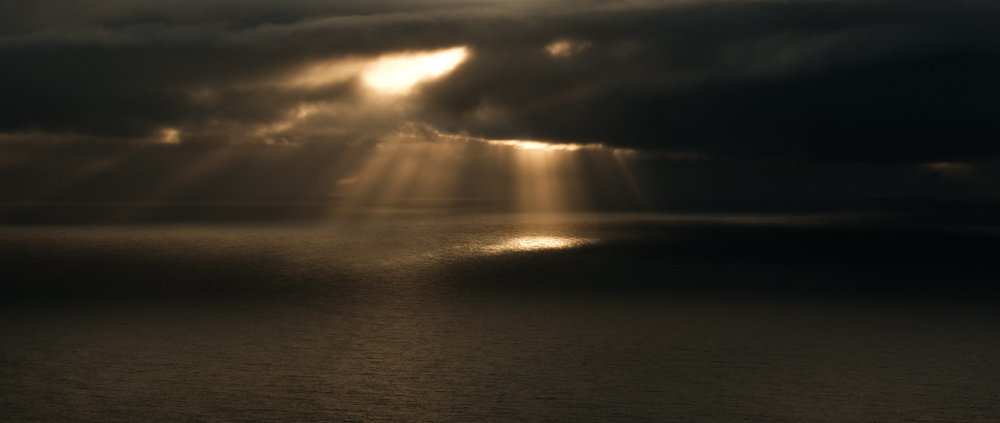
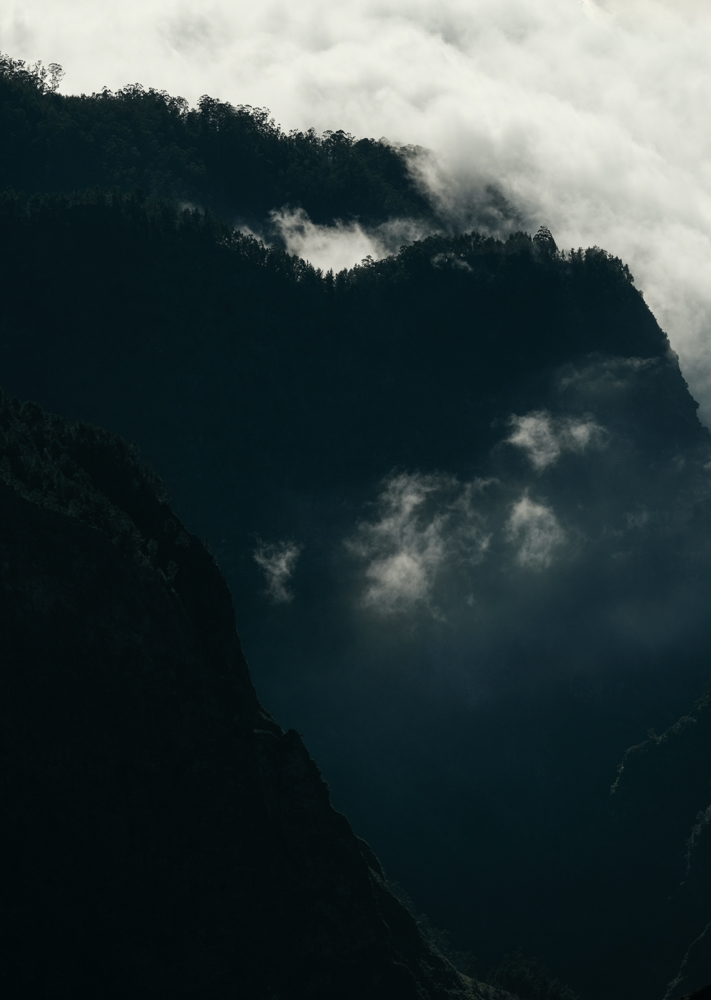
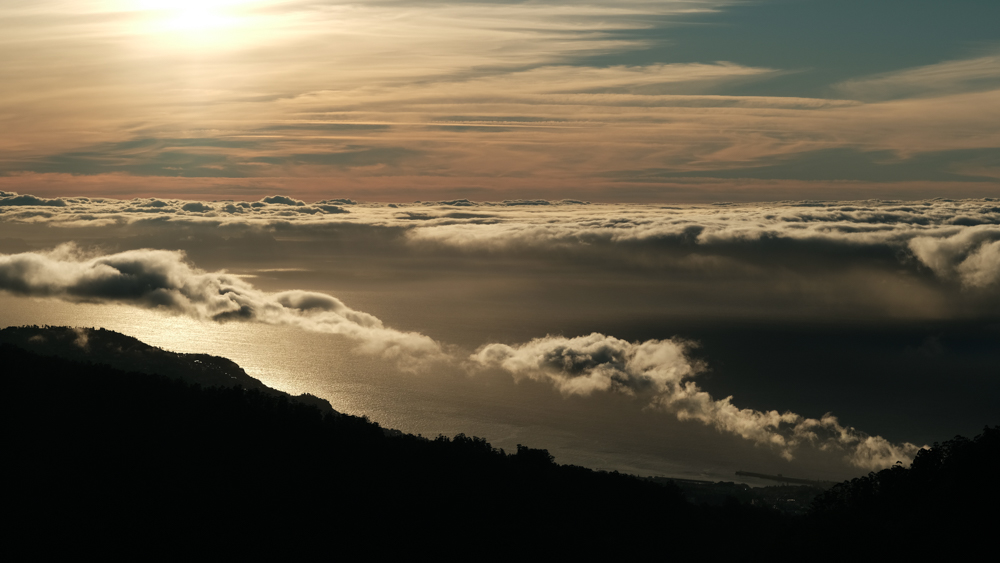
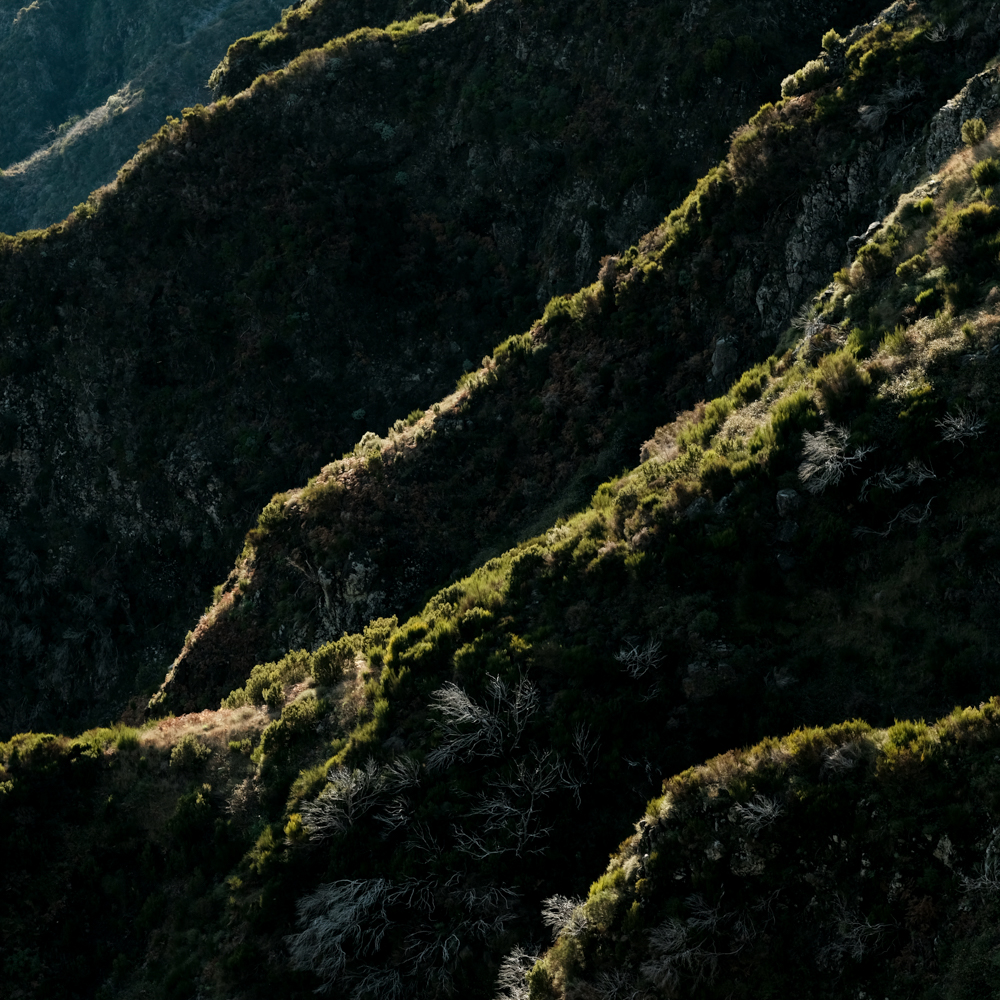
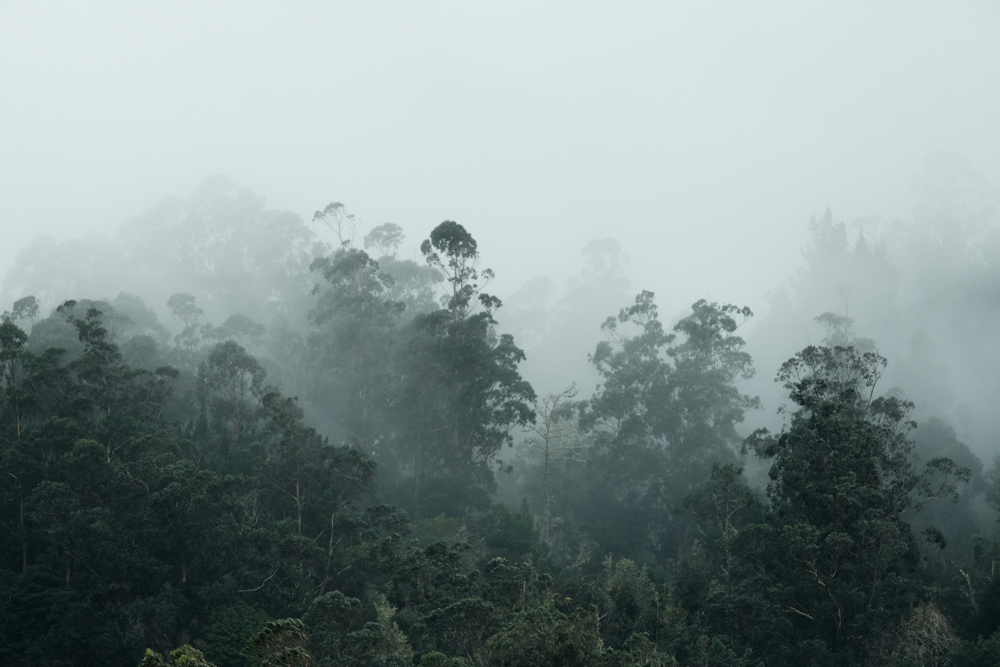
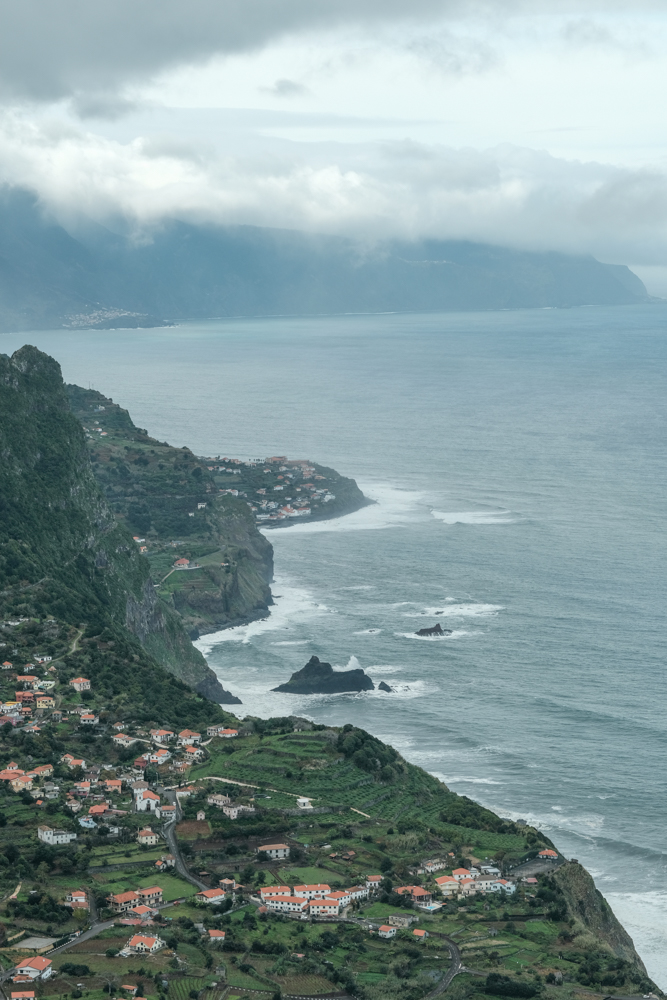
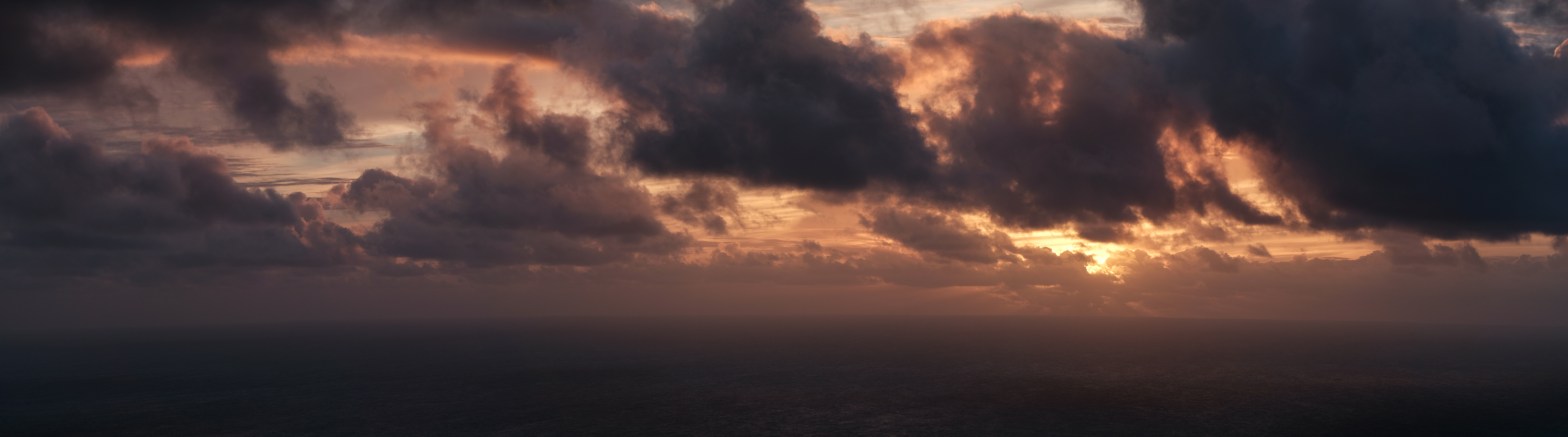
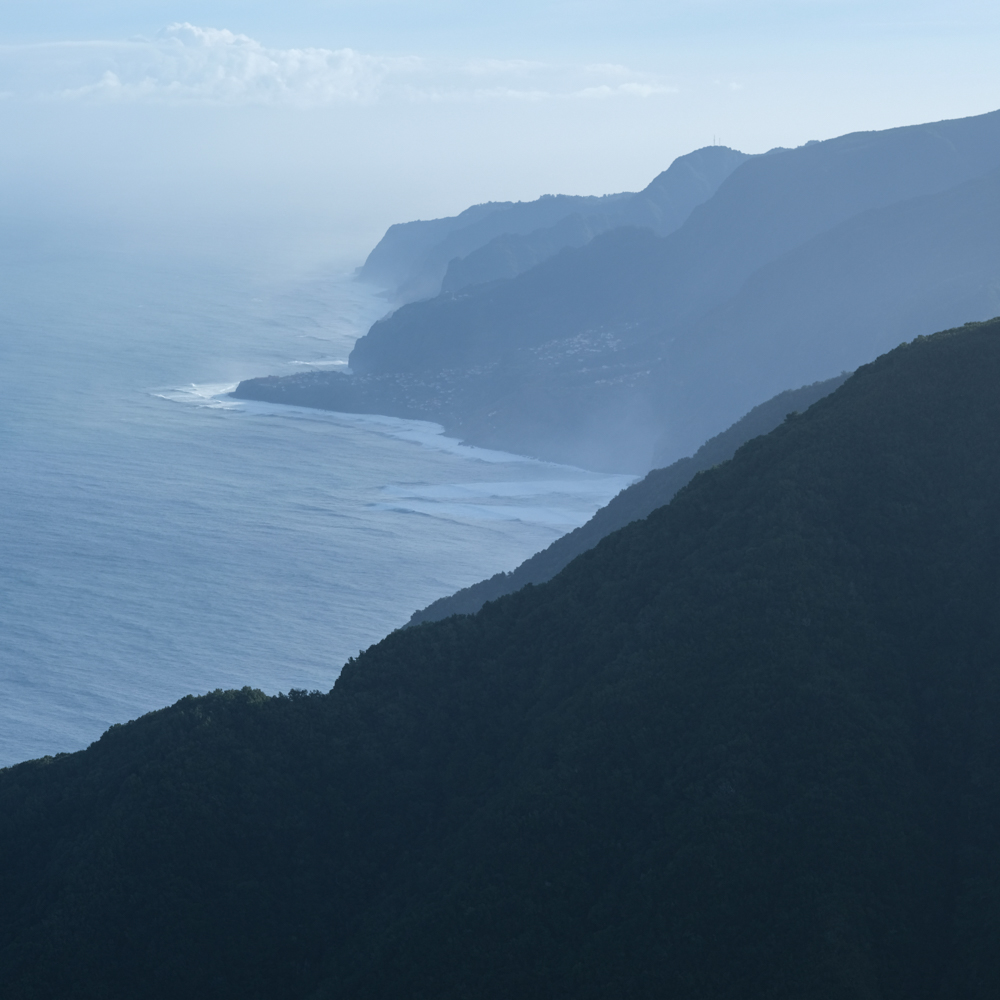
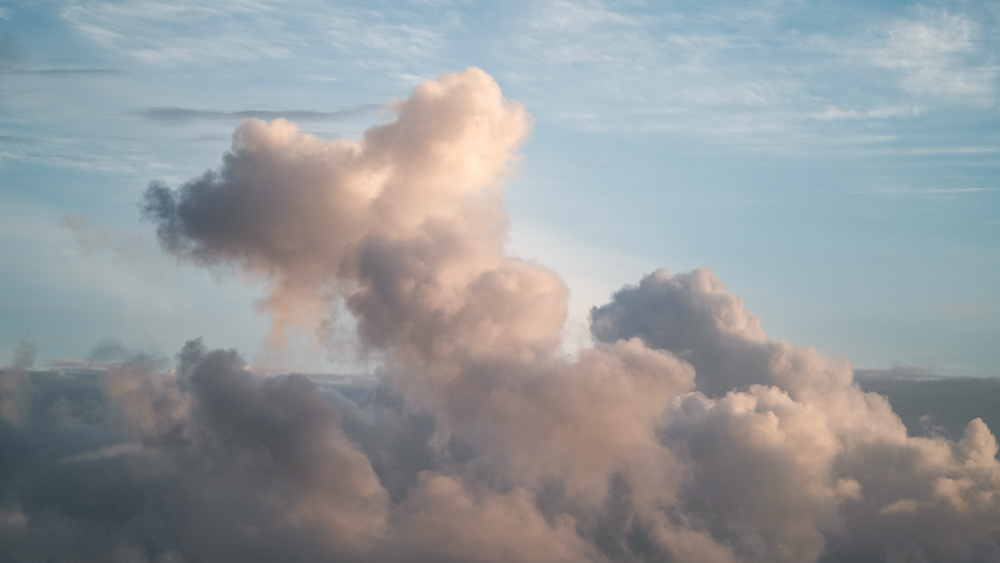
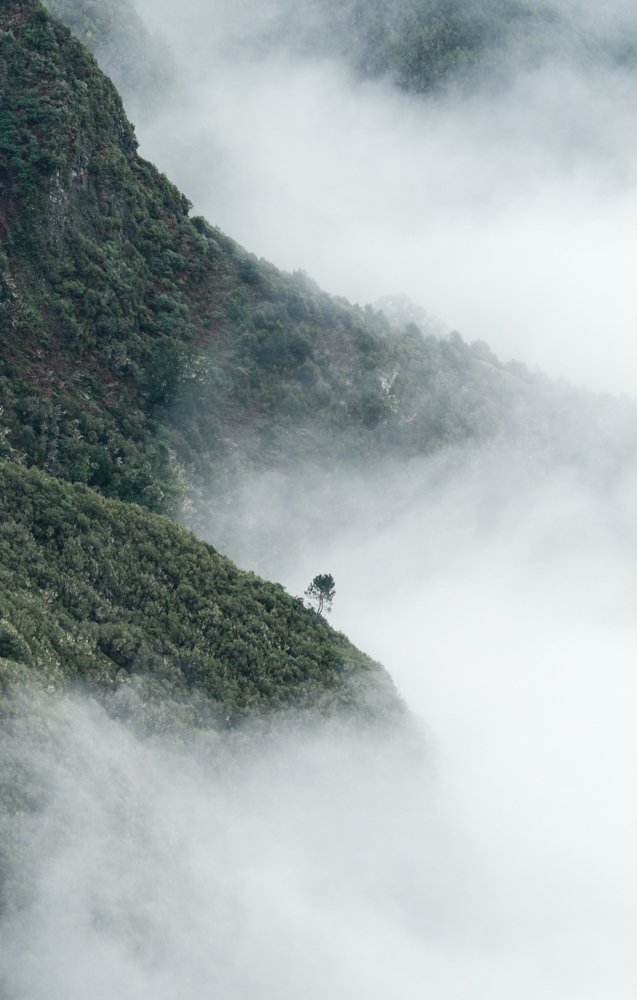
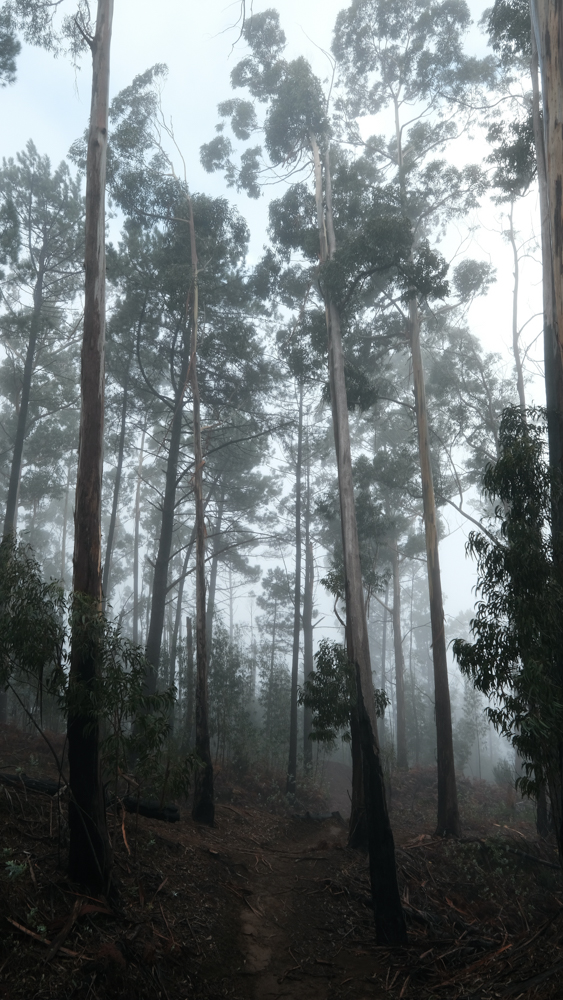
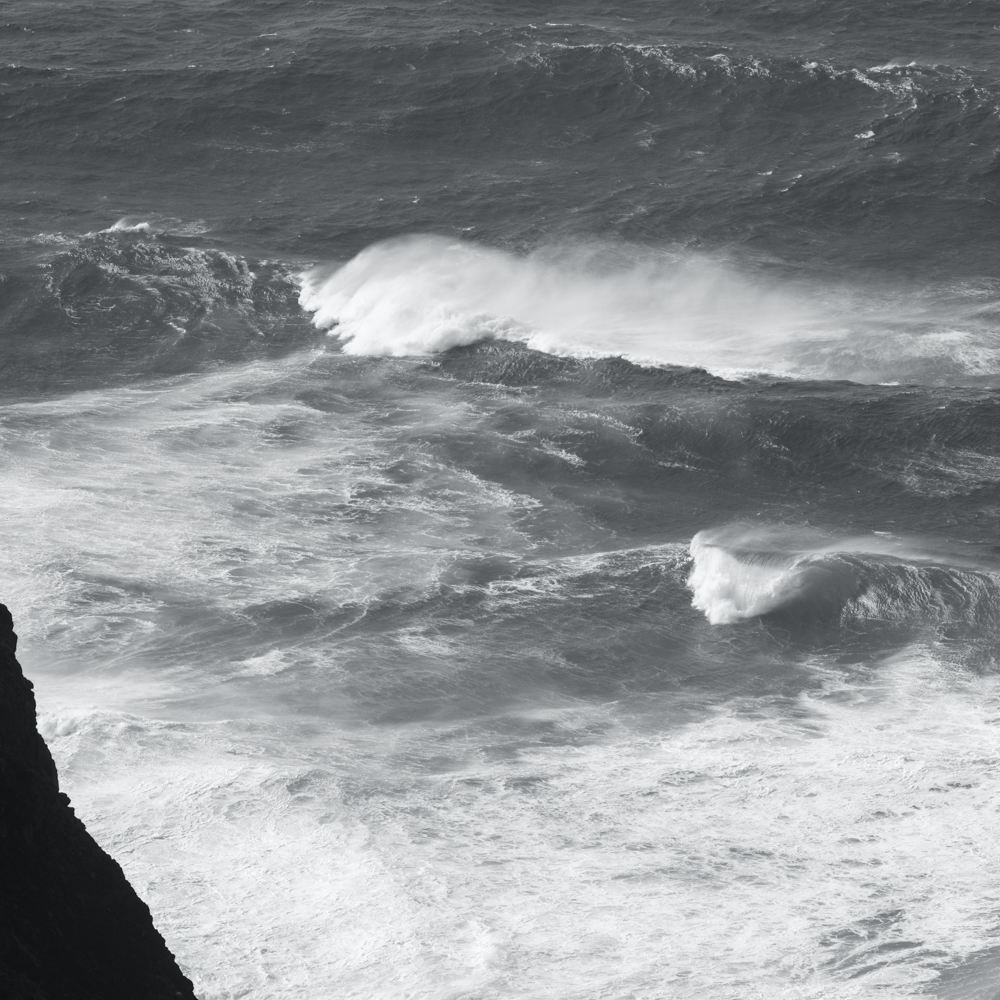
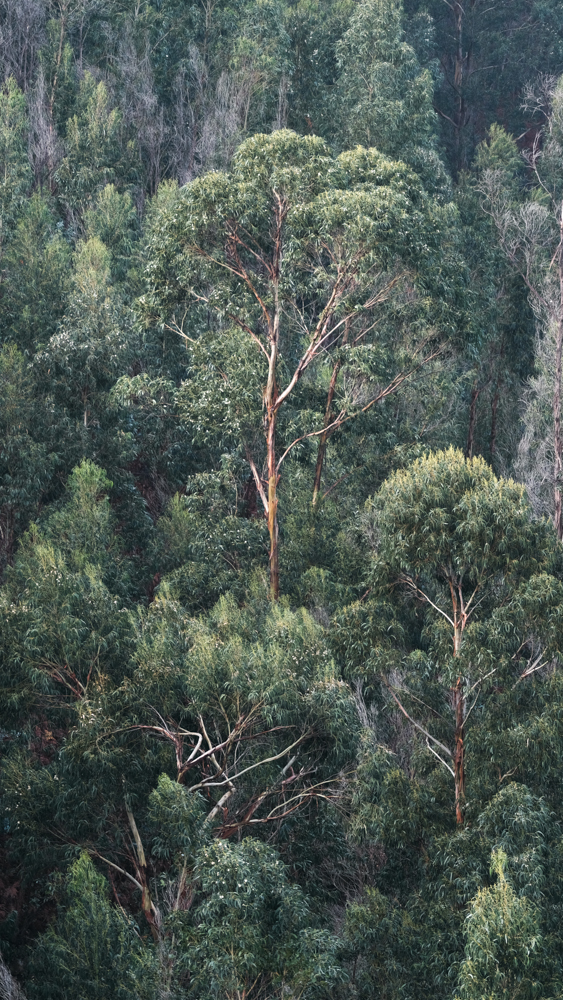
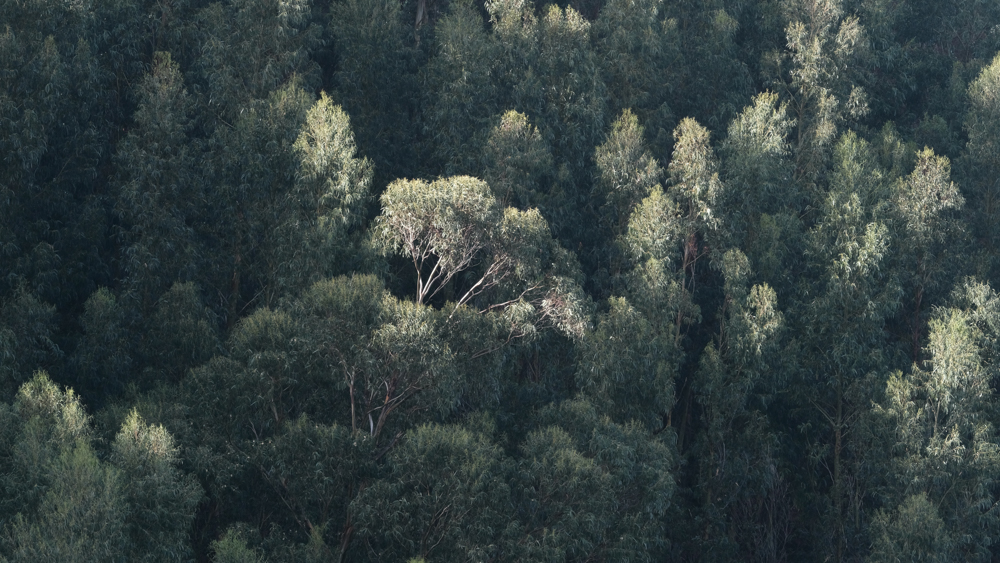
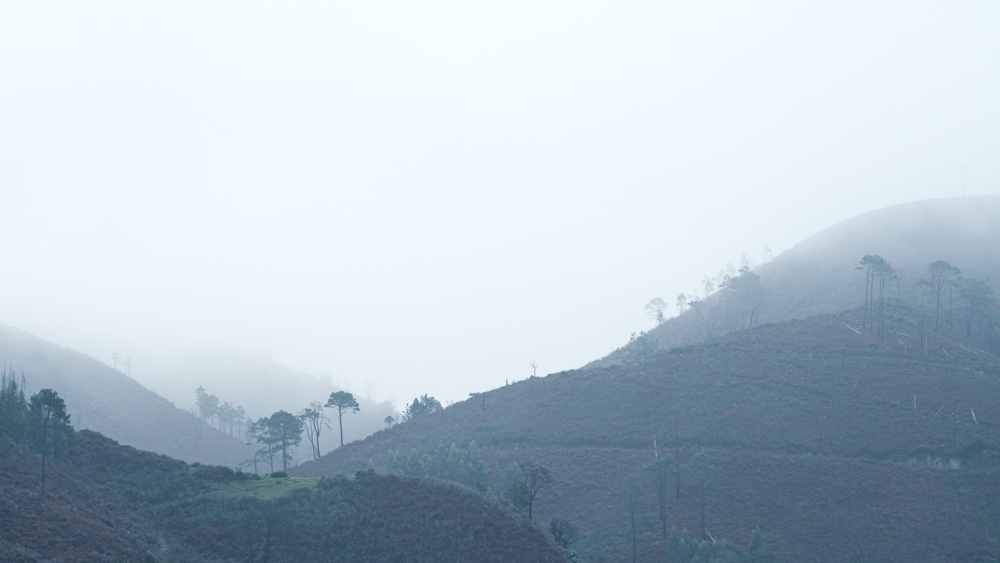
Madeira – the island of ever-changing weather: From storm to rain to sun to clouds to an ocean breeze, there was a bit of everything. On the island of eternal springtime, it felt like we witnessed at least three seasons in two weeks. But one constant remained: clouds and trees, intermingled on the rolling hills and steep faces of the mountains. Always waiting to be photographed, always changing shape and color. Madeira didn’t get spared by wildfires though; as in most European countries in the recent years, forest fires destroyed large areas in 2016 and the damages can be clearly seen along the southern coast.
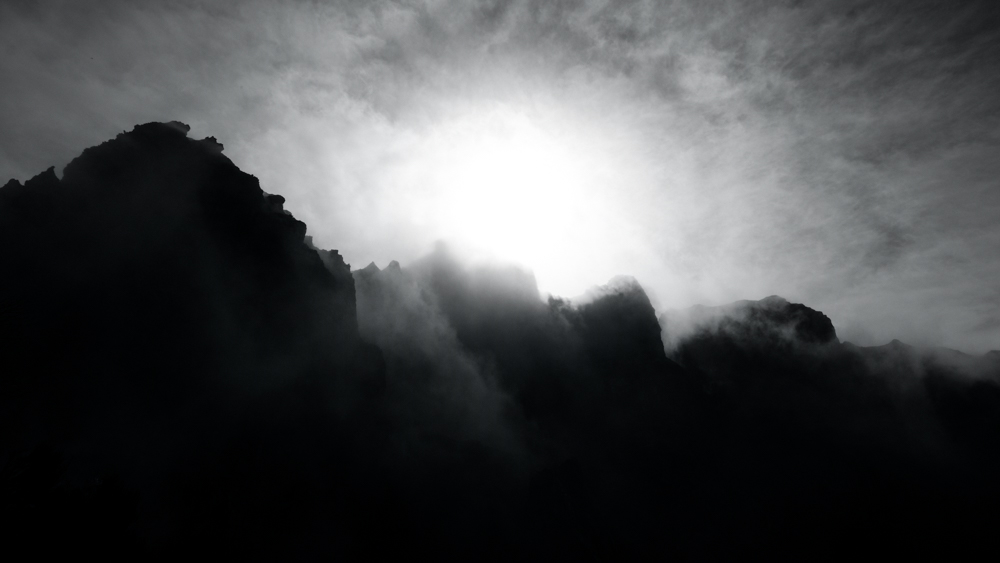
The extent to which forests help to battle climate change seems still to be rather unclear: it’s not only about the amount of carbon they can capture, but also about the amount of clouds they produce which in turn reflect sun light. In any case, cutting down trees or setting fire is detrimental – nevertheless, both will happen in the years to come. Trees, clouds, and the sun, here all coming together during our hike on Pico Grande:
After naming this blog post I also discovered that cloud forest is a real term and about 1% of all forests are considered to be cloud forests.
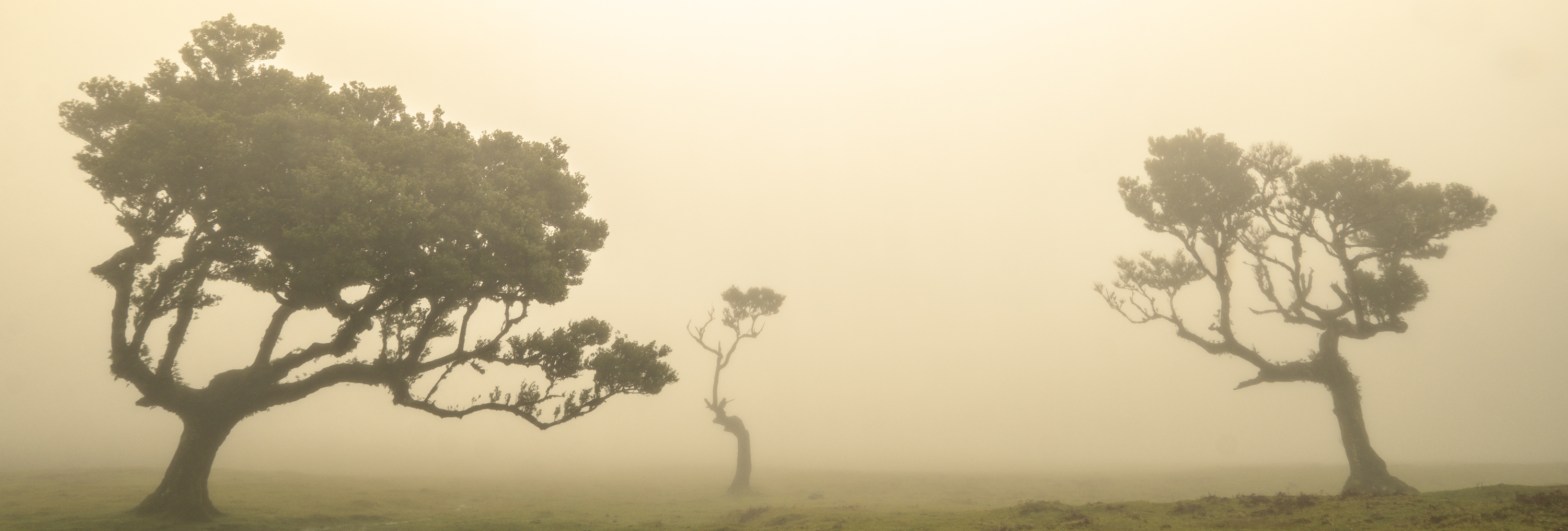
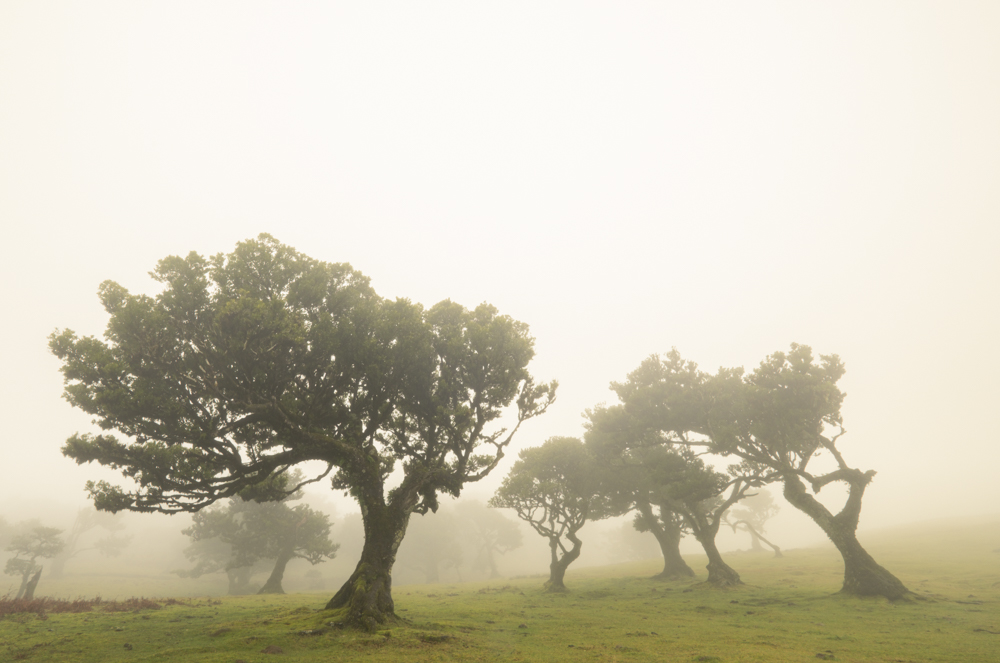
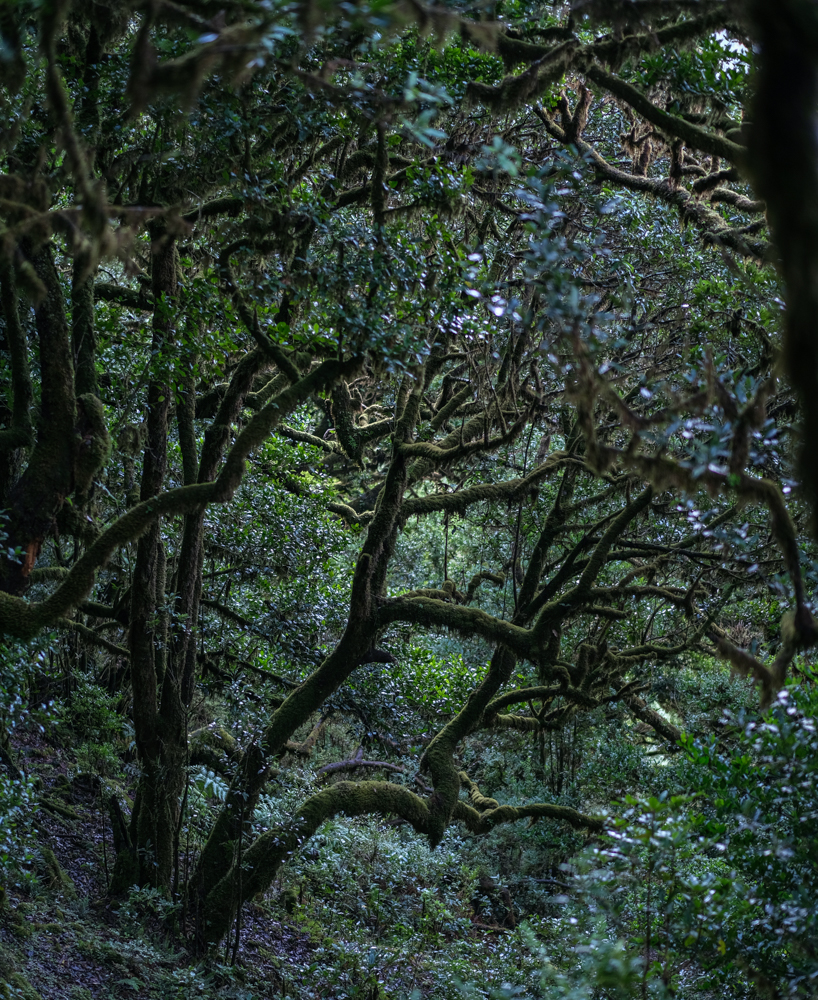
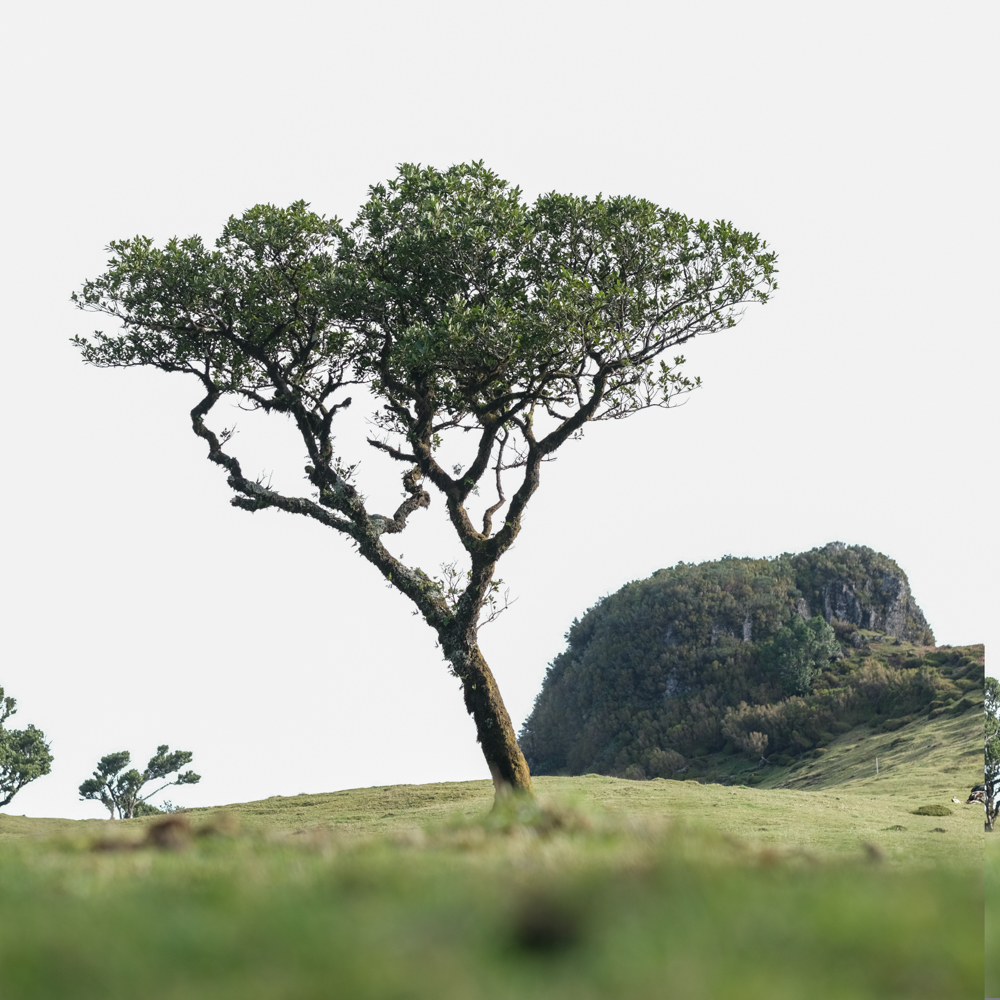
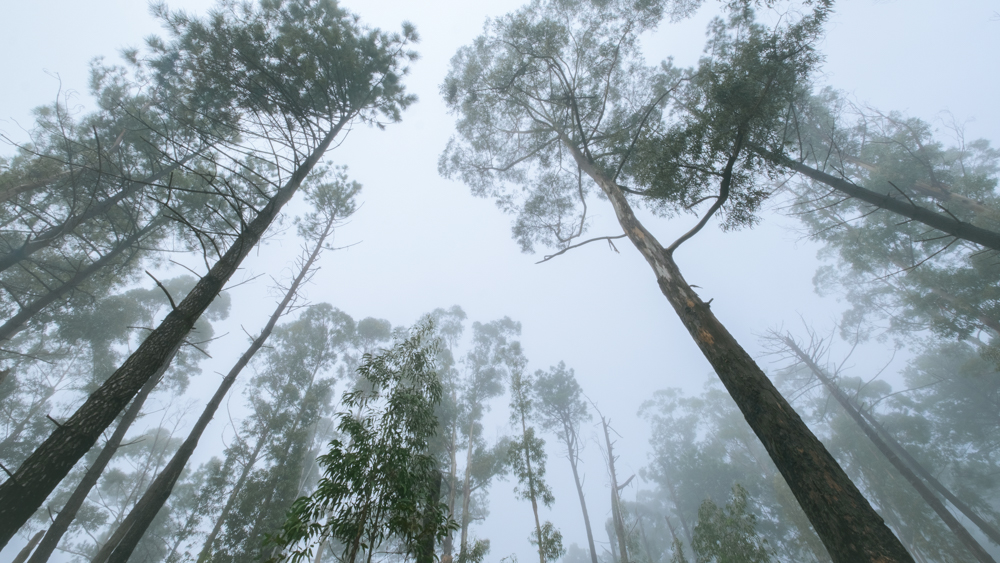
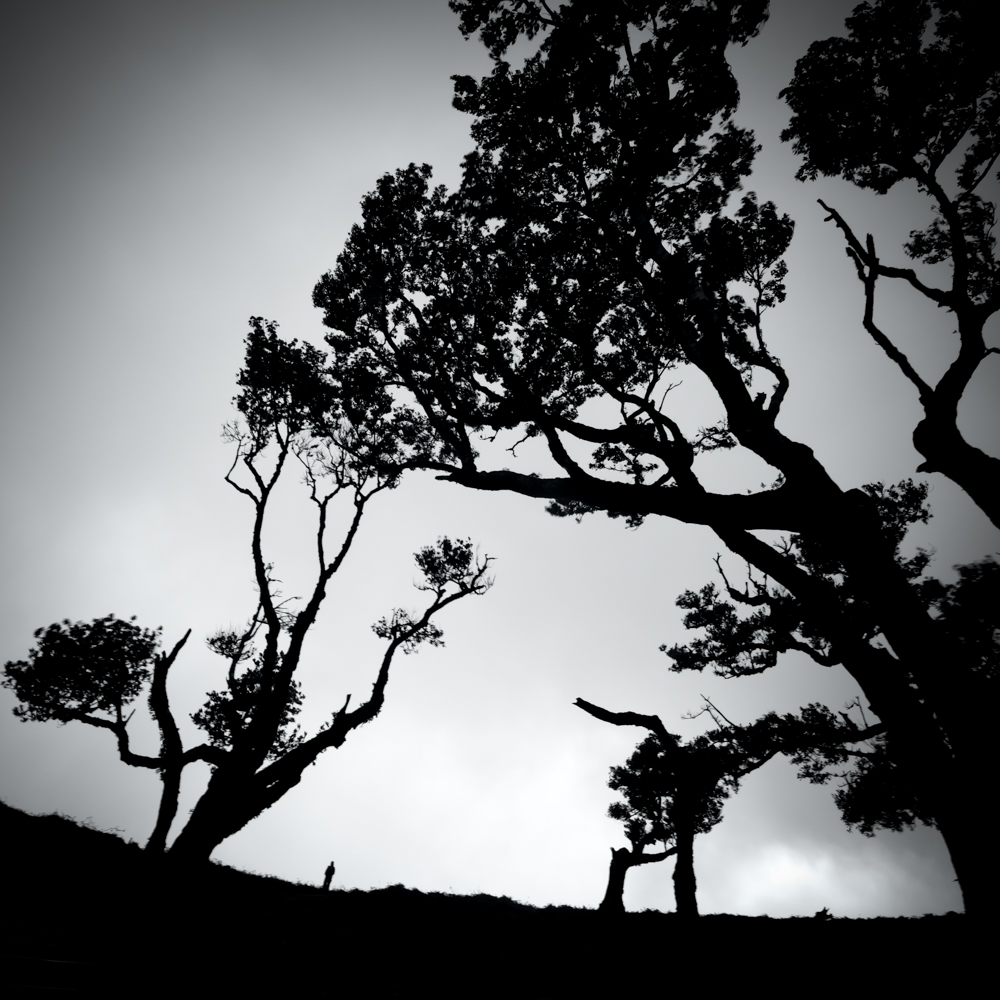
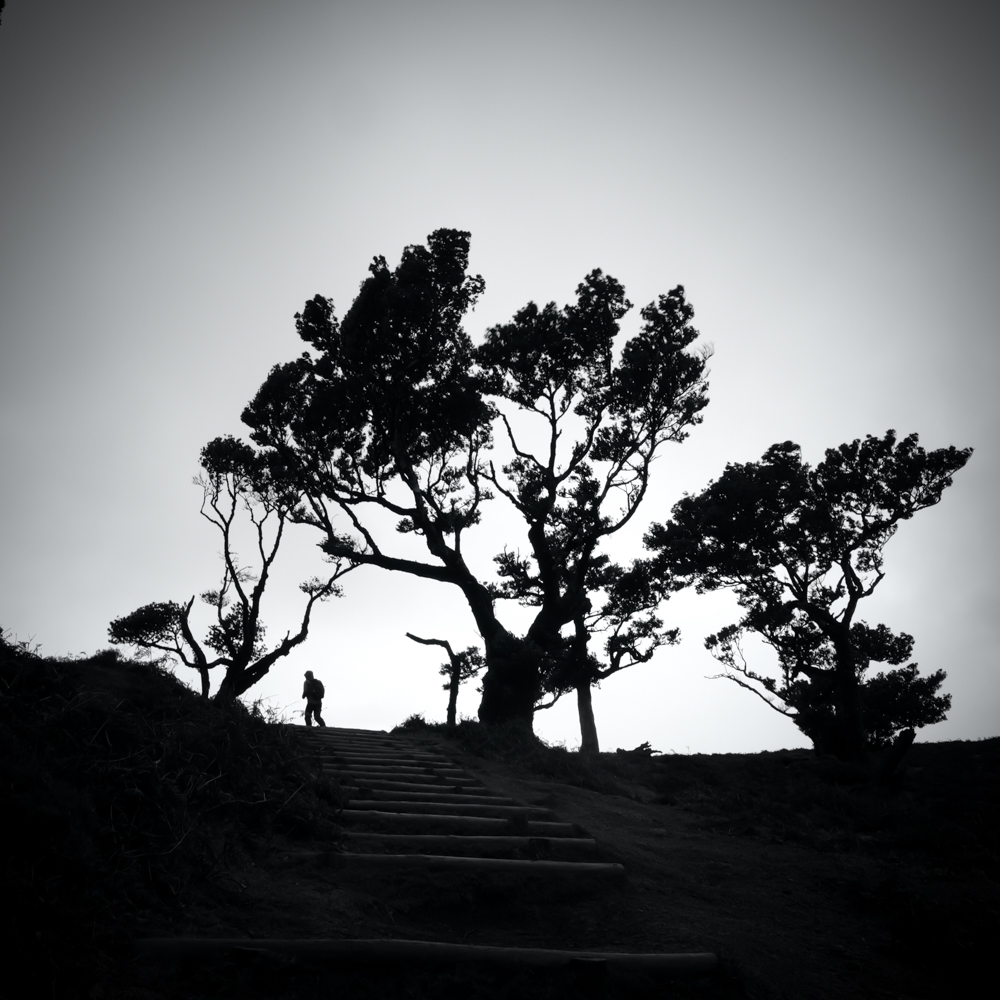
Heavy rain takes turns with strong gusts of wind. I protect the camera, quickly wipe the lens, take a single shot, repeat. From time to time the sun brightens the clouds directly above. And then again, everything is covered in thick fog and sight decreases to only a few metres. Tourists stop in the car park, wait for a few minutes, and leave again. I am lucky that my significant other patiently waits in the car while I battle the weather. There is little chance to check how the photos look – since my camera isn’t weather sealed, I am more concerned about protecting it. The trees around me dance in the wind, characters of long forgotten legends, rooted deep, and yet it seems as they are moving with every step I take: From the lonesome warrior, to the sheltered child, to the ancient sage.
Triviale Maschinen haben nur einen Zustand: Sie liefern auf denselben Input immer den gleichen Output.
Heinz von Förster
The quote could be vaguely transcribed as ‘Trivial machines have a single state: Given the same input, they always produce the same output.’ In contrast, for non-trivial systems the output not only depends on the input but additionally on an inner, possibly unknown, state of the system. This inner state evolves with every given input and, thus, the same input can lead to different output. In other words: the output may seem random to an observer as it also relies on the complete history of inputs processed by the system, reflected by its internal state.
Using this bipolar framework to describe actual systems can be challenging: When I type 2+2 in my calculator it will always yield 4. It’s apparently trivial – until the environment acts upon it and the batteries run out, the circuit board becomes corrupt, or the display breaks. If my bike would always give the same output when I start pedaling, I would be much more satisfied and my local bike shop would go out of business. If computers really were trivial, a whole lot of IT assistants could look for a new job right now. Systems decay over time, they are error prone, they are subjected to the very same universe we are.
Another approach might be to not consider it as a binary decision, but a continuous scale of triviality where systems are ranked based on their robustness. In a probabilistic sense, the calculator is rather trivial as it gives the predicted output in a quantifiably large majority of cases. In contrast, living systems are on the other end of the scale and highly non-trivial since they exhibit wildly different behaviour in seemingly similar situations.
However, when system are ranked on such a scale of non-triviality, problems arise: How should I work on this very laptop when I assume that it could fail me anytime? If I would admit its non-triviality, I couldn’t work in the first place because it could give any output, independent from the keys I am pressing. This example seems a little daft, but when transferring it to human interactions, the exact same applies: How should I communicate with my colleague about work issues when assuming that the output will be determined by a non-trivial living system? How should I forward instructions if the output is uncertain anyway? How could I coherently speak with my partner about serious topics when my input has potentially little effect on the output?
We constantly trivialize the non-triviality around us. We do so because it is necessary. When I am typing in my calculator I expect a correct result. When I am asking a question to a friend, I expect to get an answer. Not because the answering system is trivial, but because I have to assume it is in order to ask the question in the first place. We trivialize machines, we trivialize humans, the reactions of strangers, friends, and partners. And if the output is unexpected, we don’t blame our foolish assumption of triviality, but we blame the system itself. And the scale isn’t really one that describes the non-triviality of systems, but rather a scale of how much an observer trivializes systems.
Where does this lead? Potentially nowhere; there might be other, potentially more useful, distinctions to draw. But when drawing this distinction, I am wondering in which cases it might be wise to begin to acknowledge the non-triviality of systems.
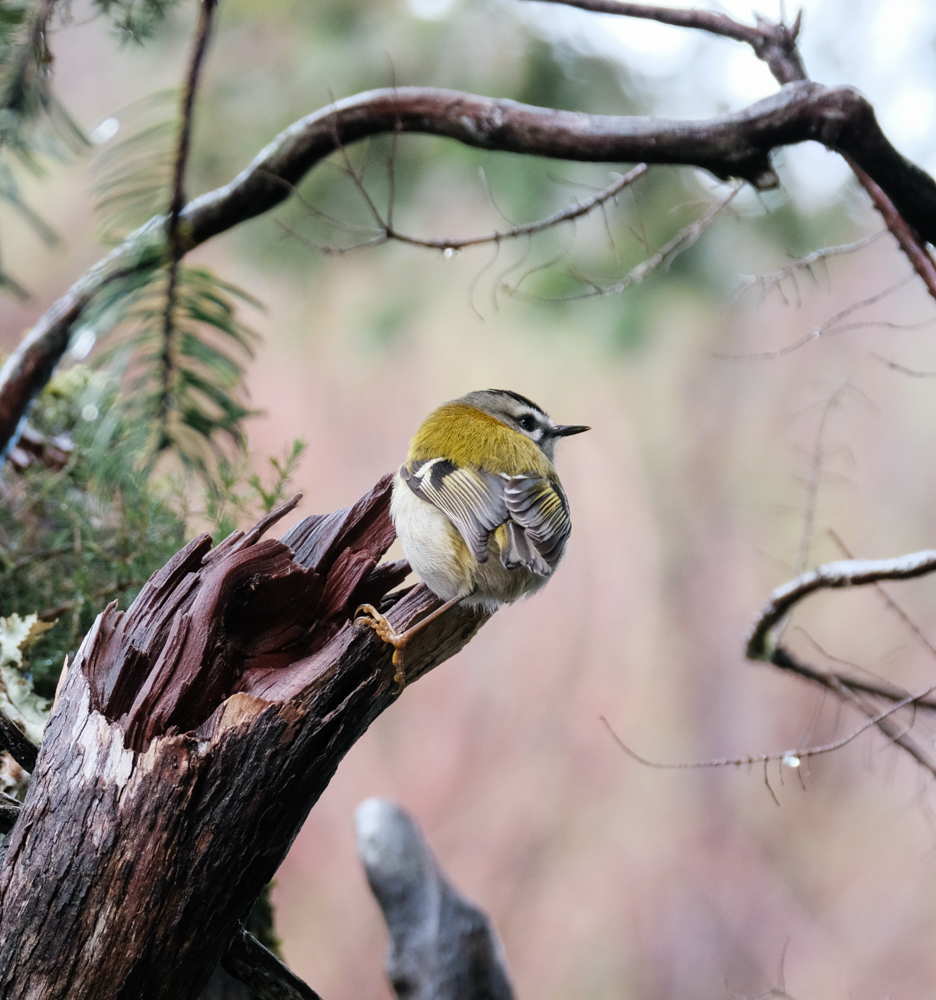
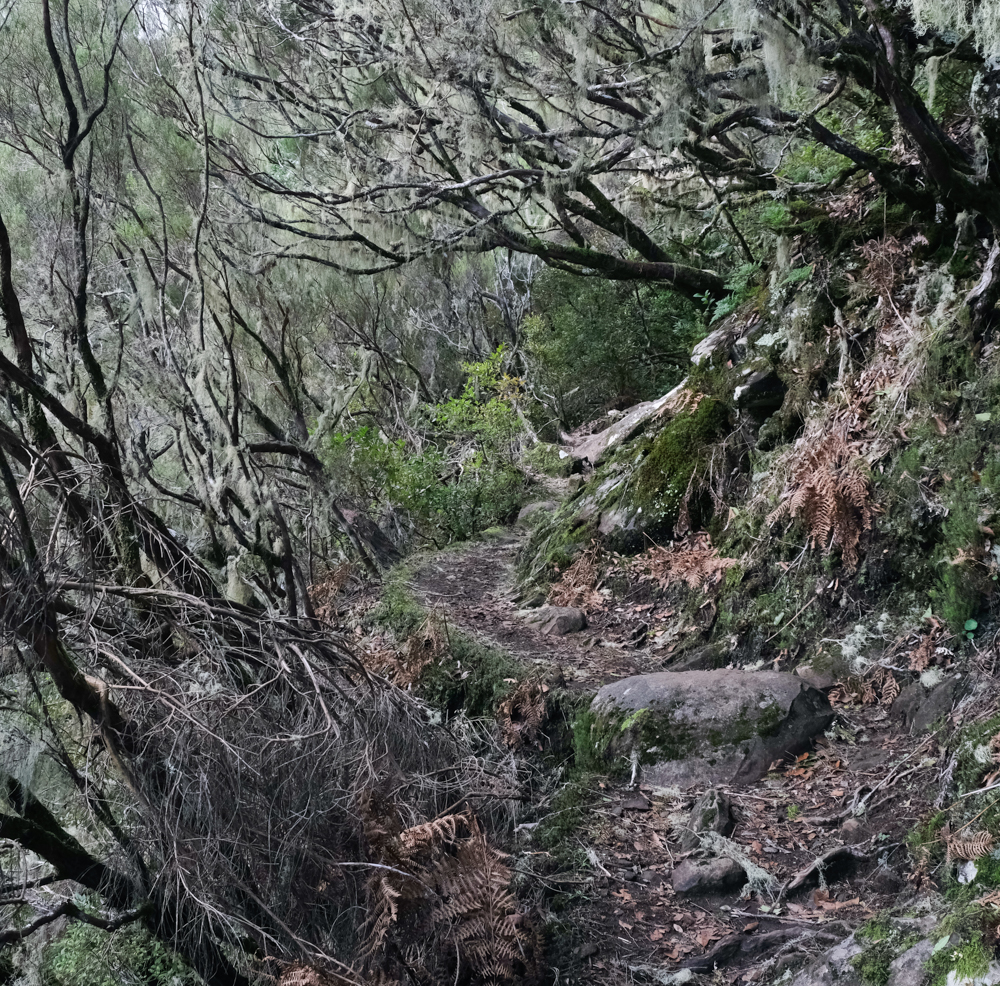
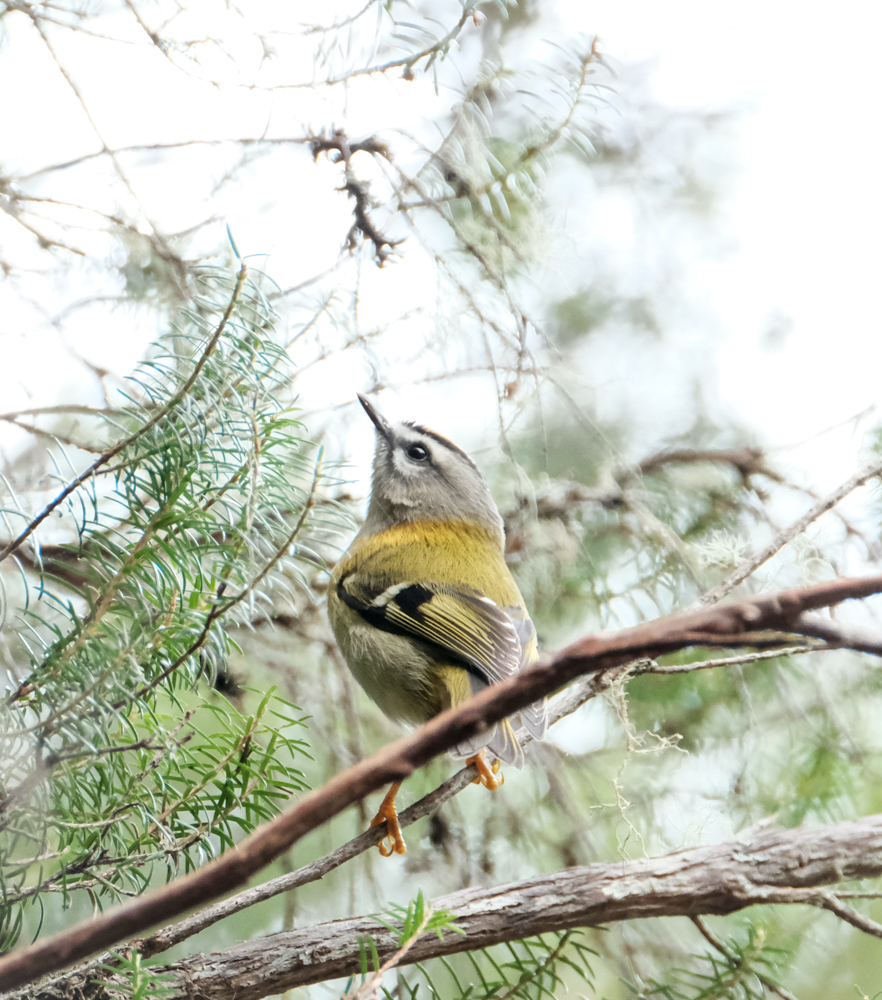
Above the small village of Ribeiro Frio, known for the breeding of trouts, a plateau promises a view towards Madeiras seconds highest peak: Pico Arieiro. The hike follows a narrow path along Levada do Furado. Mist rises from the valley deep below and the sun has brief appearances below the dense canopy of leaves. After following the Levada for a while an arduous ascent begins. We pass a hidden spring, wriggle through low-hanging branches, and cross small meadows with flocks of kinglets. In the end we reach the aspired plateau, but the reward remains absent: Instead of the expected peaks of the central mountain range, we can only see clouds of rain.
This post is rather provocative – the judgement of its seriousness is left for the reader.
Way too fast, no breaks, a wall of bricks ahead. That’s how the climate crises can be described. Unprecedented floods, soil dried out for years to come, dying forests, 10 years in a row with highly increased temperatures, glaciers melting at unprecedented speeds. North-west Germany will become significantly smaller, the question is not if it happens, but when it happens.
And out there, some honorable organizations and non-profit associations fight. They fight against the crises, against politics, and for our planet. They try to find some breaks, to dampen the impact, to bypass the unavoidable. Fridays For Future, Extinction Rebellion, 80000 Hours, the list goes on and on. What they do is important and could be our last hope for an ordinary future. But there is an inherent assumption to their philosophies, silently hiding, rarely talked about, let alone discussed, but critical as no other.
They not only fight for the planet, they fight for us, for the human race. They assume that the we, humanity itself, should be saved as well. That the continuation of our species is inherently good. An assumption that is not grounded in any observable truths, but originates from a pure instinct of self-preservation. From the urge of dominance and feeling of supremacy that seemingly has been inherent to our species for a long time now.
Extinction Rebellion is branded as radical and drastic for what they do. They are disregarded as being over the top. But what if they are not radical enough? What if this underlying assumption is just plain false? The fight for both things at once, humans and earth, is impossible. It might be that these goals are diametrically opposed. Since our species has been expanding, it has eradicated everything on its rise. Why should it stop? How should it stop? The planet won’t generate new resources. The change of human nature will be too slow. It just might be that this planets only rescue is the downfall of us. If earth should be saved, maybe we are already heading in the right direction: Way too fast, no breaks, a wall of bricks ahead.
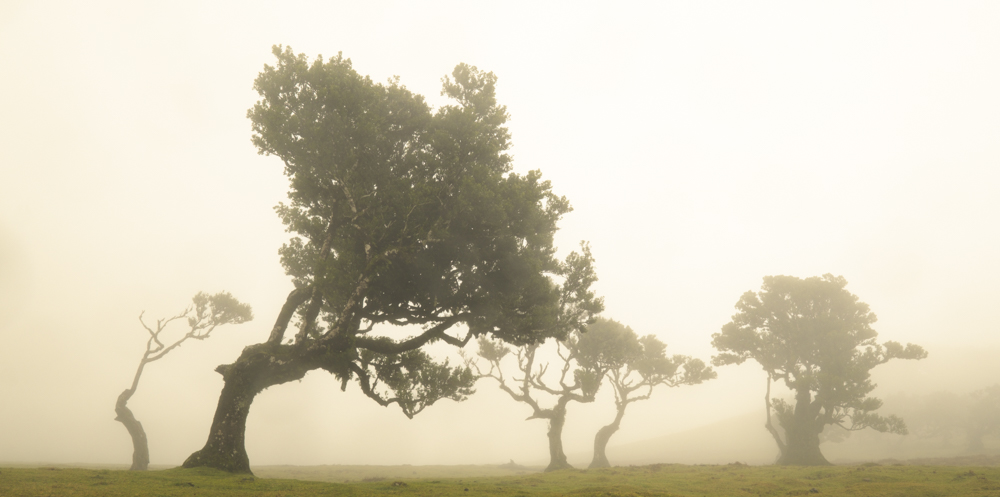
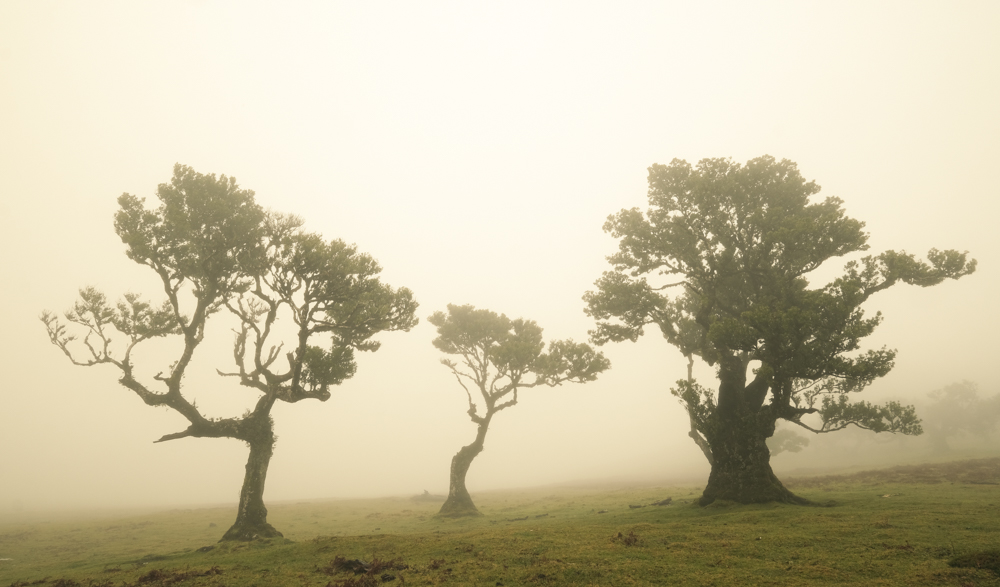
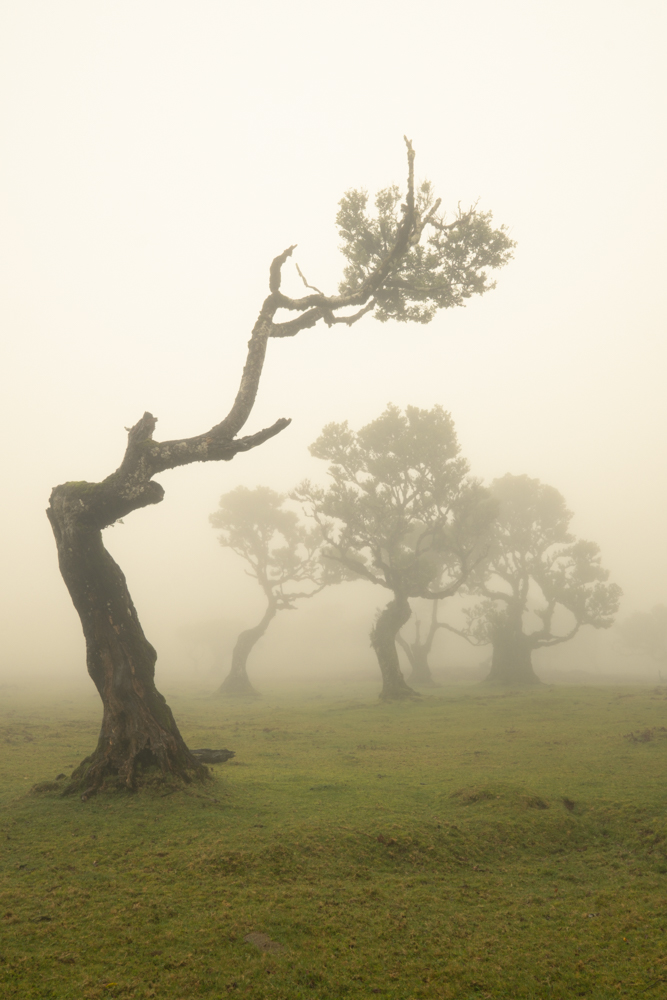
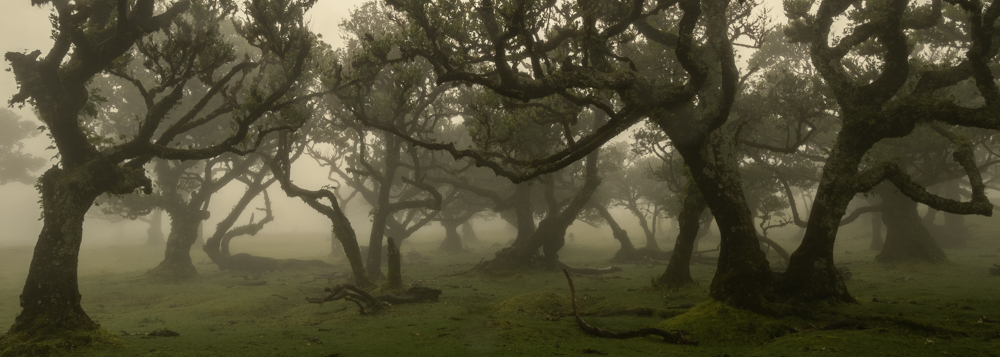
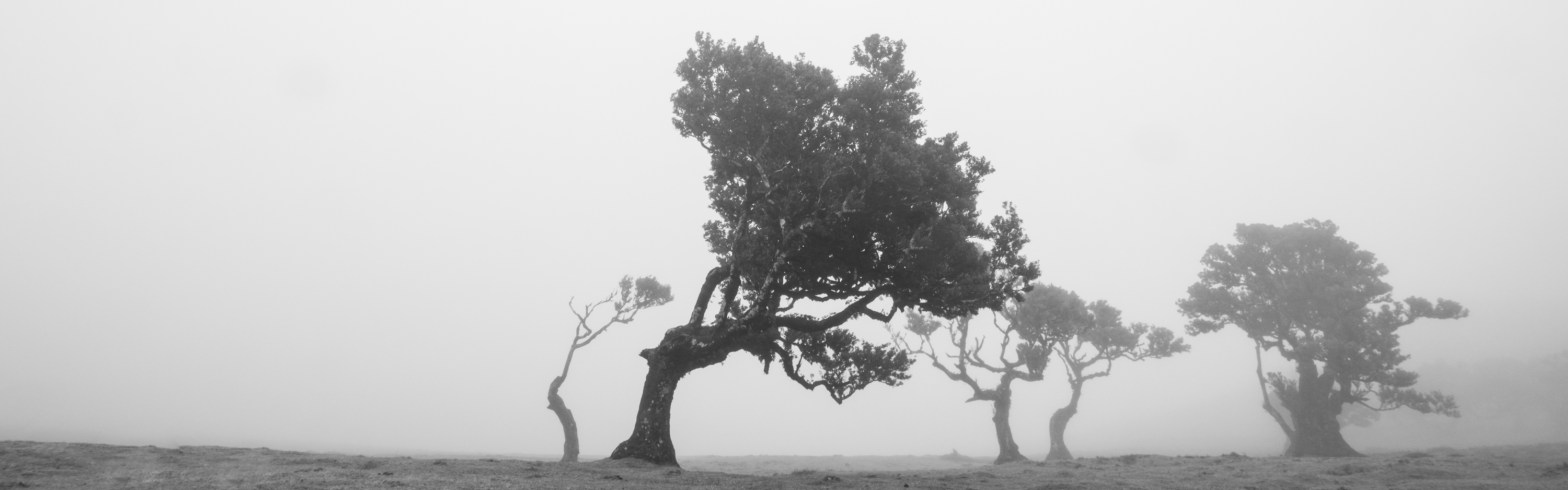
The Fanal forest on Madeira – probably one of the most photographed stretches of woodland in Europe. I thought that, by now, I enjoy the more simple and unknown scenes nature has to offer. But I have to admit, sometimes the hot spots of photography are revisited over and over for a reason. Fanal is wonderful. However, getting good conditions is an endless waiting game. Persistence is perseverance in spite of exhaustion or frustration. Persistence is the characteristic of data to outlive the process that created it. This was our first of three visits to the forest; this time during heavy rains and strong winds, but no clouds.
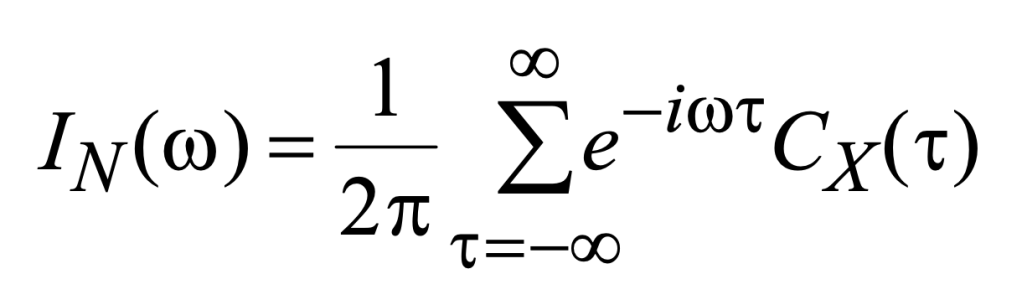
A periodogram estimates the frequency spectrum of a time series. It’s a decomposition of the signal into its single frequency components. An overview of the rate of recurring events and their power. Weekends bring joy. Ends of month bring money. Mornings bring mourning. Sometimes delight. Seasons introduce change. Adventures approach with holidays. Family reunions come every second year. Resolutions once a year.
Adventure time has just passed and the 1 year frequency approaches with all its power. There was a time long ago on an island far away where I understood what is going on in this formula. Right now, I have no idea. Maybe it’s time to start revisiting long forgotten knowledge. Maybe with some fixed frequency. Maybe, at least, with undetermined infrequency.
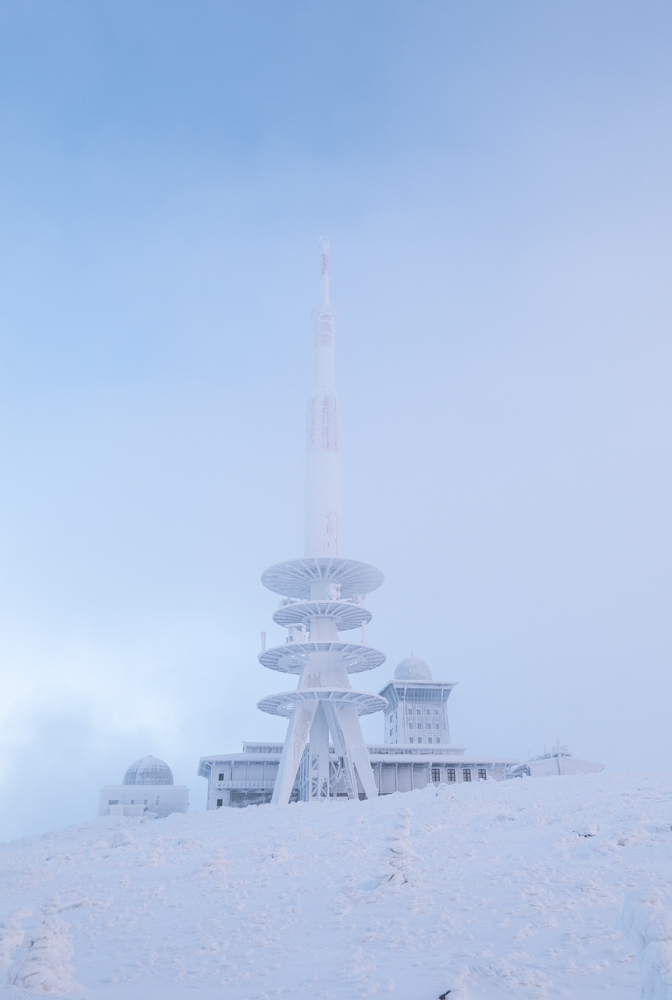
And even though
it's hard to show,
I like to offer
you a glimpse
of what I felt
and what I saw,
I was in awe:
The elements
so pure and clean,
recurring yearly,
the routine.
And with this polished
elegance,
all thoughts dropped to
irrelevance.
The scene was peerless,
people fearless.
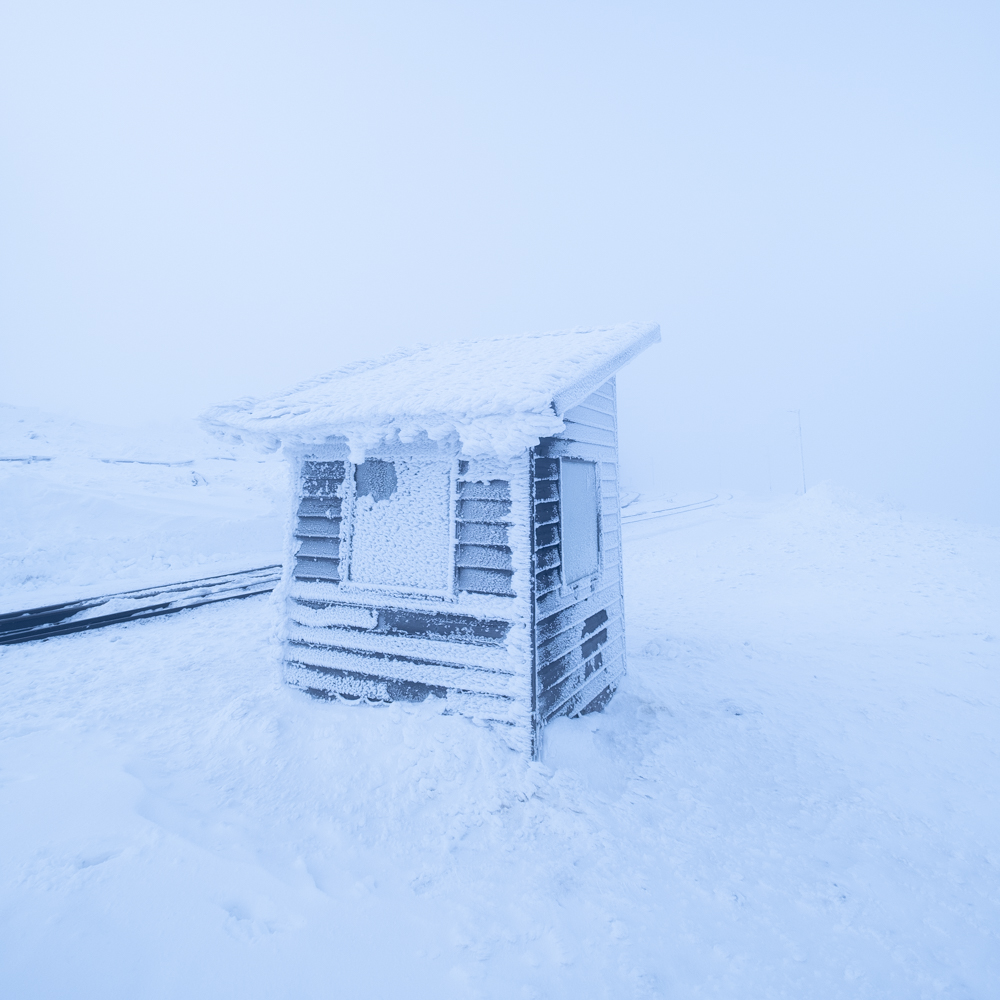
A single person
on a bike –
quite bold amidst the cold;
instead, I hike.
Meanwhile,
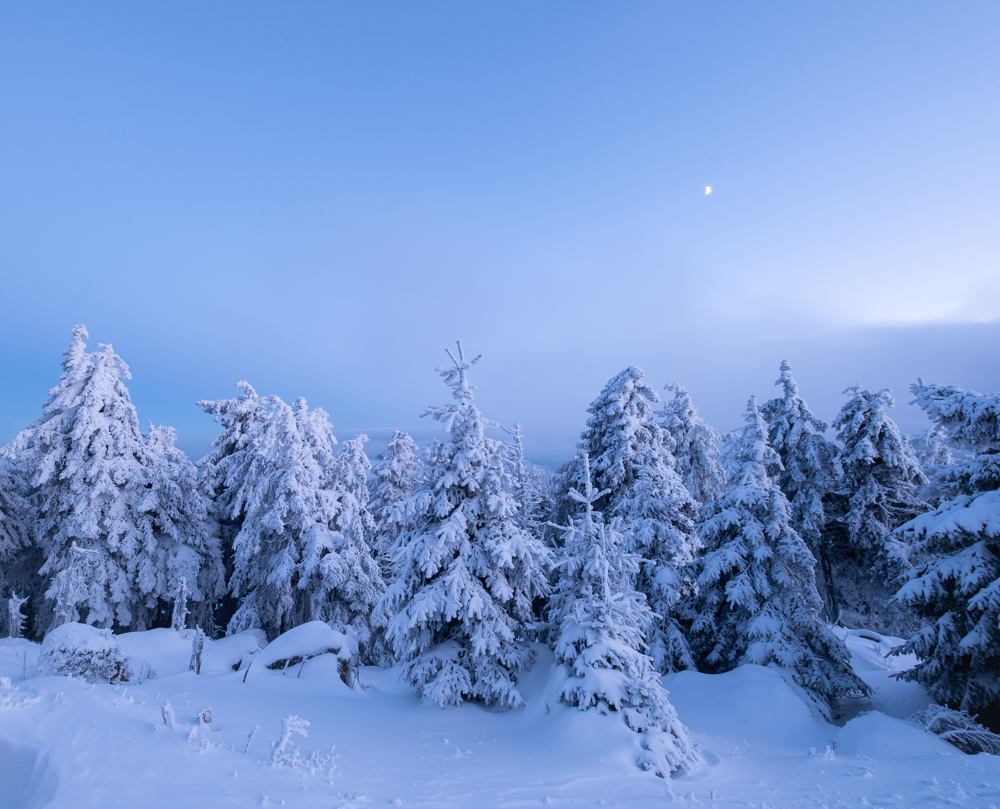
the moon seduces
all alike,
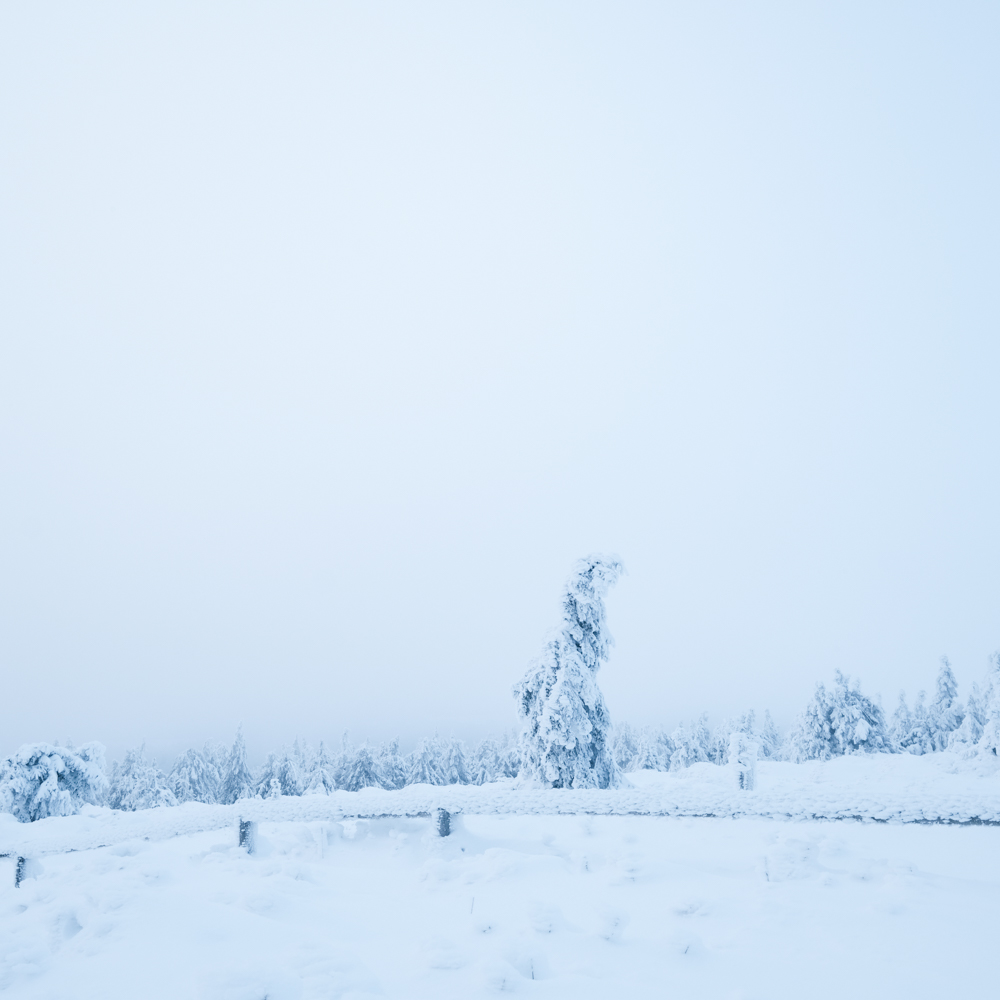
Snow-covered spruces,
frozen rails,
as blue took over,
in the sky
a crescent, thin,
night settled in.
And I descend
with frozen skin,
a radiant grin,
as it has been
miraculous.
Peace is comfortable. Conflicts only appear in the newspapers – neither in our streets, nor in our reality. But out there is war. And with every day we keep ignoring the climate crisis it comes closer. Climate refugees knock on our doors right now – and there will be more. And even though the conflicts haven’t even reached us yet, I am not fighting for what I believe: Basic human rights. The right to use our only chance on life. A chance that we could provide rather easily right now. Instead, I repeatedly choose comfort over action. Security over uncertainty. Every life lost in the Mediterranean, at the British Channel, at the Polish border, is lost forever. And even worse: the tide may turn. When it’s not a handful, but millions who seek shelter, water, food. Will there be a time where we have to defend what we have? Where we have to flee ourselves? So, sometimes, I engage the thought: Fight, flight, freeze? What is it worth fighting for? Would I fight? And why not now?
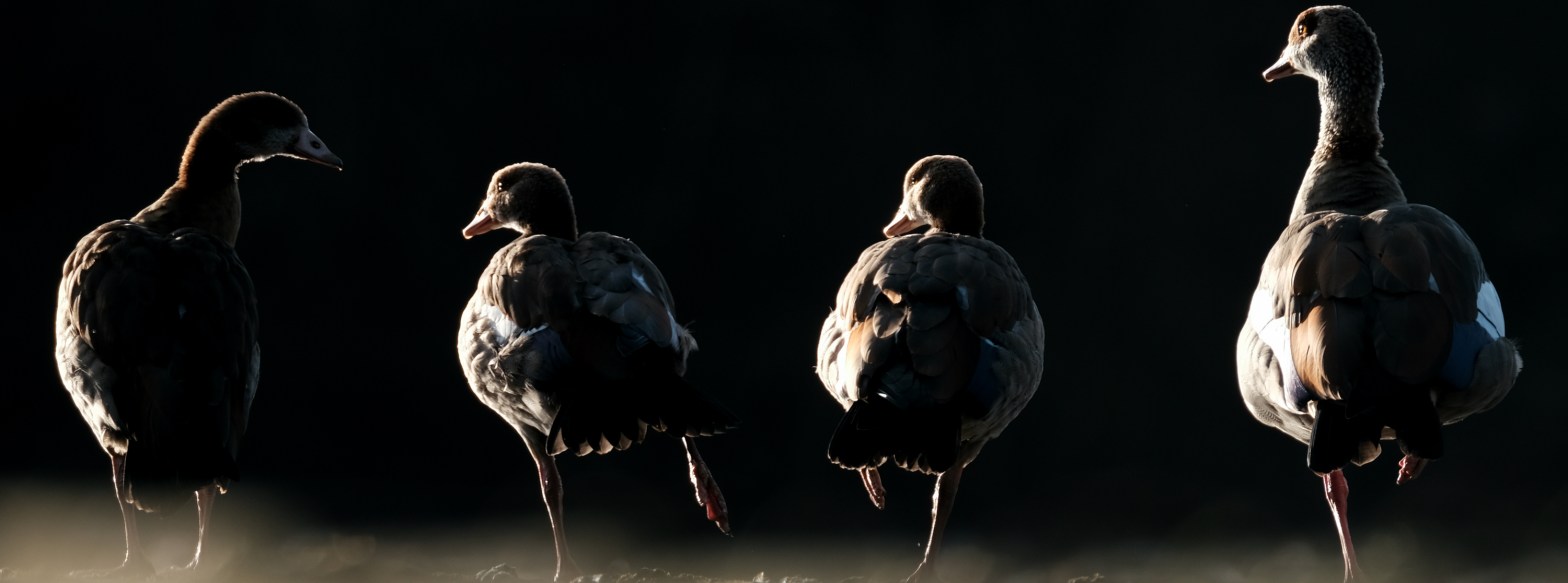
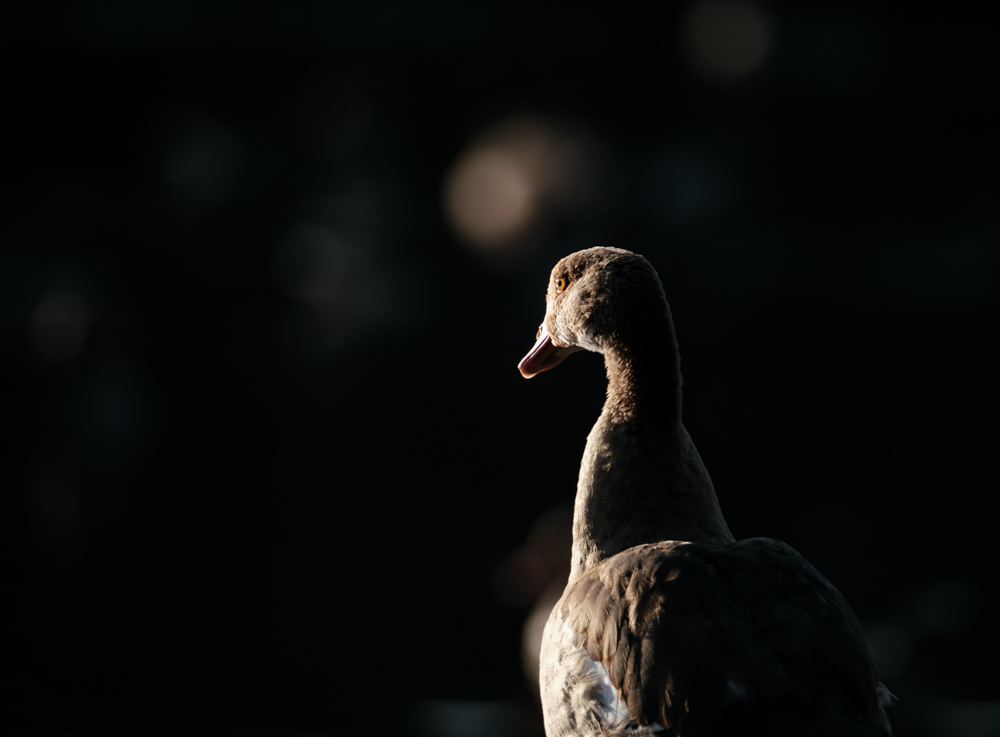
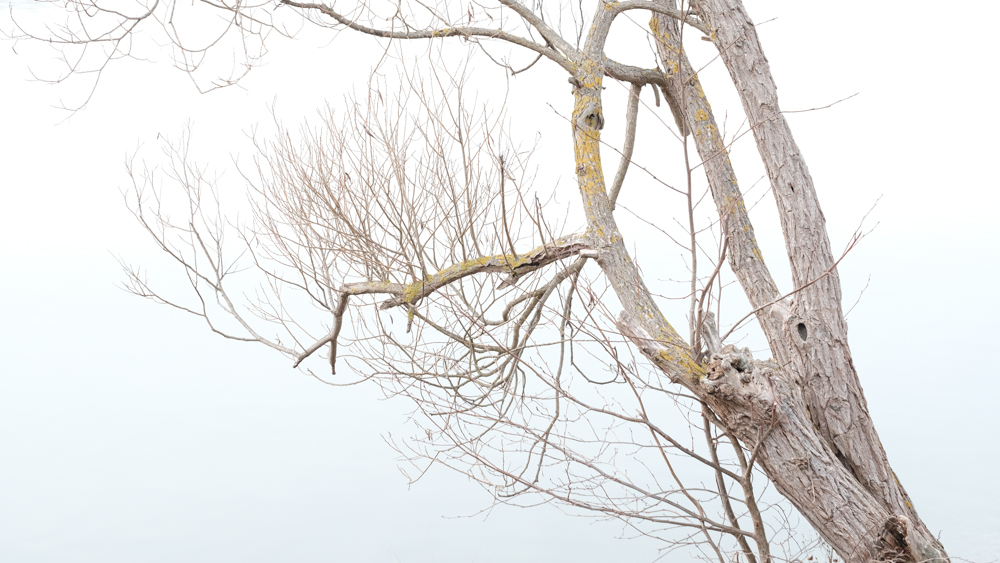
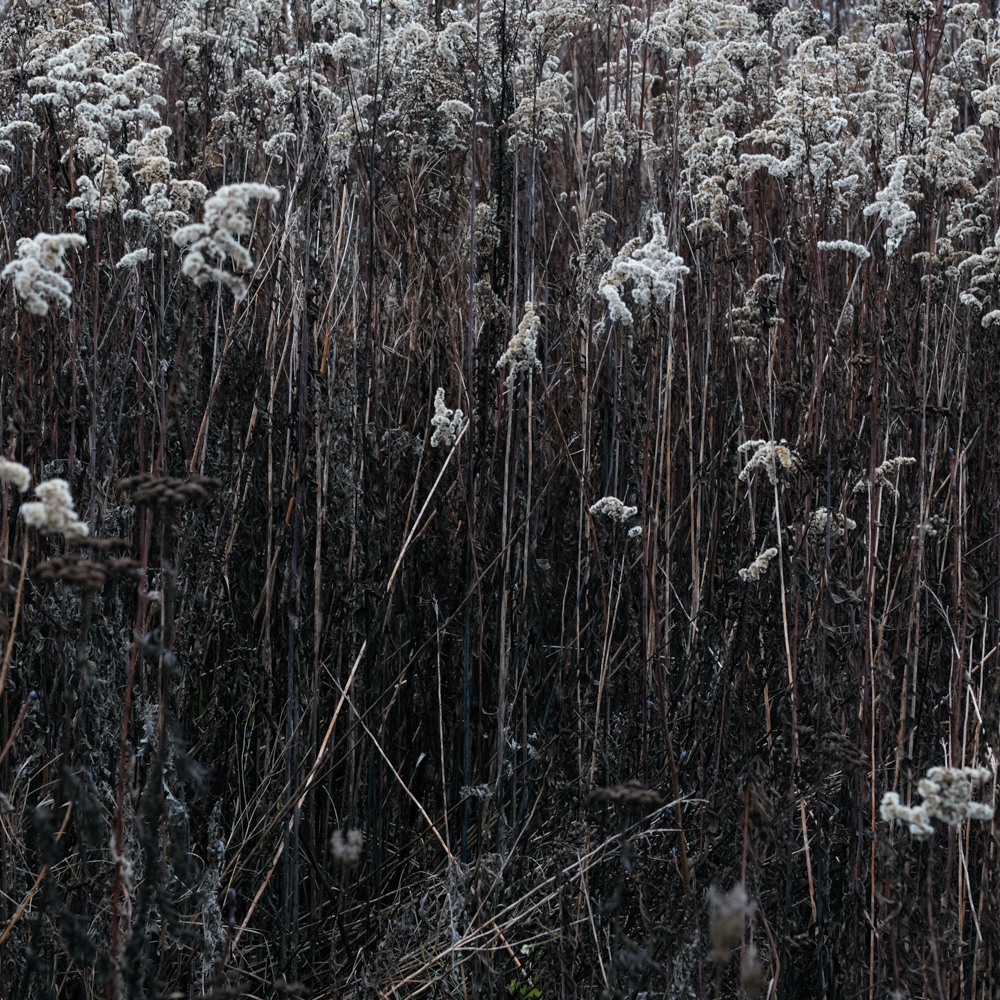
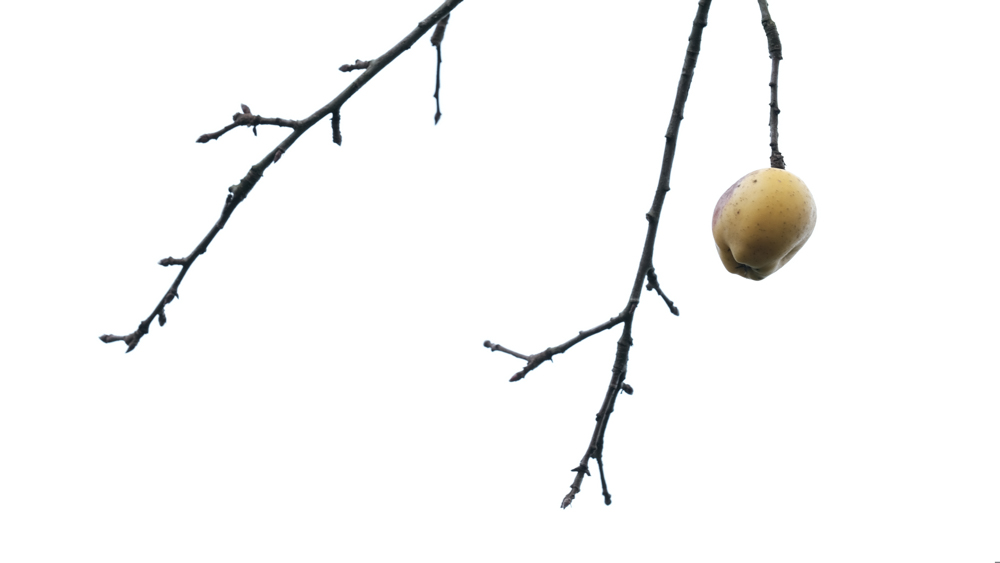
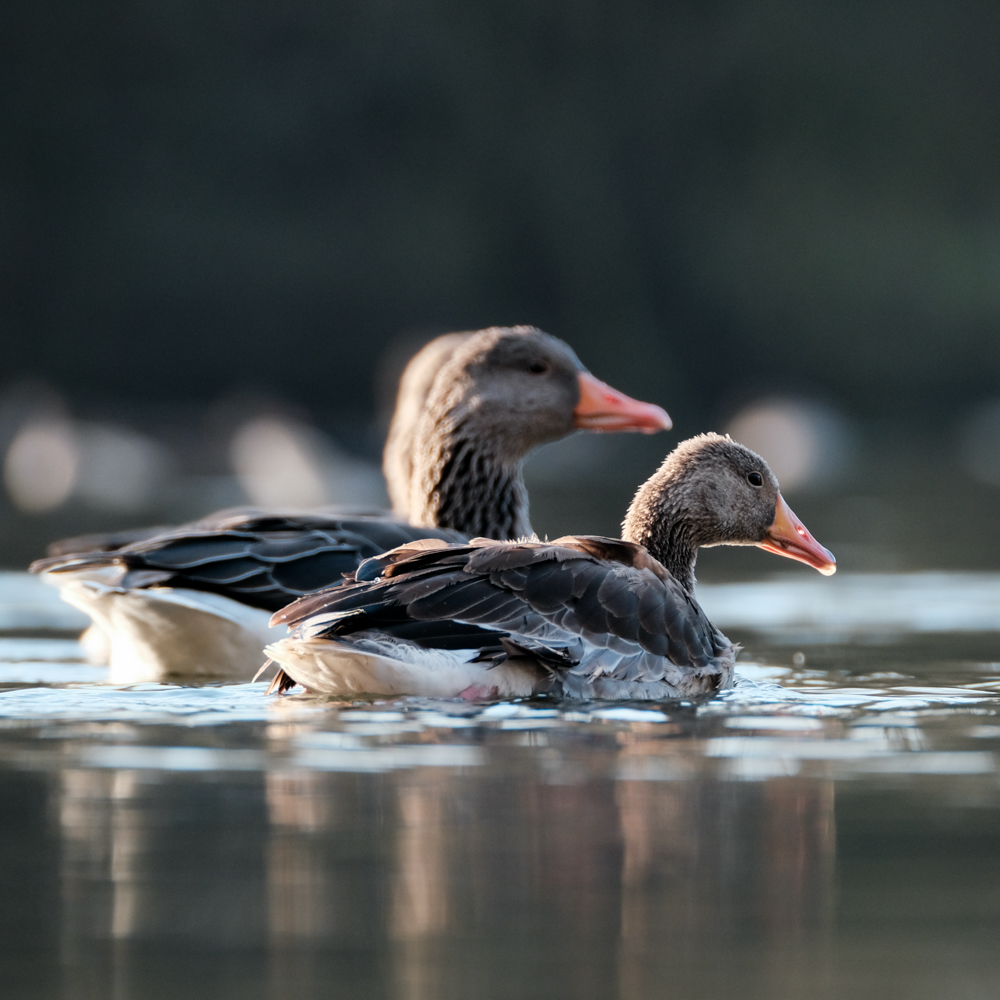
This topic deserves a longer post, I guess. But there is little time (another excuse to not fight right now…). Anyway, I like this selection of photos. Although they are from two different walks at two different lakes around here, they fit together: The combination of light and dark, the muted colors, the mood they reflect – nature during these early winter days. White and black, peace and war.


































































 Punkt im Dunkeln
