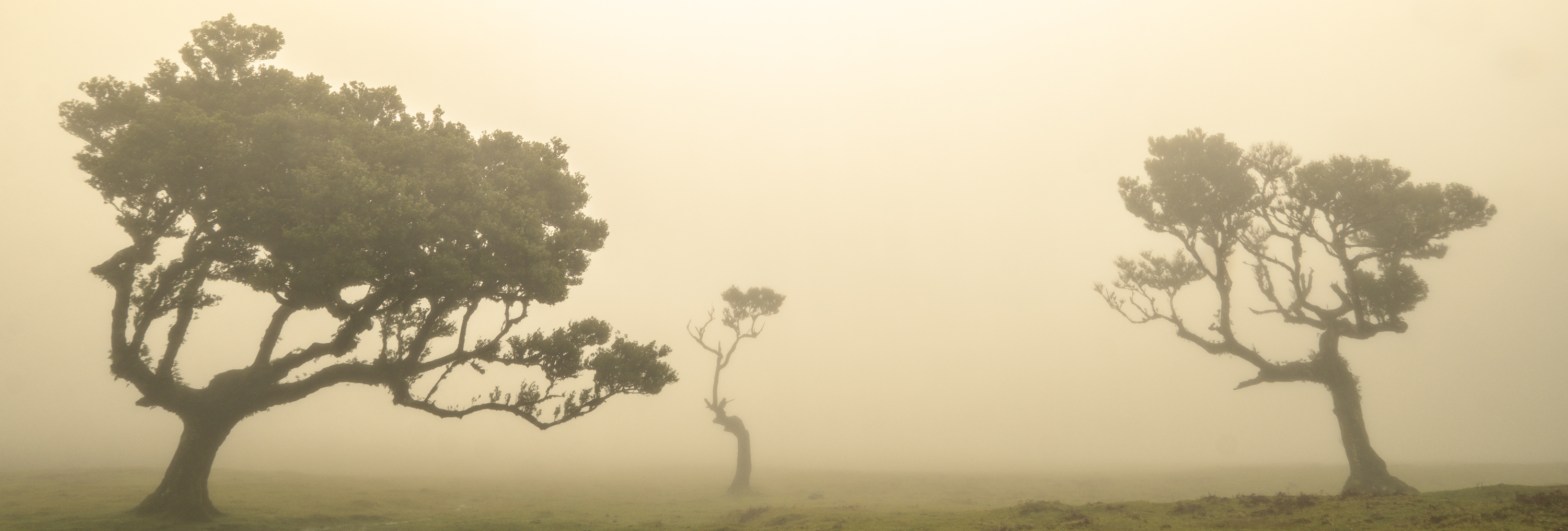
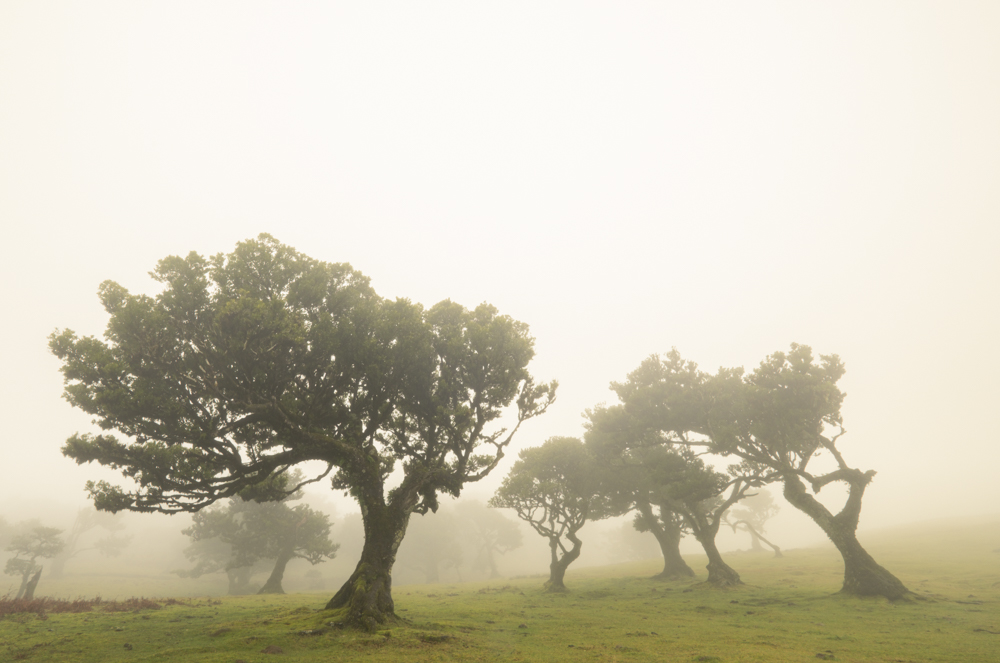
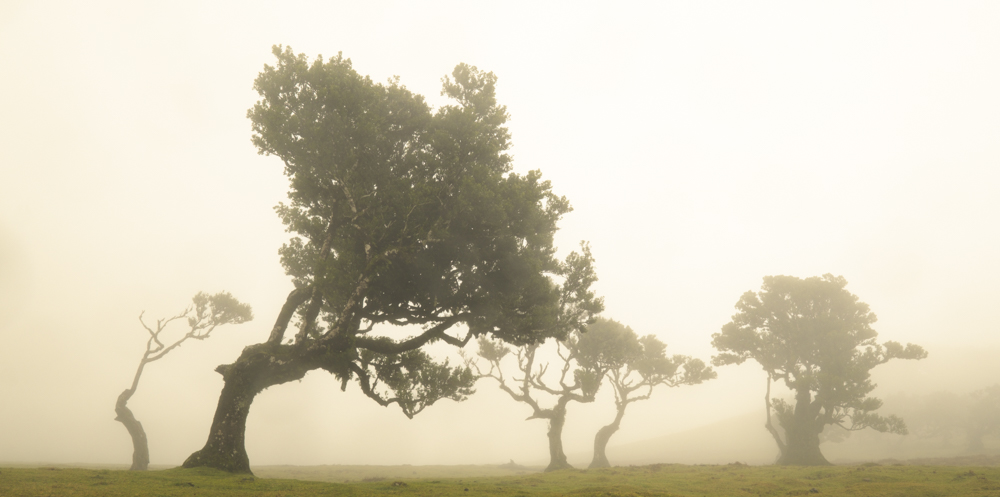
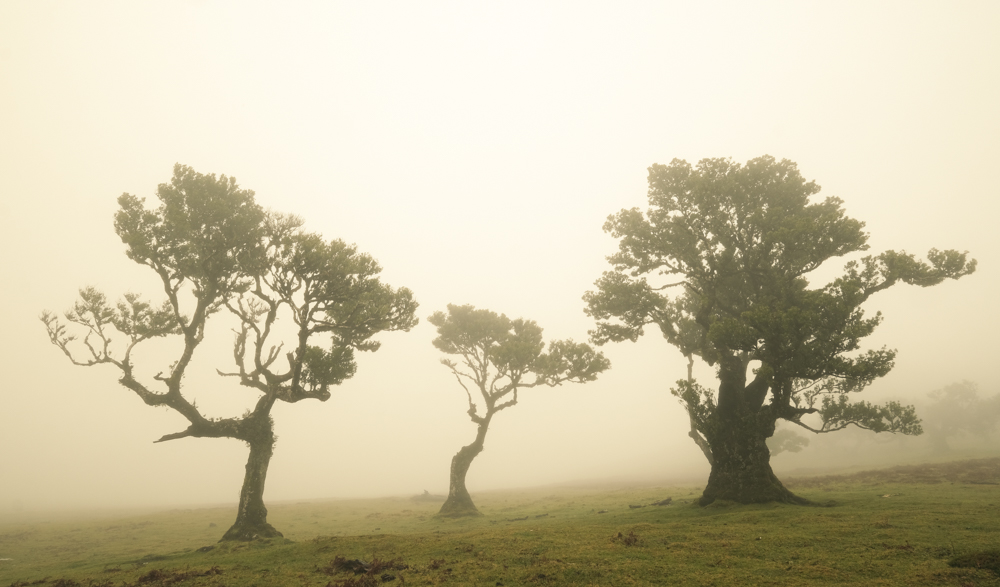
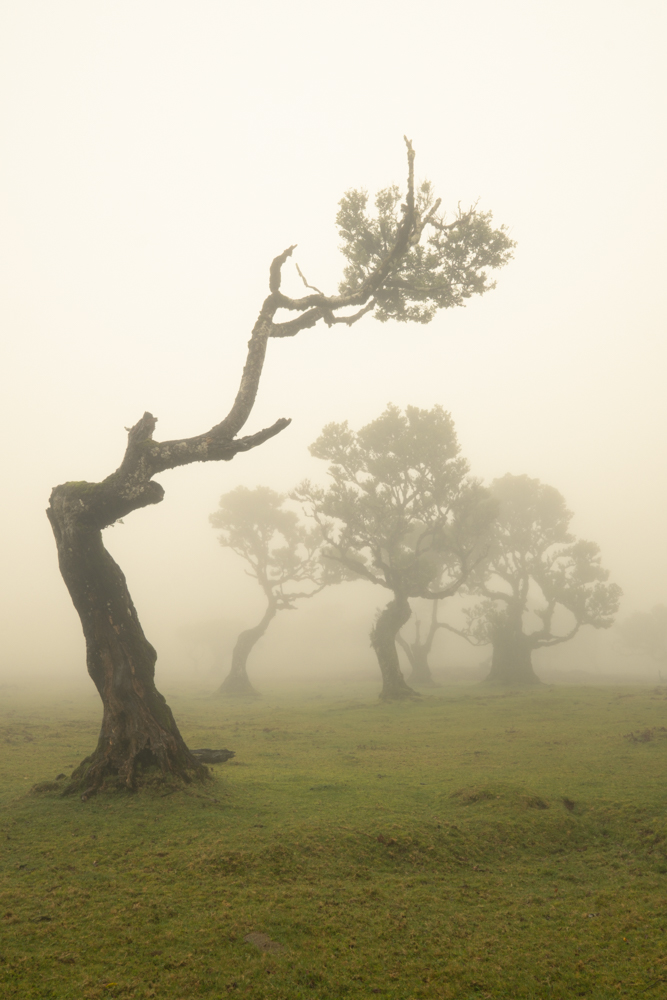
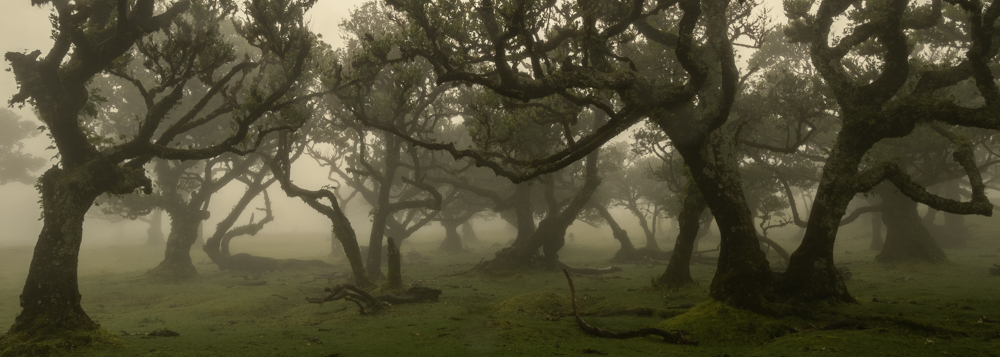
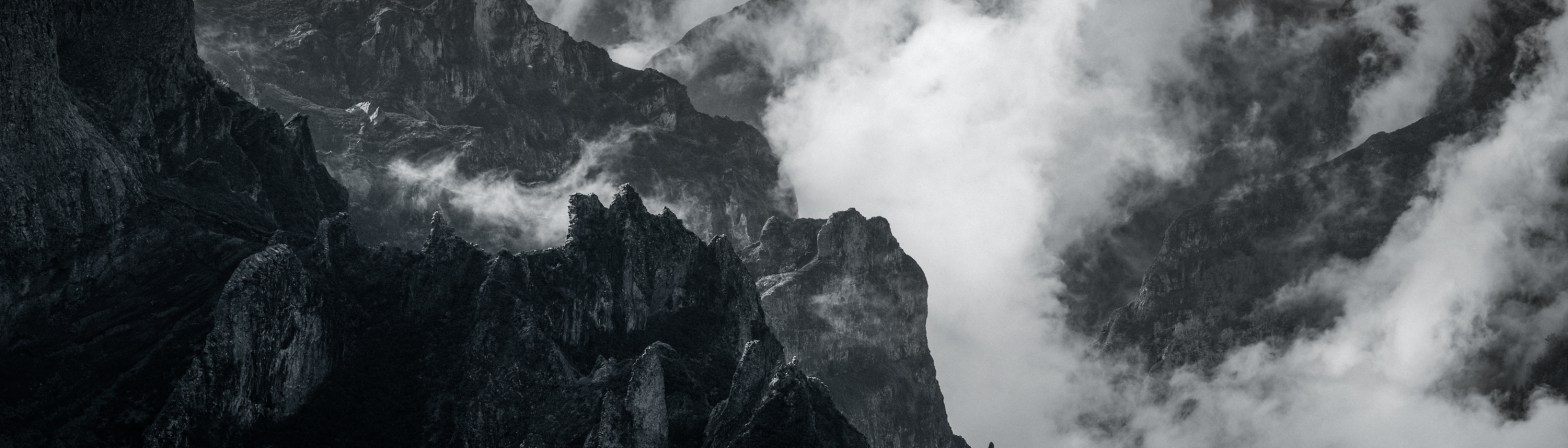
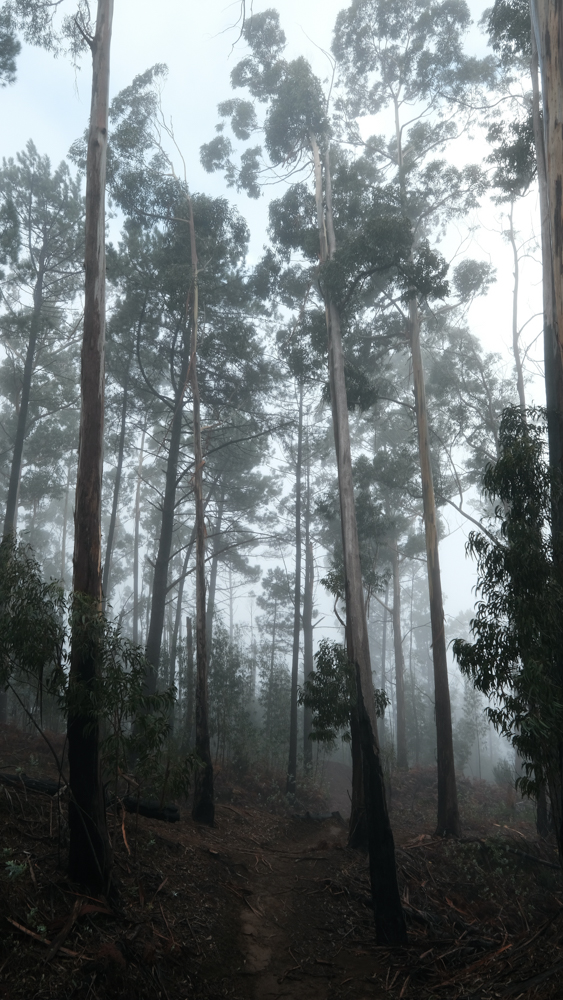
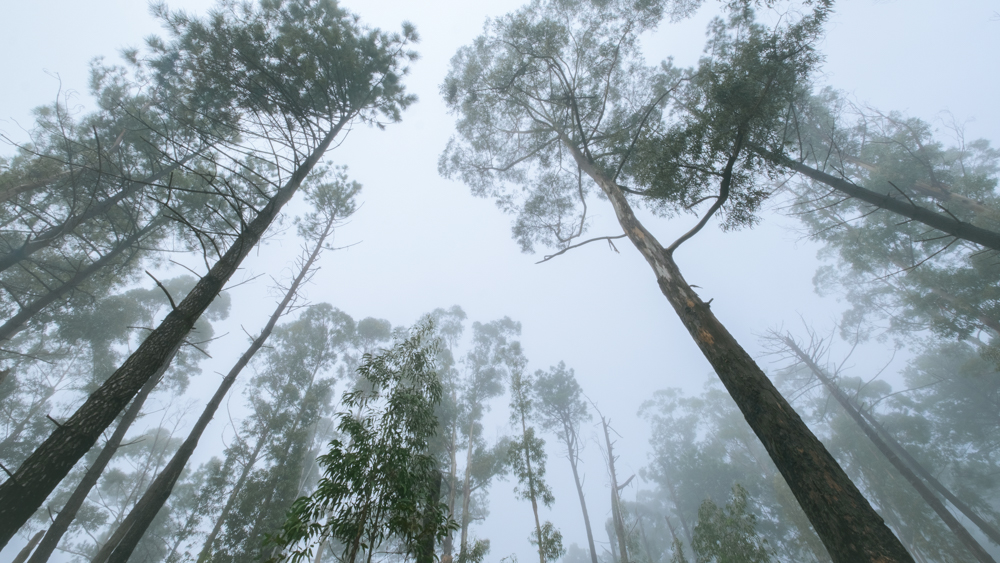
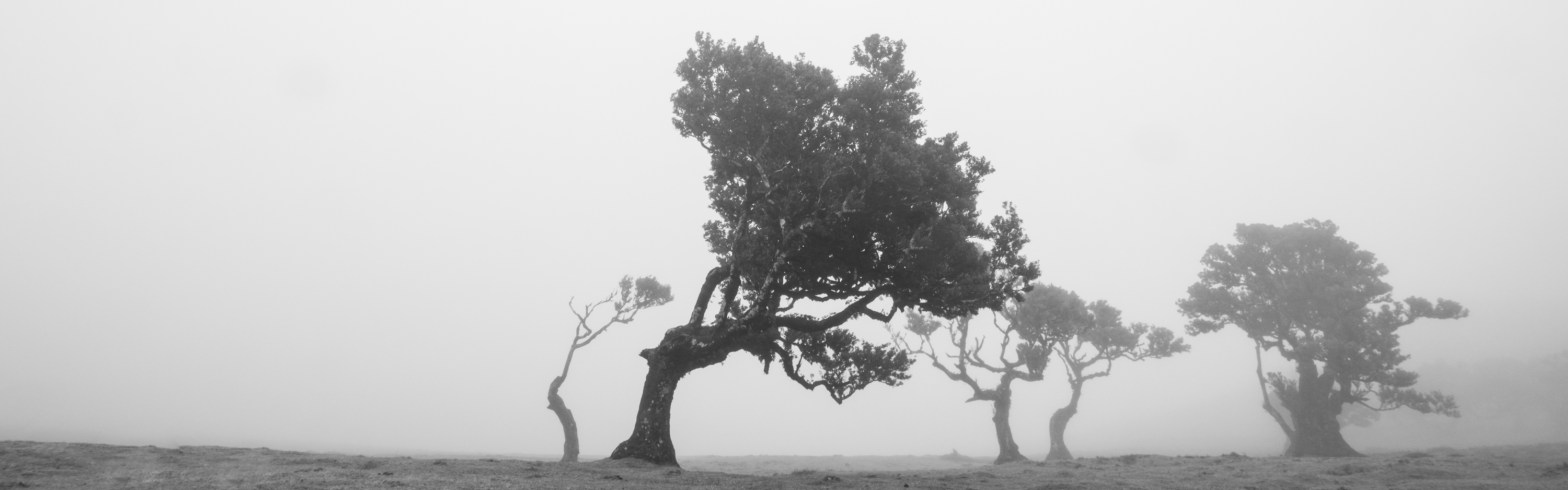
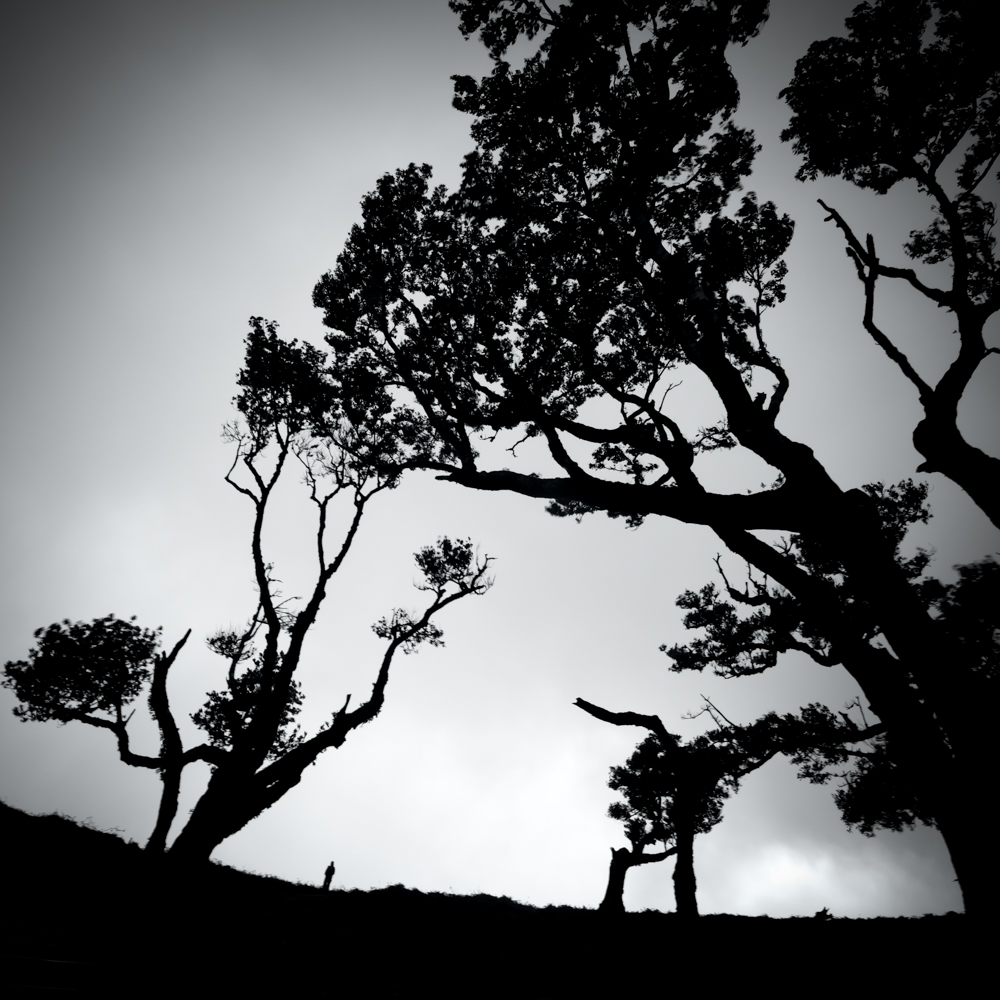
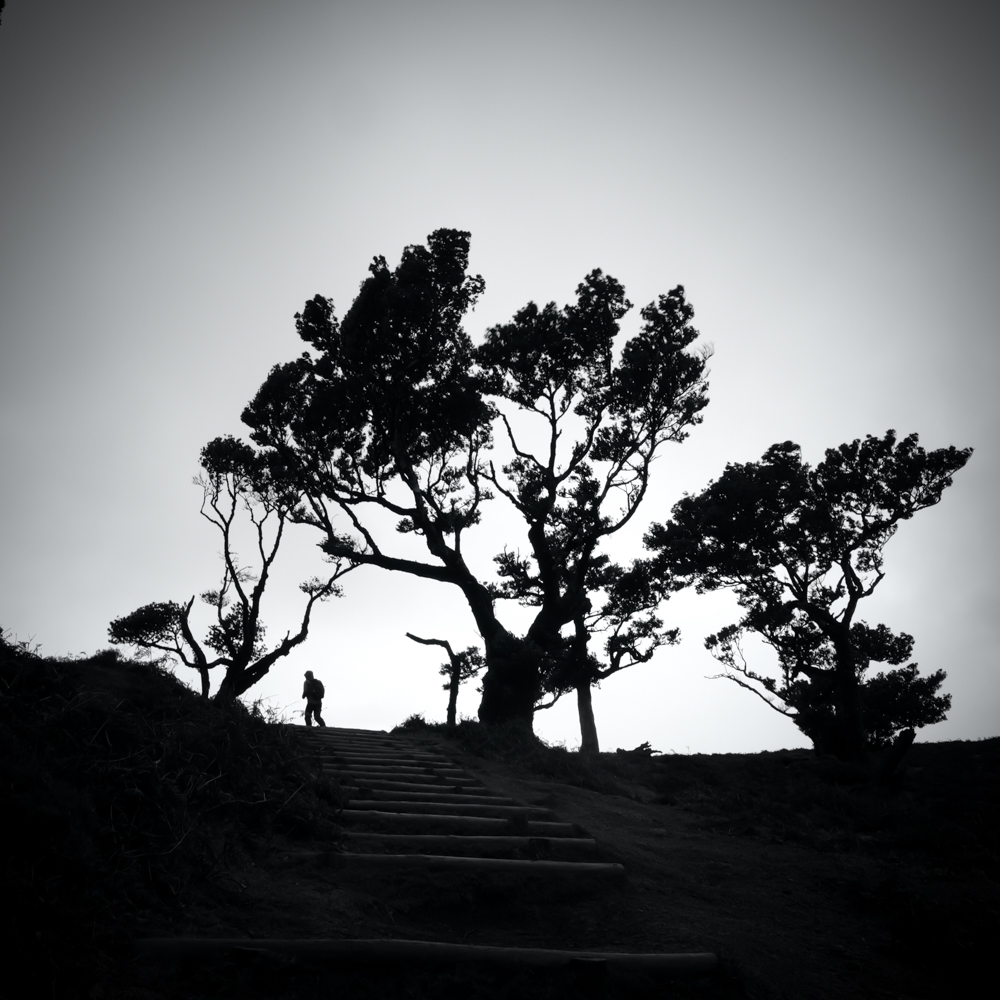
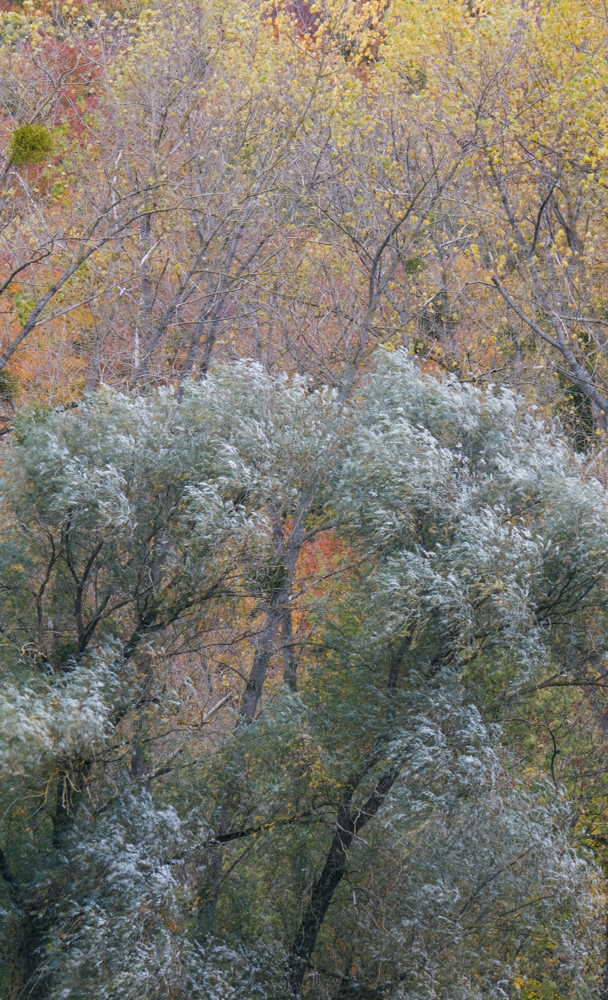
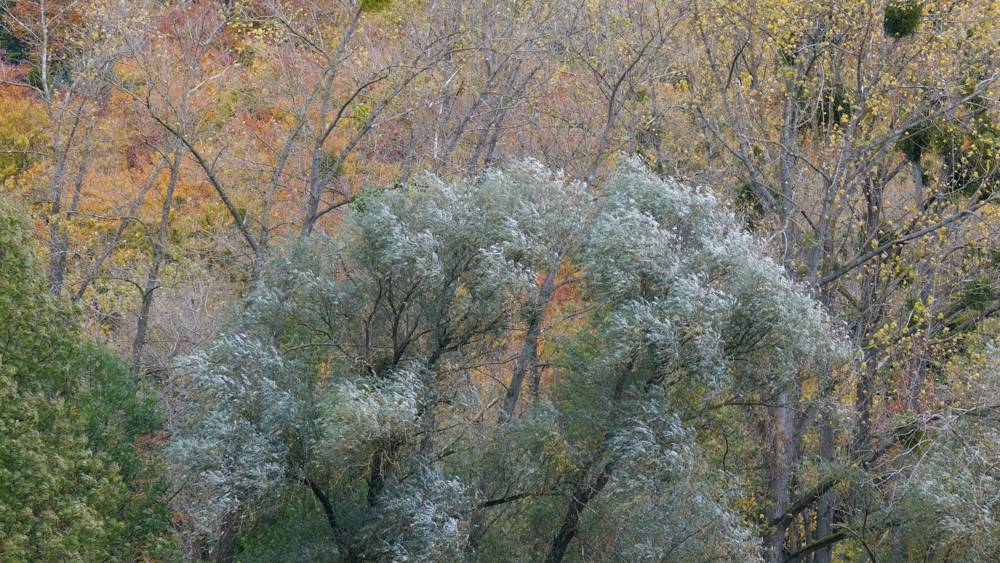
Heavy rain takes turns with strong gusts of wind. I protect the camera, quickly wipe the lens, take a single shot, repeat. From time to time the sun brightens the clouds directly above. And then again, everything is covered in thick fog and sight decreases to only a few metres. Tourists stop in the car park, wait for a few minutes, and leave again. I am lucky that my significant other patiently waits in the car while I battle the weather. There is little chance to check how the photos look – since my camera isn’t weather sealed, I am more concerned about protecting it. The trees around me dance in the wind, characters of long forgotten legends, rooted deep, and yet it seems as they are moving with every step I take: From the lonesome warrior, to the sheltered child, to the ancient sage.
Triviale Maschinen haben nur einen Zustand: Sie liefern auf denselben Input immer den gleichen Output.
Heinz von Förster
The quote could be vaguely transcribed as ‘Trivial machines have a single state: Given the same input, they always produce the same output.’ In contrast, for non-trivial systems the output not only depends on the input but additionally on an inner, possibly unknown, state of the system. This inner state evolves with every given input and, thus, the same input can lead to different output. In other words: the output may seem random to an observer as it also relies on the complete history of inputs processed by the system, reflected by its internal state.
Using this bipolar framework to describe actual systems can be challenging: When I type 2+2 in my calculator it will always yield 4. It’s apparently trivial – until the environment acts upon it and the batteries run out, the circuit board becomes corrupt, or the display breaks. If my bike would always give the same output when I start pedaling, I would be much more satisfied and my local bike shop would go out of business. If computers really were trivial, a whole lot of IT assistants could look for a new job right now. Systems decay over time, they are error prone, they are subjected to the very same universe we are.
Another approach might be to not consider it as a binary decision, but a continuous scale of triviality where systems are ranked based on their robustness. In a probabilistic sense, the calculator is rather trivial as it gives the predicted output in a quantifiably large majority of cases. In contrast, living systems are on the other end of the scale and highly non-trivial since they exhibit wildly different behaviour in seemingly similar situations.
However, when system are ranked on such a scale of non-triviality, problems arise: How should I work on this very laptop when I assume that it could fail me anytime? If I would admit its non-triviality, I couldn’t work in the first place because it could give any output, independent from the keys I am pressing. This example seems a little daft, but when transferring it to human interactions, the exact same applies: How should I communicate with my colleague about work issues when assuming that the output will be determined by a non-trivial living system? How should I forward instructions if the output is uncertain anyway? How could I coherently speak with my partner about serious topics when my input has potentially little effect on the output?
We constantly trivialize the non-triviality around us. We do so because it is necessary. When I am typing in my calculator I expect a correct result. When I am asking a question to a friend, I expect to get an answer. Not because the answering system is trivial, but because I have to assume it is in order to ask the question in the first place. We trivialize machines, we trivialize humans, the reactions of strangers, friends, and partners. And if the output is unexpected, we don’t blame our foolish assumption of triviality, but we blame the system itself. And the scale isn’t really one that describes the non-triviality of systems, but rather a scale of how much an observer trivializes systems.
Where does this lead? Potentially nowhere; there might be other, potentially more useful, distinctions to draw. But when drawing this distinction, I am wondering in which cases it might be wise to begin to acknowledge the non-triviality of systems.
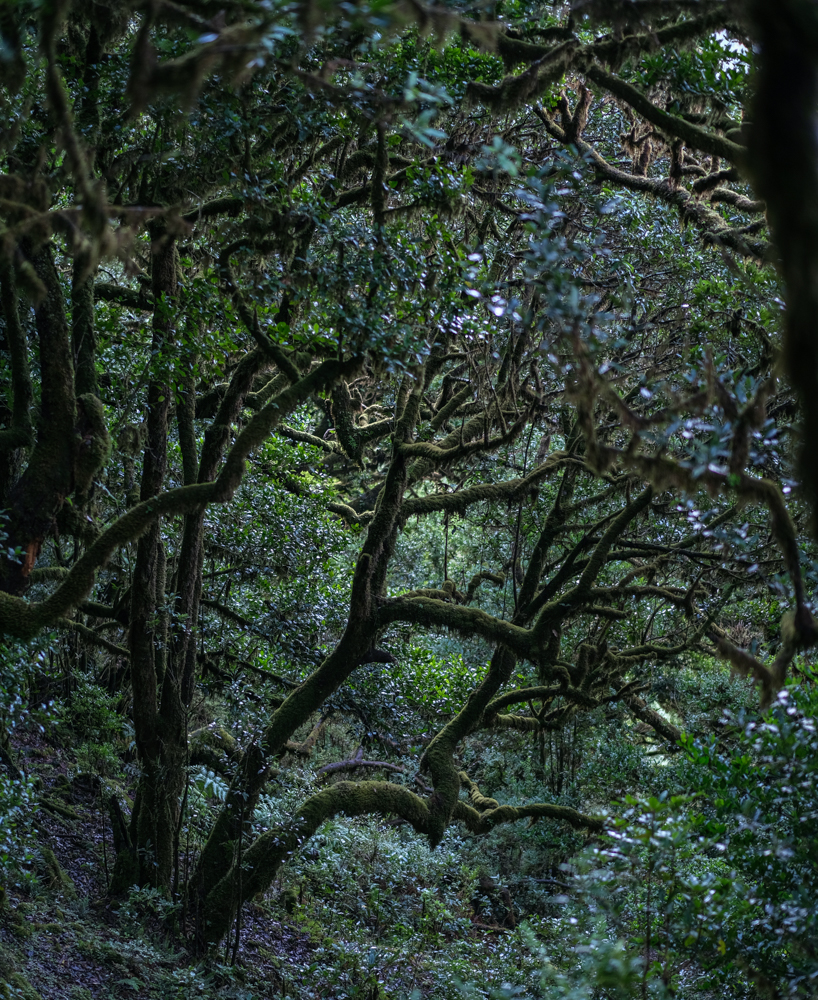
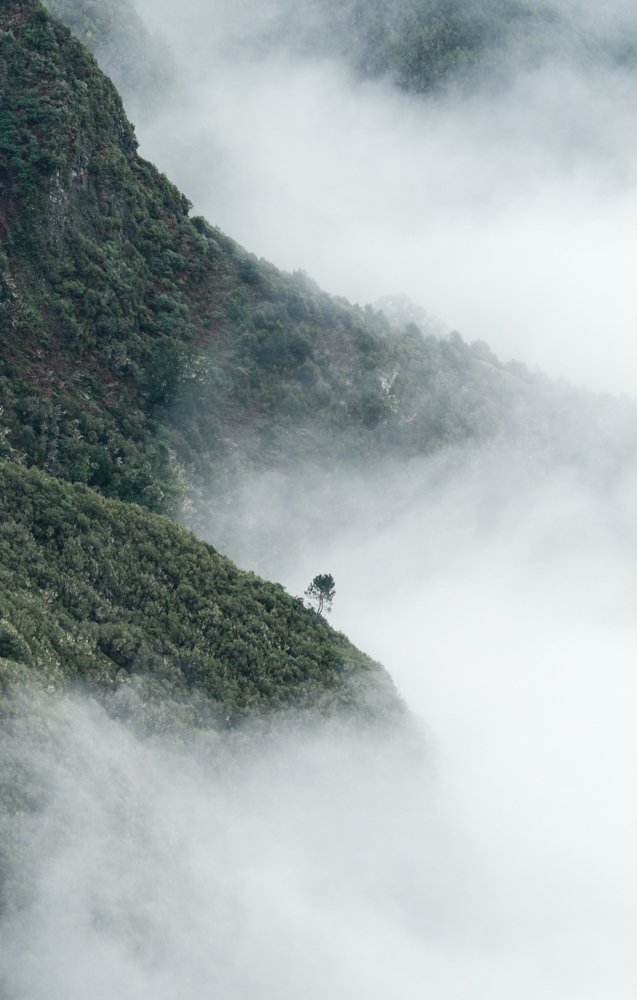
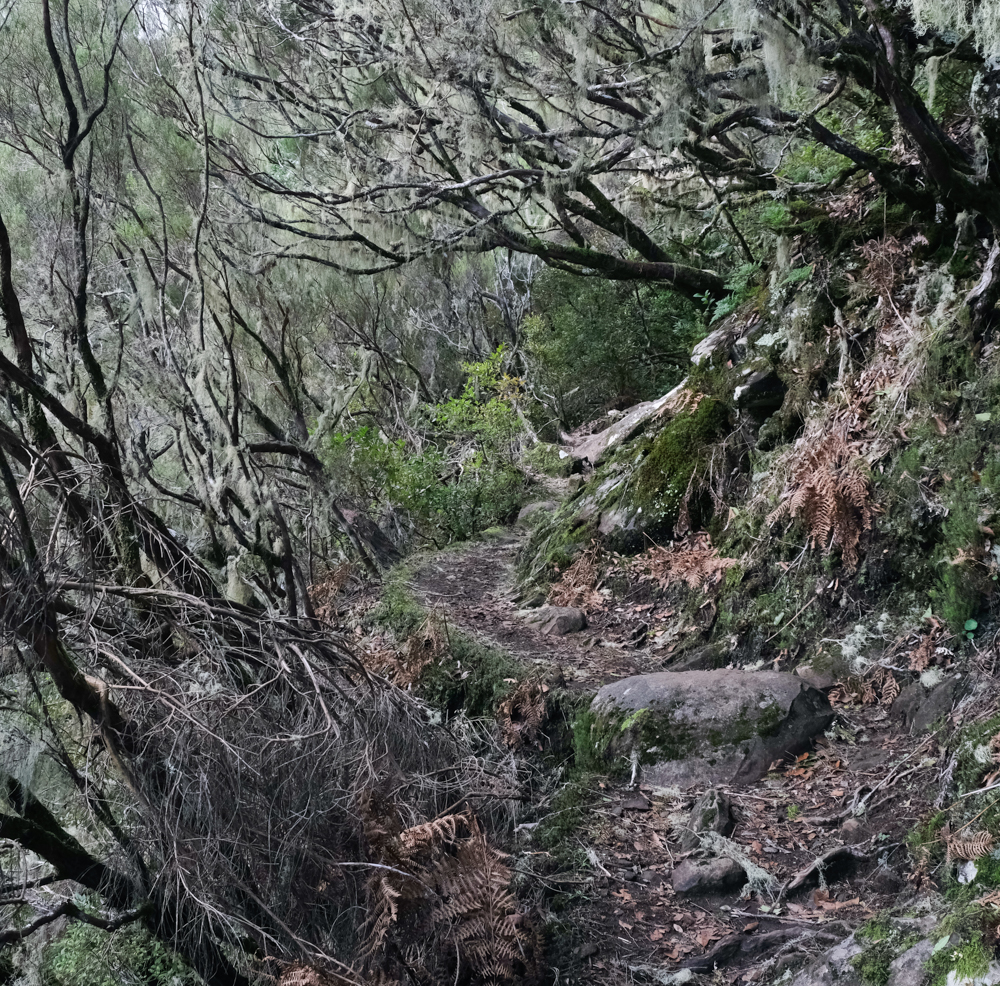
Above the small village of Ribeiro Frio, known for the breeding of trouts, a plateau promises a view towards Madeiras seconds highest peak: Pico Arieiro. The hike follows a narrow path along Levada do Furado. Mist rises from the valley deep below and the sun has brief appearances below the dense canopy of leaves. After following the Levada for a while an arduous ascent begins. We pass a hidden spring, wriggle through low-hanging branches, and cross small meadows with flocks of kinglets. In the end we reach the aspired plateau, but the reward remains absent: Instead of the expected peaks of the central mountain range, we can only see clouds of rain.
This post is rather provocative – the judgement of its seriousness is left for the reader.
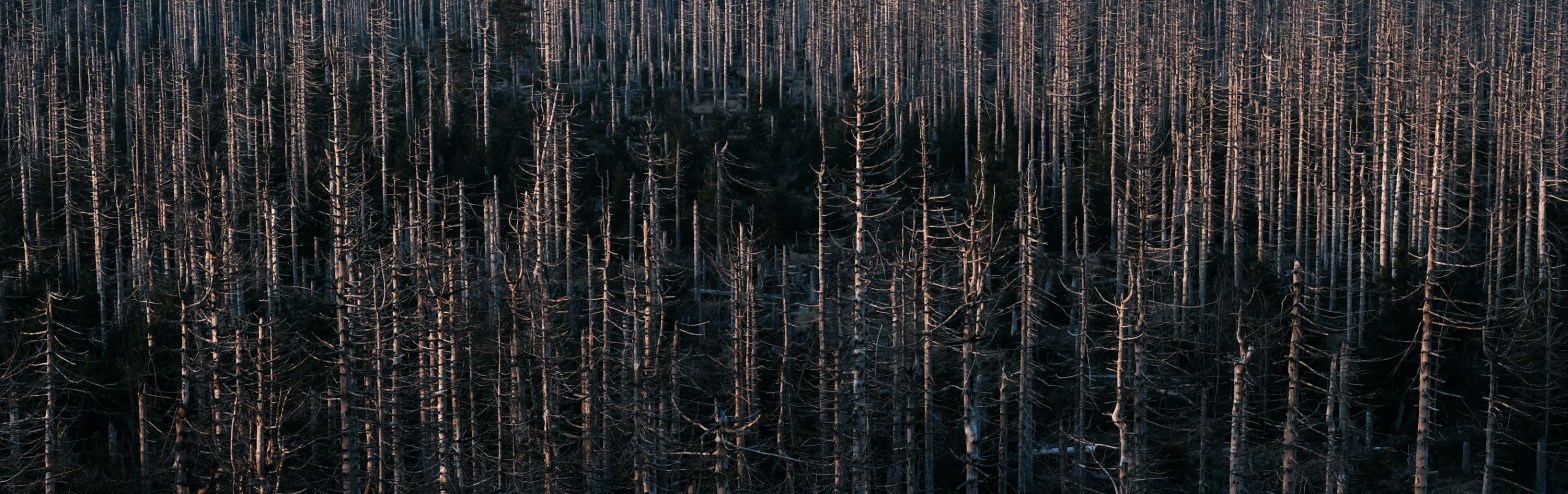
Way too fast, no breaks, a wall of bricks ahead. That’s how the climate crises can be described. Unprecedented floods, soil dried out for years to come, dying forests, 10 years in a row with highly increased temperatures, glaciers melting at unprecedented speeds. North-west Germany will become significantly smaller, the question is not if it happens, but when it happens.
And out there, some honorable organizations and non-profit associations fight. They fight against the crises, against politics, and for our planet. They try to find some breaks, to dampen the impact, to bypass the unavoidable. Fridays For Future, Extinction Rebellion, 80000 Hours, the list goes on and on. What they do is important and could be our last hope for an ordinary future. But there is an inherent assumption to their philosophies, silently hiding, rarely talked about, let alone discussed, but critical as no other.
They not only fight for the planet, they fight for us, for the human race. They assume that the we, humanity itself, should be saved as well. That the continuation of our species is inherently good. An assumption that is not grounded in any observable truths, but originates from a pure instinct of self-preservation. From the urge of dominance and feeling of supremacy that seemingly has been inherent to our species for a long time now.
Extinction Rebellion is branded as radical and drastic for what they do. They are disregarded as being over the top. But what if they are not radical enough? What if this underlying assumption is just plain false? The fight for both things at once, humans and earth, is impossible. It might be that these goals are diametrically opposed. Since our species has been expanding, it has eradicated everything on its rise. Why should it stop? How should it stop? The planet won’t generate new resources. The change of human nature will be too slow. It just might be that this planets only rescue is the downfall of us. If earth should be saved, maybe we are already heading in the right direction: Way too fast, no breaks, a wall of bricks ahead.
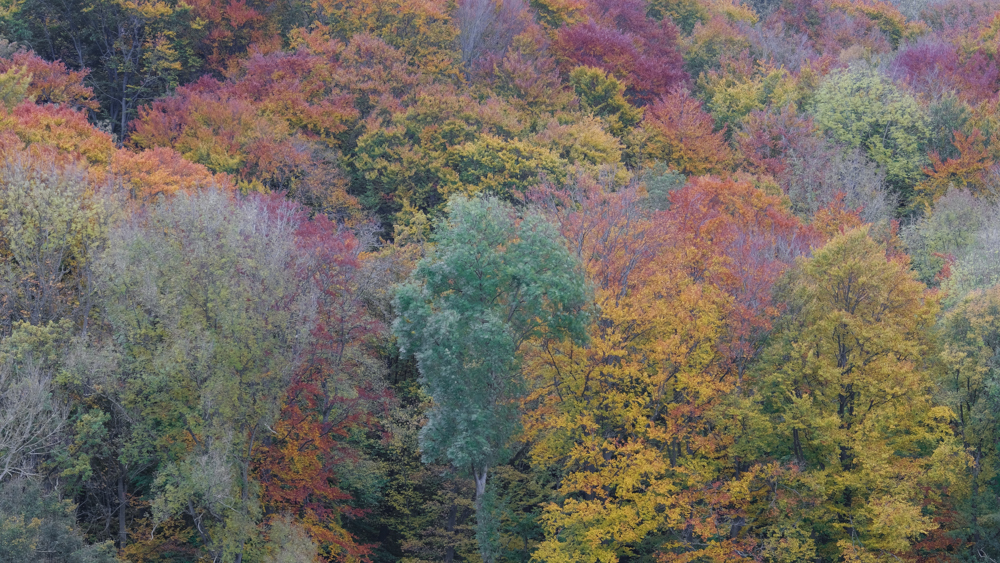
The Fanal forest on Madeira – probably one of the most photographed stretches of woodland in Europe. I thought that, by now, I enjoy the more simple and unknown scenes nature has to offer. But I have to admit, sometimes the hot spots of photography are revisited over and over for a reason. Fanal is wonderful. However, getting good conditions is an endless waiting game. Persistence is perseverance in spite of exhaustion or frustration. Persistence is the characteristic of data to outlive the process that created it. This was our first of three visits to the forest; this time during heavy rains and strong winds, but no clouds.
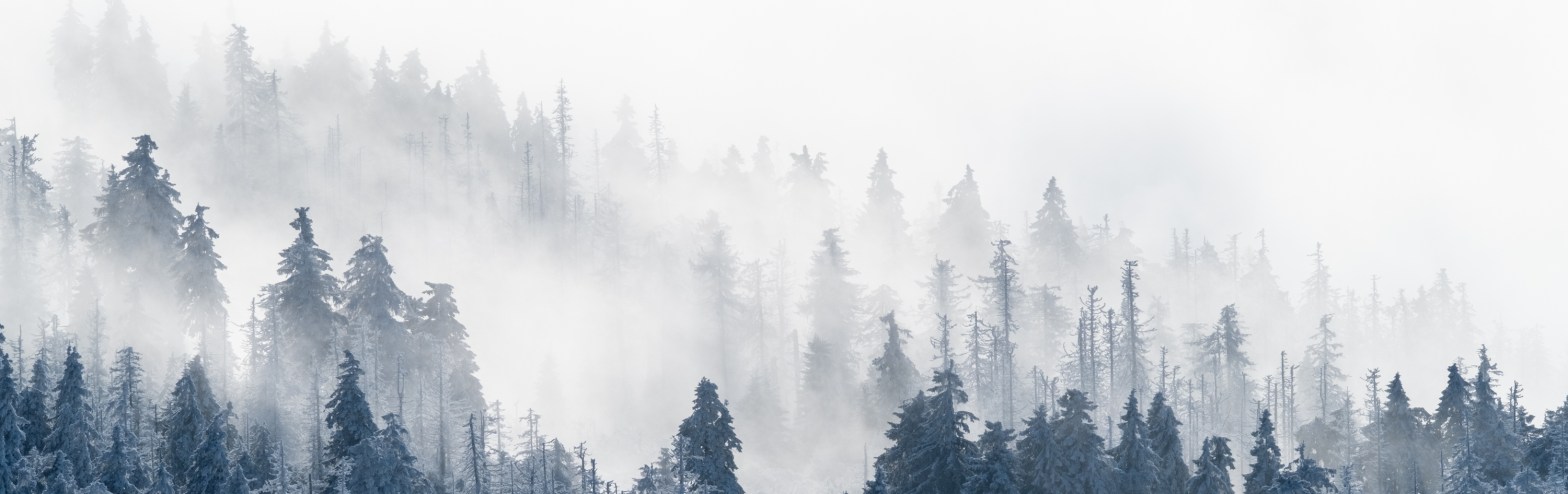
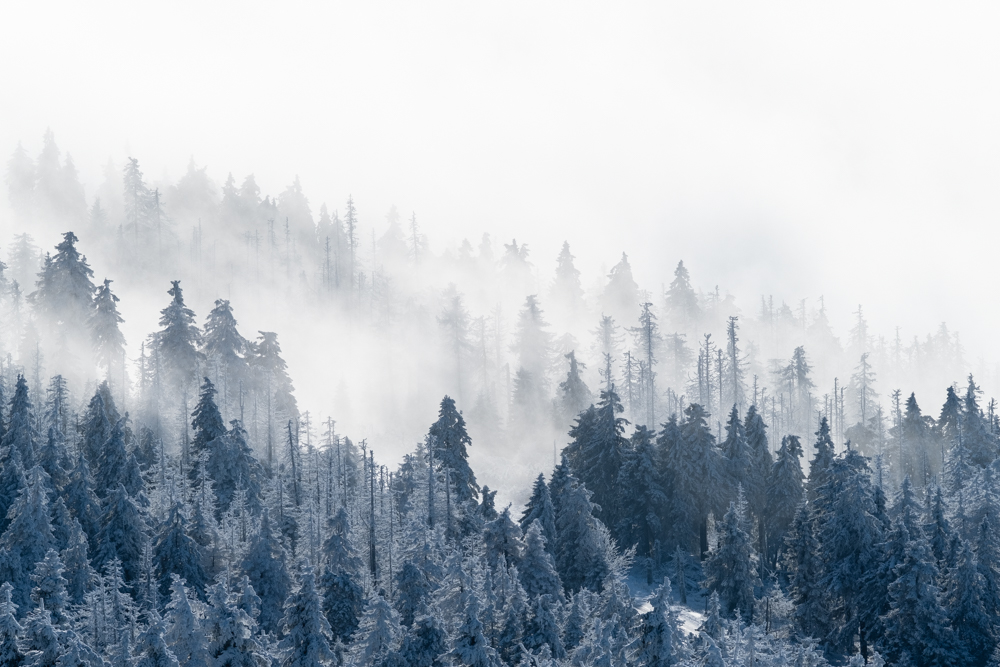
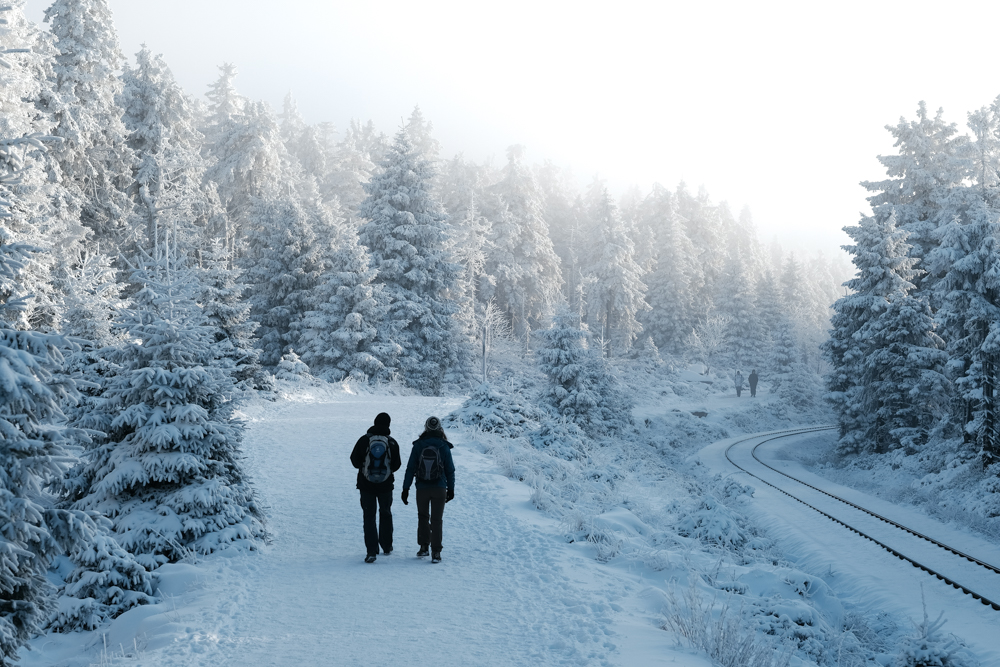
First snow, crisp air,
blue frost, white glow
buries despair,
and slow I go
onward.
From
parallel trees
lined up with ease,
to twigs that please,
like limbs, appease
the camera.
And clouds rise high
try to defy
the gravity.
As does my mind
left far behind,
outpaced by steps
towards the peak,
wandering blind
through some old week.
But now and then
it sure does speak,
with care: Beware! –
Do neither sink
into the past,
nor outrun now;
instead allow
to be, at last:
right here, right now.
And here, right now,
it's marvelous:
Another world,
curled into snow,
furled onto film,
pearled, carefully,
by ice and frost;
my soul gets lost.
And save to say:
Somehow,
it's winter now.
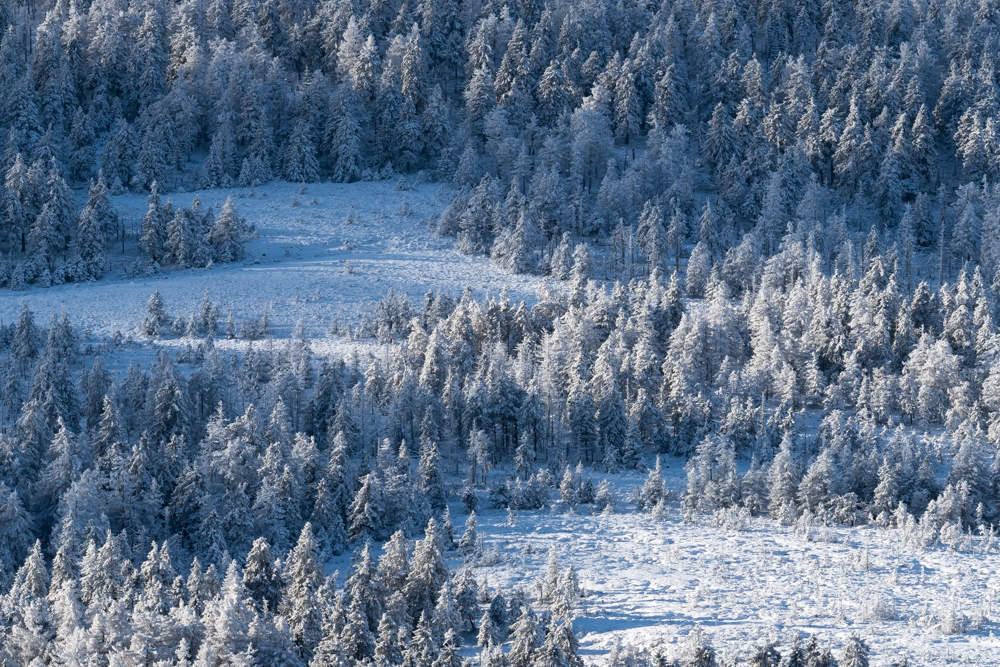
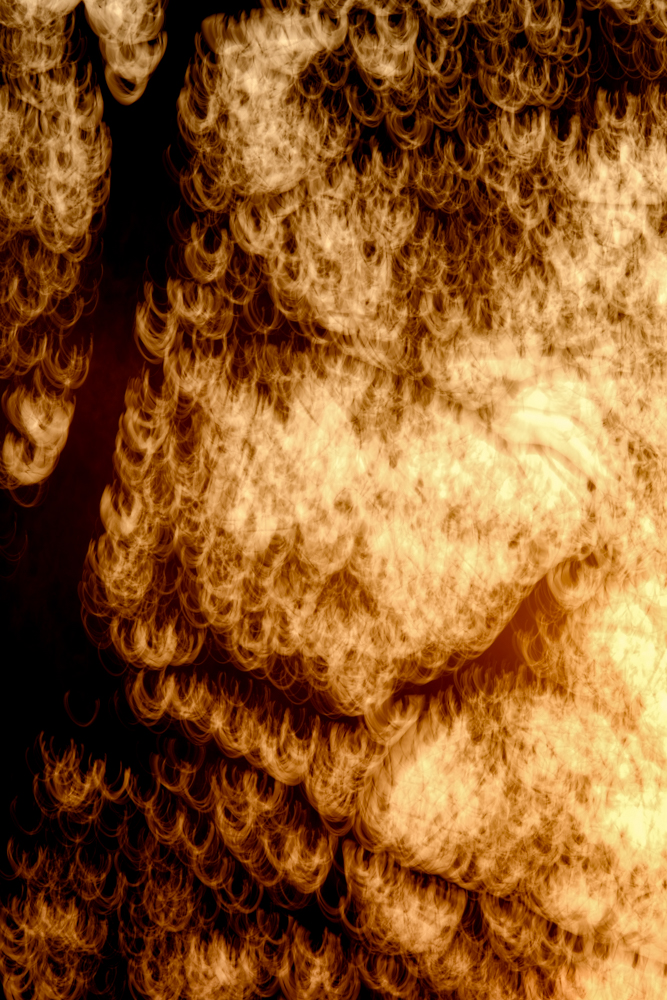
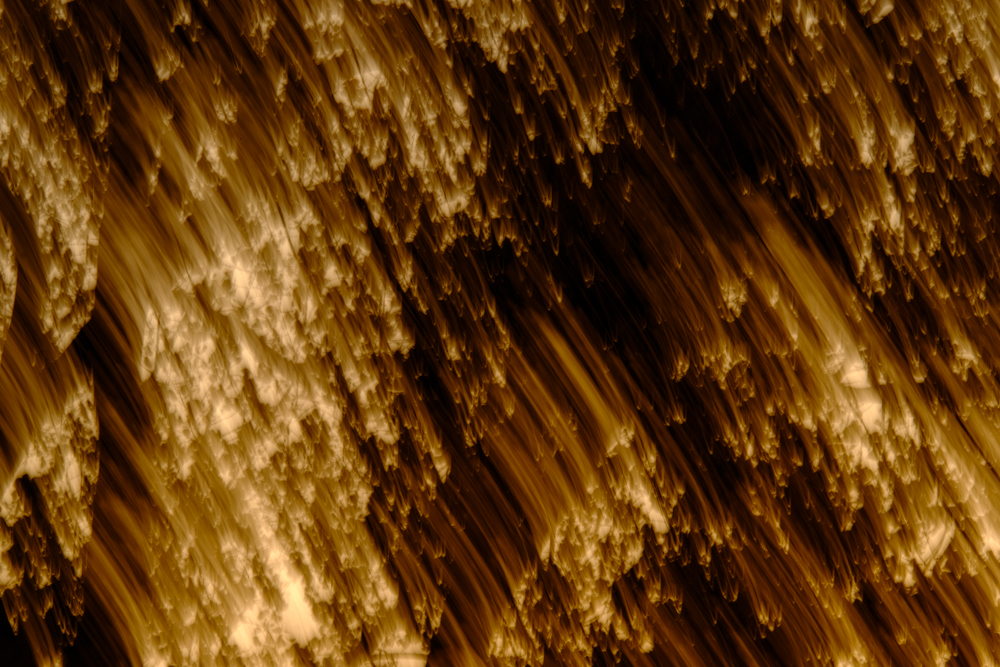
If finding an exact solution is not possible, perturbation theory provides a framework to build upon a known solution for a simpler problem. The resulting perturbation series can then be utilized to approximate the solution to the original, more complex, problem. If a simple picture does not work, perturbing it might result in the emergence of previously non-existent forms that produce structure. Thus, the more complex procedure while taking the photo can result in pictures of greater simplicity.
Happy endings are pleasant. They are comfortable. They are liberating. They are desired. The good overcomes the bad, the mission is successful, there are flowers, firework, and love. People want happy endings. And sometimes, I do as well. It’s easy going and fun. All the hard pain pays off, the characters I rooted for achieve what they deserve, the reading experience is exhilarating. The ring gets finally destroyed, Voldemort is gone for good, and all the rest lived happily ever after. These stories are, and stay, fairy tales.
But, most often, those stories are not the ones that inspire me the most. Instead, it’s the other kind. The ones that do not end well. The ones that end how most things end: In chaos and hardship, and without loved ones. The stories that feel real. And it’s not because they do not portray happiness. It’s because how they portray happiness. In fairy tales, the happiness only comes in the end, after all bad is gone. But without an happy ending, the happiness has to be portrayed in between. During the struggle, despite the struggle, because of the struggle. They teach courage and perseverance. These stories are the ones that move me, move my heart, that have the potential to cause real change. Because there is no ever after. There is only now to find happiness.
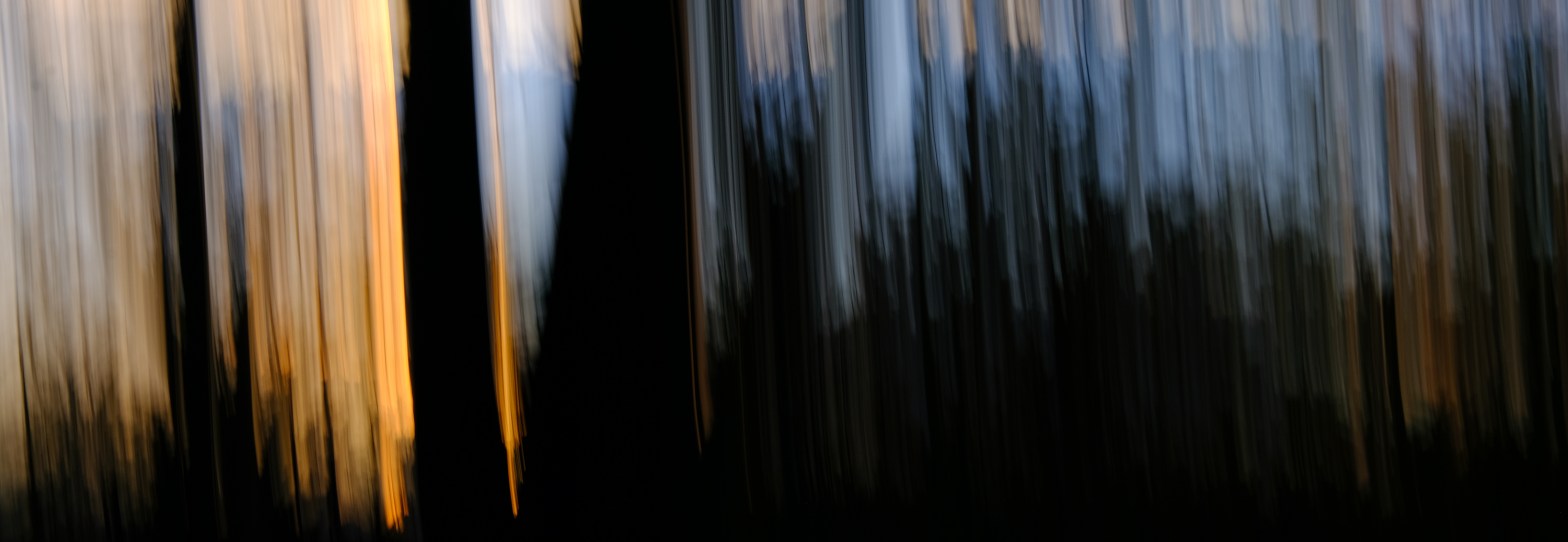
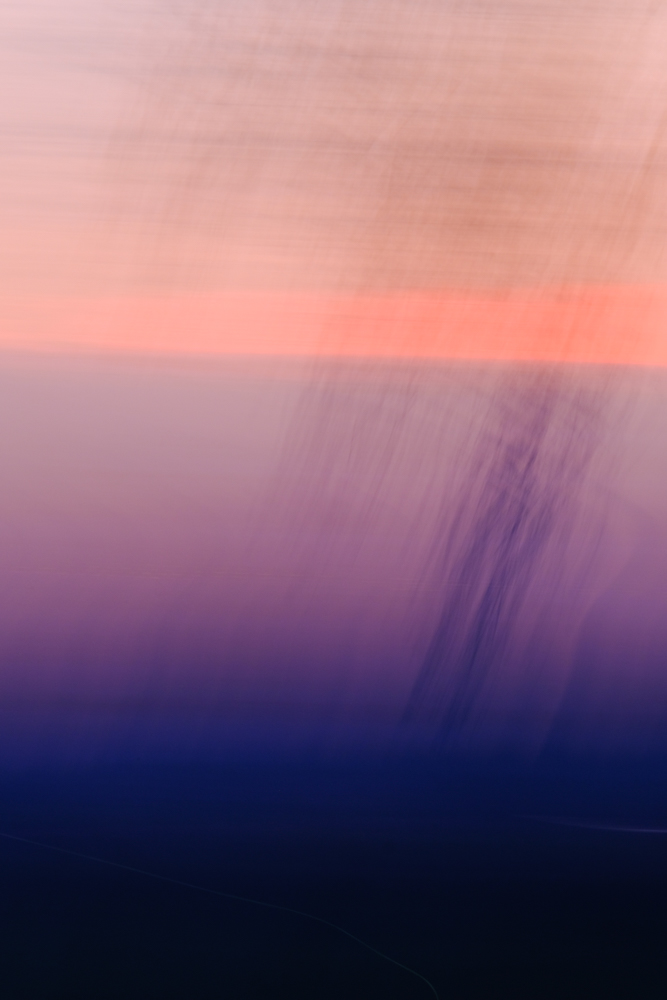
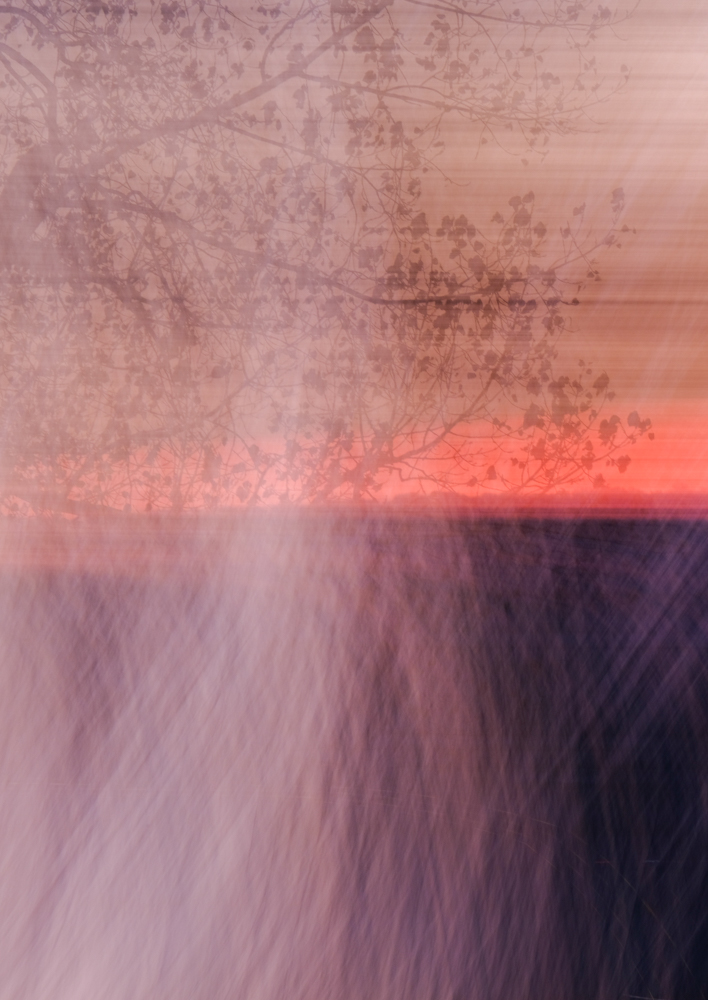
Someone recently told me that she doesn’t like the ‘blurred’ images I have started to share frequently. For a moment, I was a little taken aback. But actually, by now, I am pleased she told me. It reminded me that I picked up photography for myself. I think some of these images are among the best I have taken so far. Others are among the worst. I greatly enjoyed taking all of them, and I find great pleasure looking at them: Blurring the line between reality and fiction.
When I started photography I had no plans, no vision. Now, I have countless. And it has gone far beyond the plain attempt to depict some sort of reality or to take holiday photos. It’s way more: abstract, documentary, emotional, attractive, engaging. Blurring the line between photography and art.
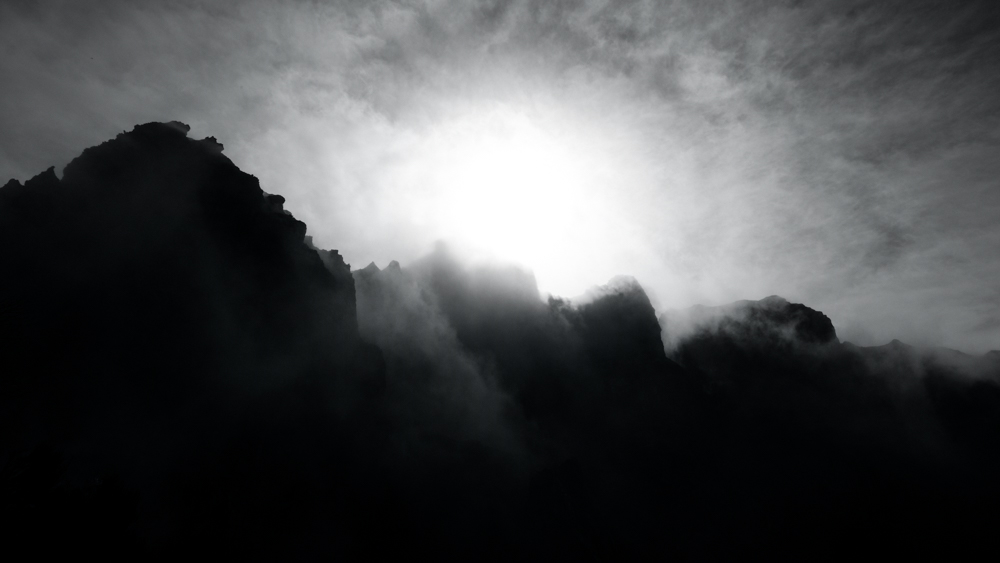
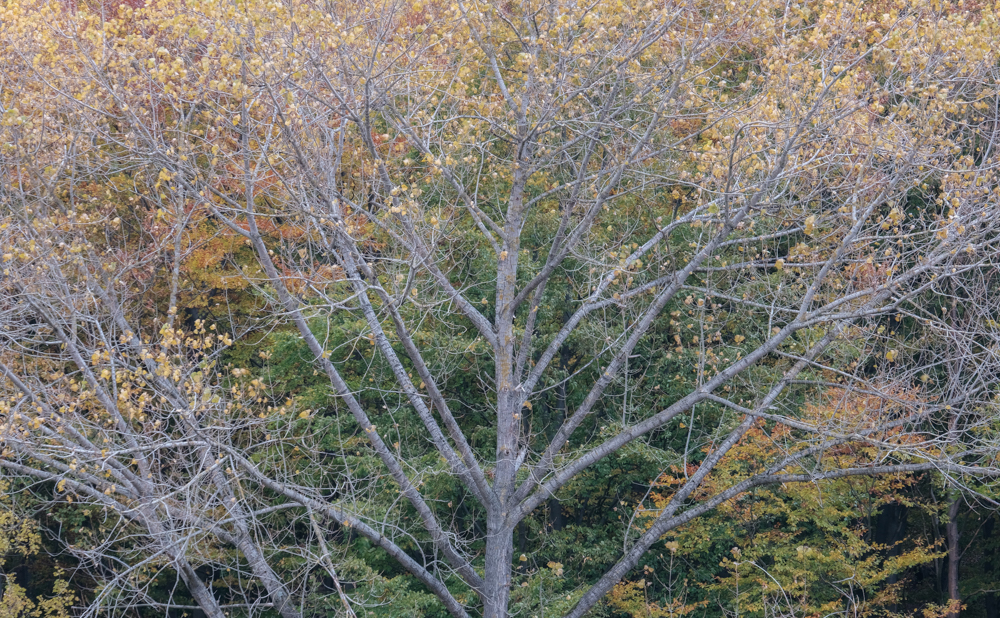
In the beginning, I thought that light plays one of the most important roles in photography – and sure, it’s important to a certain extent. But by now, I’ve seen the most incredible pictures from all conditions imaginable. And I, myself, can go out in most conditions these days and come back with something that might work. Sometimes, blurring the line between light and shadow.



















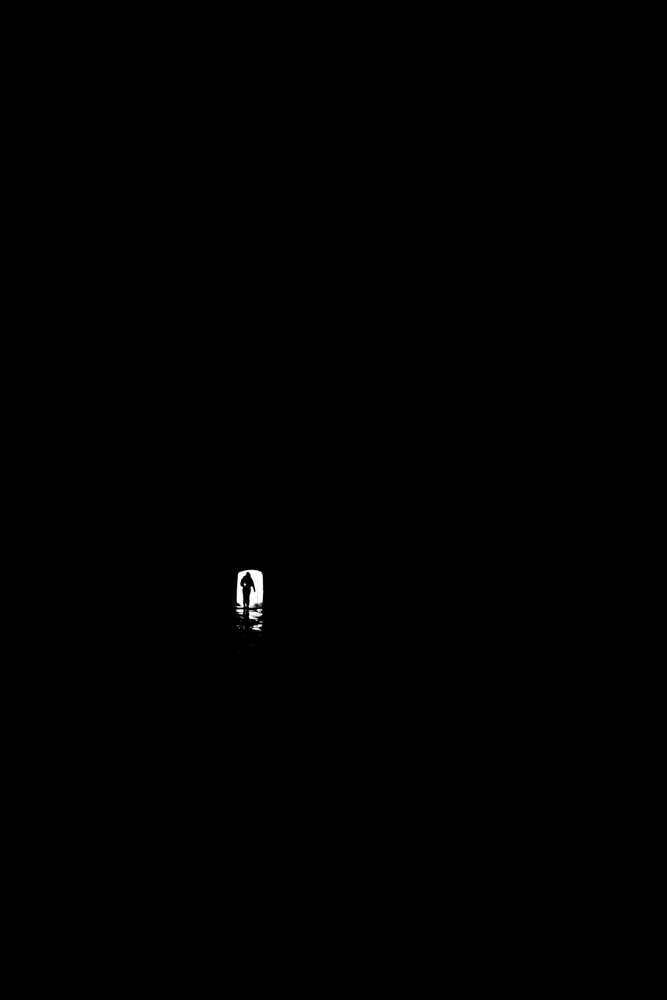


























































 Punkt im Dunkeln