Nothing really new from my side. Important elections coming up in Germany, but everything is as always: Internet and social media create echo chambers where every camp can confirm the superiority of their own arguments. Algorithms distort and decide. Alternative facts dominate and destroy. Little genuine discourse taking place. Four years ago we were horrified about the results beyond the ocean, this time we might elect a clown ourselves.
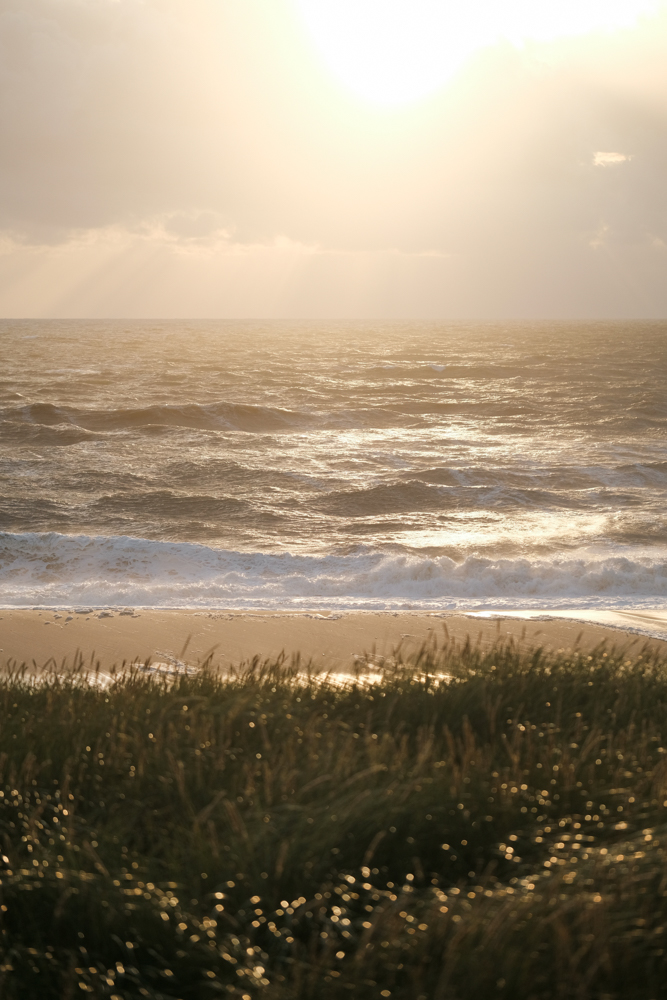
I have pictures for at least five upcoming posts in the queue. But they want to be sighted, sorted, selected, and set up first. The following selection is from our first evening at a seven day vacation at the coast – scenic sunsets, rough seas, wonderful memories. A lot more to come from the other six days.
There is a common thought that the best ideas come in the most unexpected circumstances. While showering, while washing dishes, or while taking a walk. I agree that distraction and activities that leave room for thoughts to roam freely are important; but I also feel that the flip side is just as important and does only seldom get recognition: deliberate creativity.
The walls are empty, stripped from the grimy holds that decorated this section over the past weeks. Boulder problems climbed by hundreds of people are gone. Problems climbed by only a few will be forgotten soon. But the walls are not meant to stay this bleak – new boulders are to be created.
For now, however, the holds are neatly arranged into their boxes; by color and by manufacturer. Large wooden volumes lay on the floor and wait to be placed somewhere on 45 square metres of wall – to change the wall shape and angle. Where to start? Which volume to pick? Which holds go where? What movements to create? How hard should it be? Everything is possible. The number of options are uncountably infinite.
But still, the result cannot be chosen by chance. It needs to be assembled carefully and put together accurately. It needs knowledge, experience, empathy, strengths, and: creativity. The movements shouldn’t feel similar because it will be boring. If the movements are to funky, most people will be turned off as well. Most boulders need to have an element of interest while the body positions still feel familiar. They need to be challenging, but without overloading the customer. All elements of this job require a lot of creativity. So again: Where to start?
Waiting in the shower won’t solve the problem of being creative. And the same applies for taking a walk. The only thing that will solve the task is to dive right into it and start. Routesetting has taught me this important lesson: Creativity doesn’t come to me on its own. It does not always present itself in unrelated tasks. I need to actively seek it out. I have to explore my mind, feel the holds, inspect the wall. I need to place volumes at different angles, arrange the holds on the floor, move my body, move my thoughts. Holds go up, holds go down again. Holds go up, this time slightly better. I try to replicate a neat move I saw. I fail. Instead, I find something new – sometimes worse, sometimes even better. Problems that require specific muscles movements, boulders that require intricate movements.
And if everything goes well, a new set of boulders decorates the wall. For people to try hard, to invest, to train on, to feel accomplishment, to show off, to feel their body, to cheer for others, to fail and fall, to scale and accomplish their goals.
I notice the same in my field of work: mostly, the ideas do not come to me on their own. I need to sit down and actively explore them. I need to draw diagrams and pictures for some hours until a new potential idea emerges. In photography, I do not sit at home and wait for my subject to appear. I go outside, in all conditions, change my viewpoint, change my approach, and only then, if I am lucky, I create something interesting, sometimes even something creative. And lastly, when writing on here: It’s useless for me to wait for the next topic to peak around the next corner; I have to actively engage in thought. And even if it’s not creative, at least it’s about creativity.
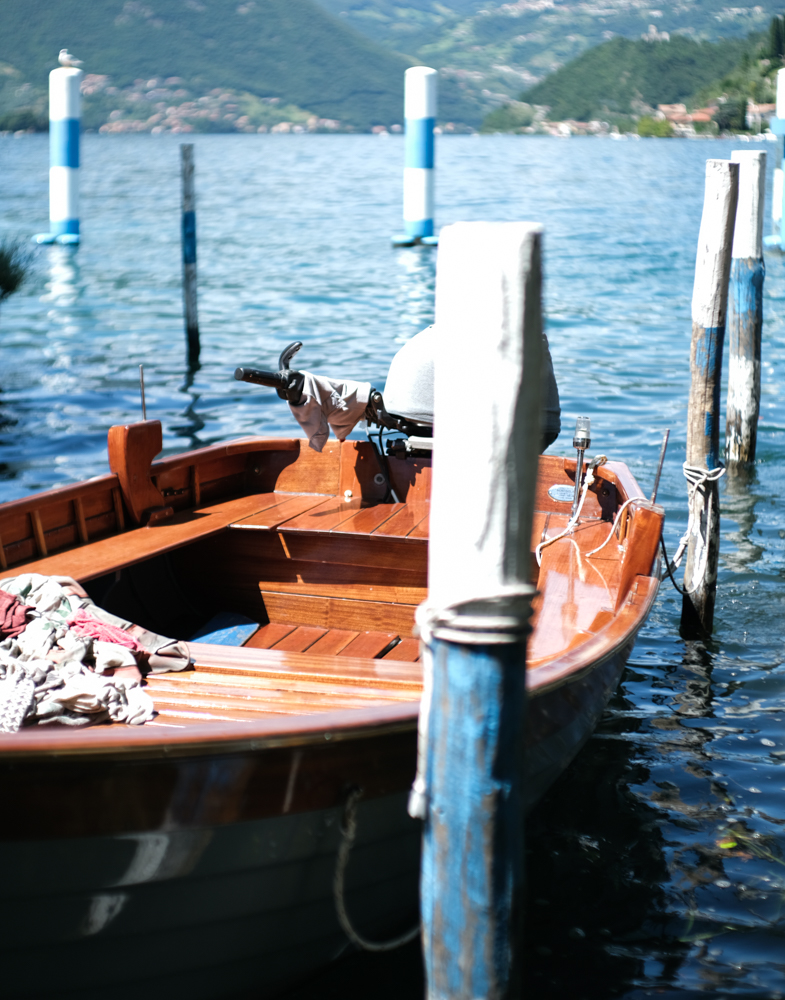
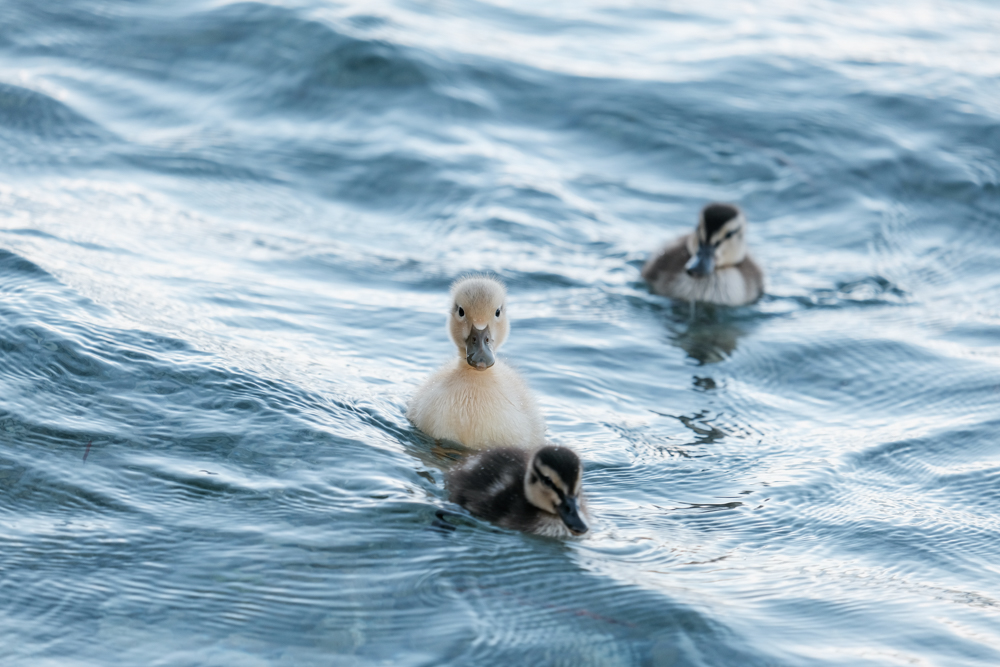
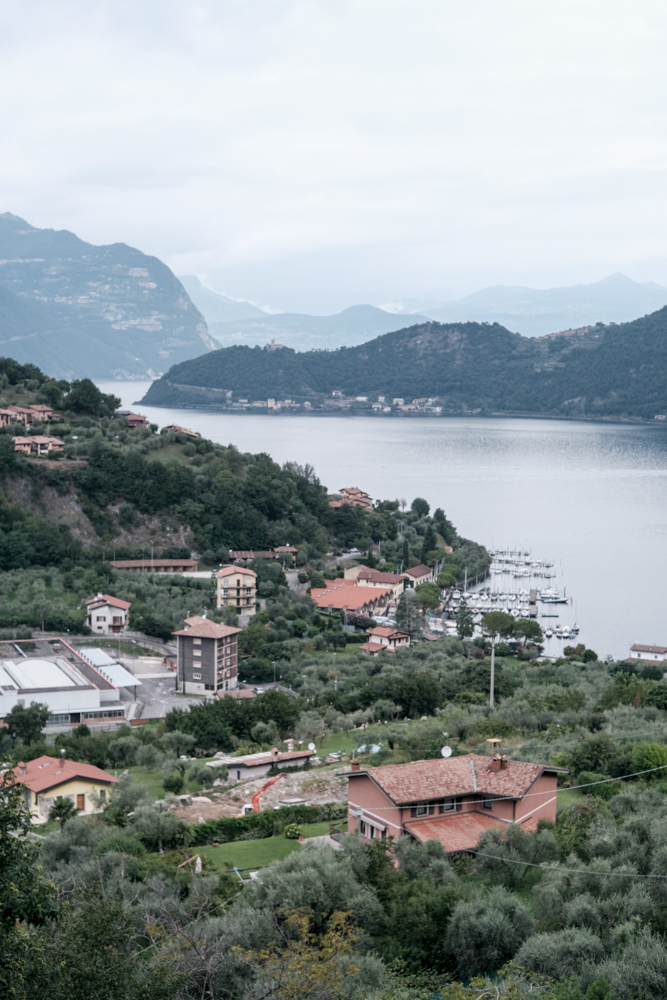
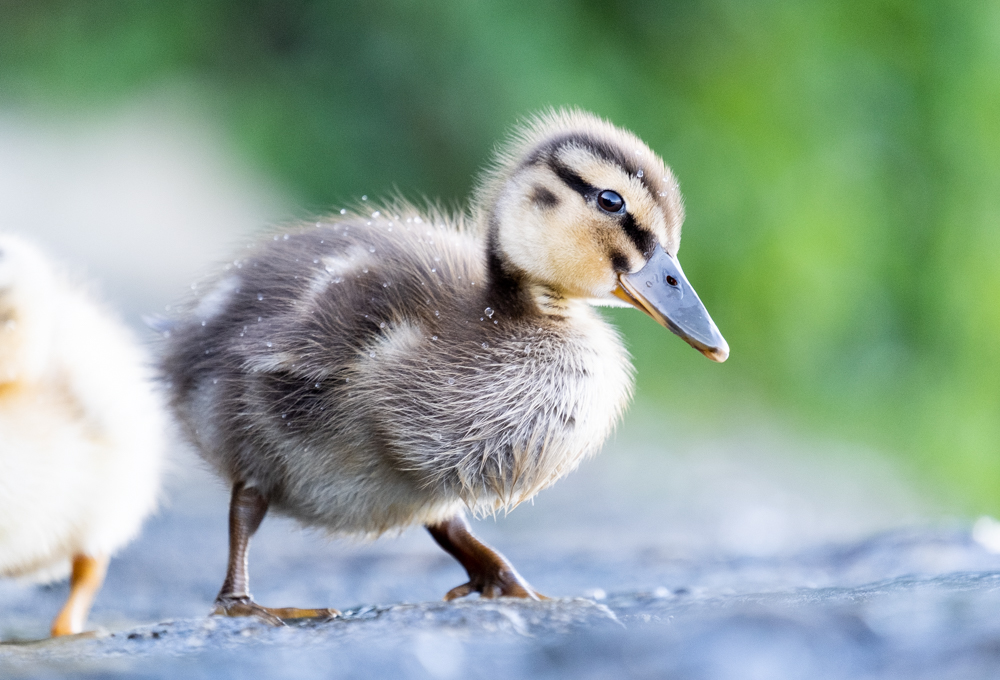
Also, the pictures aren’t to creative this time, but I still like them as they remind me of our wonderful vacations we had in Italy. Just look at those cute ducklings!
It settles slowly and weighs heavy. It dampens everything. It’s real, the disappointment. A single lantern in the dark – wiped out. Darkness all around. No more glimmer of hope, no light at the end of the tunnel. A lone tree on a hill – chopped down. Roots ripped out, green leaves decay. The remaining air in the lungs squeezed out; it’s impossible to breathe below the surface, impossible to reach the surface. An unsuccessful escape into the familiar. A short diversion by bright screens. Only to get pulled back into reality; another passed day, missed opportunities to progress. Surrendered without a fight. The cube is solved except the last corner, rotated by external force. The next move unknown, all pieces captured. A drawn out opening that does not deliver. A middle game never reached. The king tipped over, onto the rigid board. Only time is left, to reignite the lantern, to plant a new seedling. To pick up all pieces and organize them, for the next fight ahead.
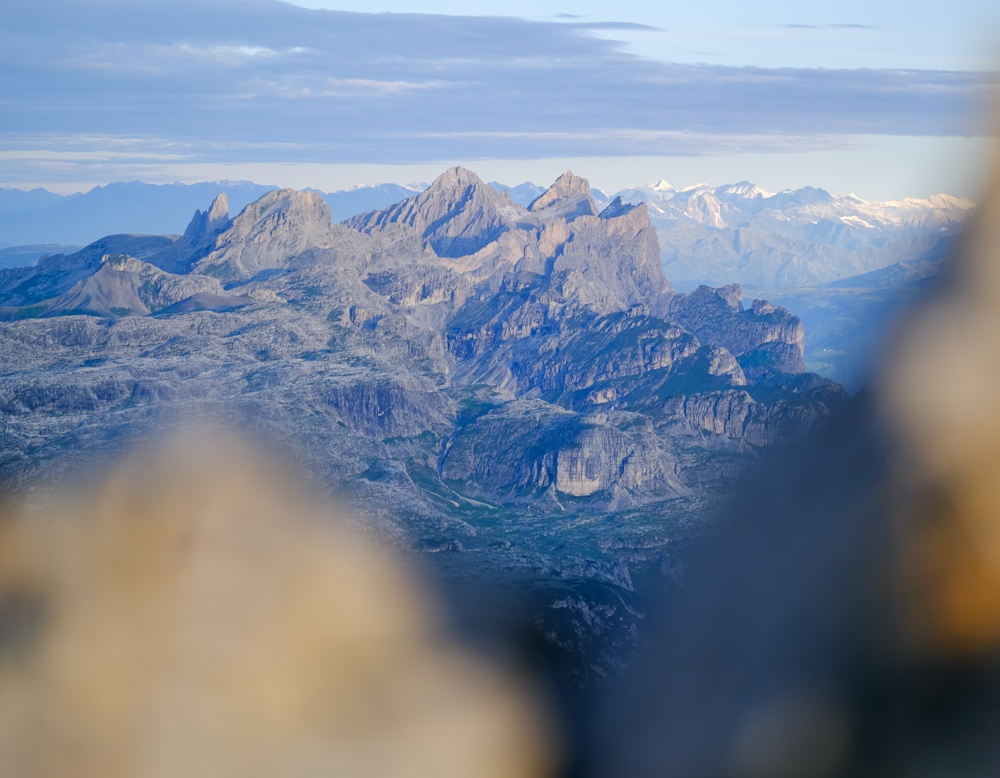
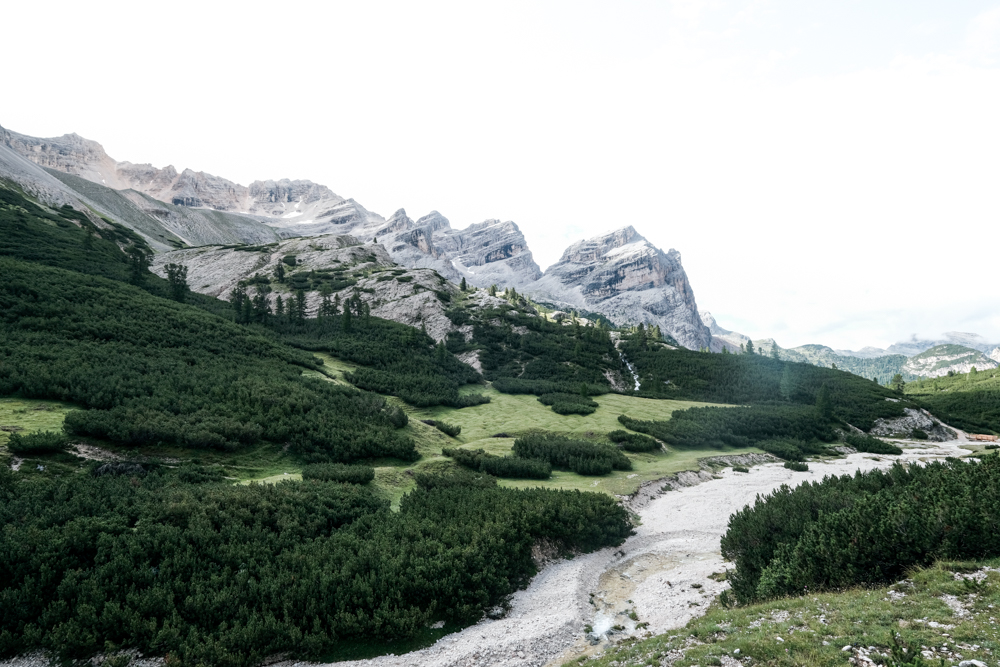
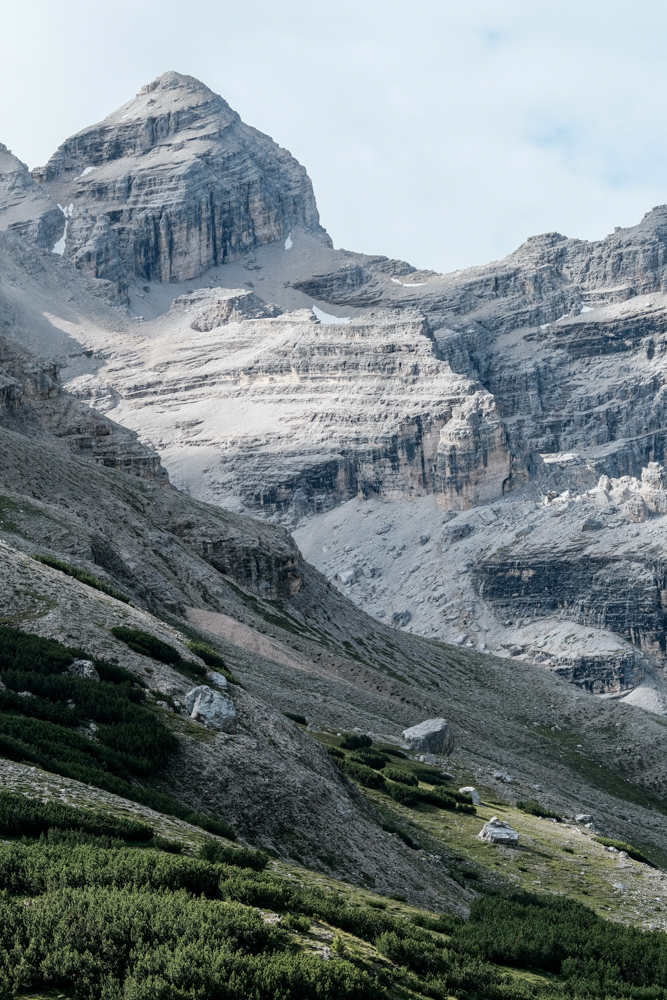
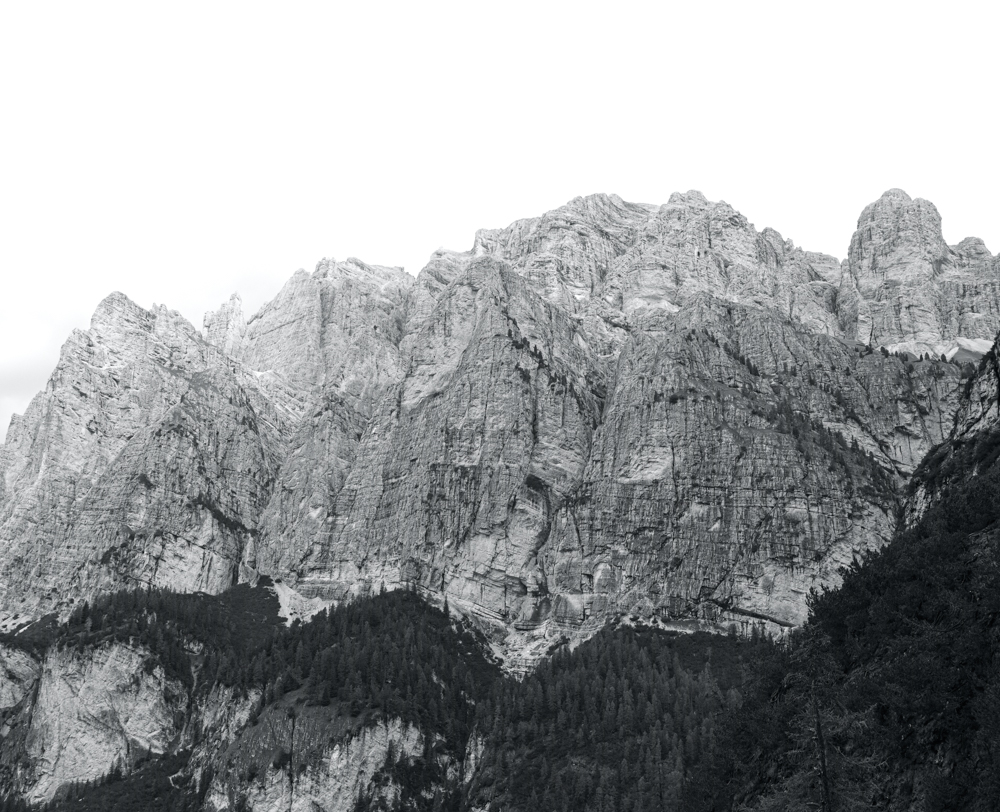
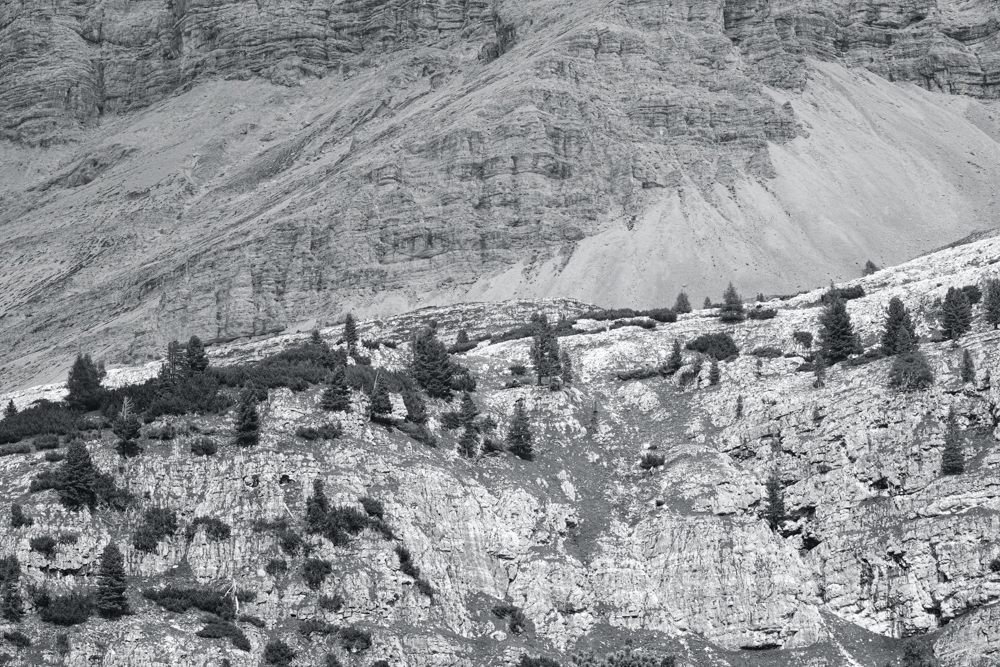
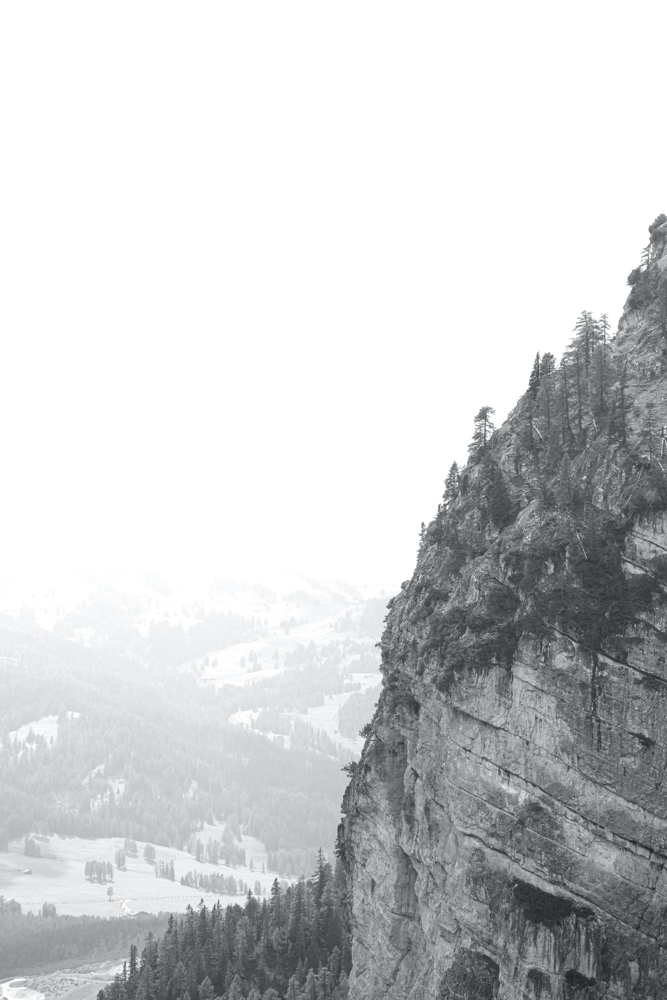
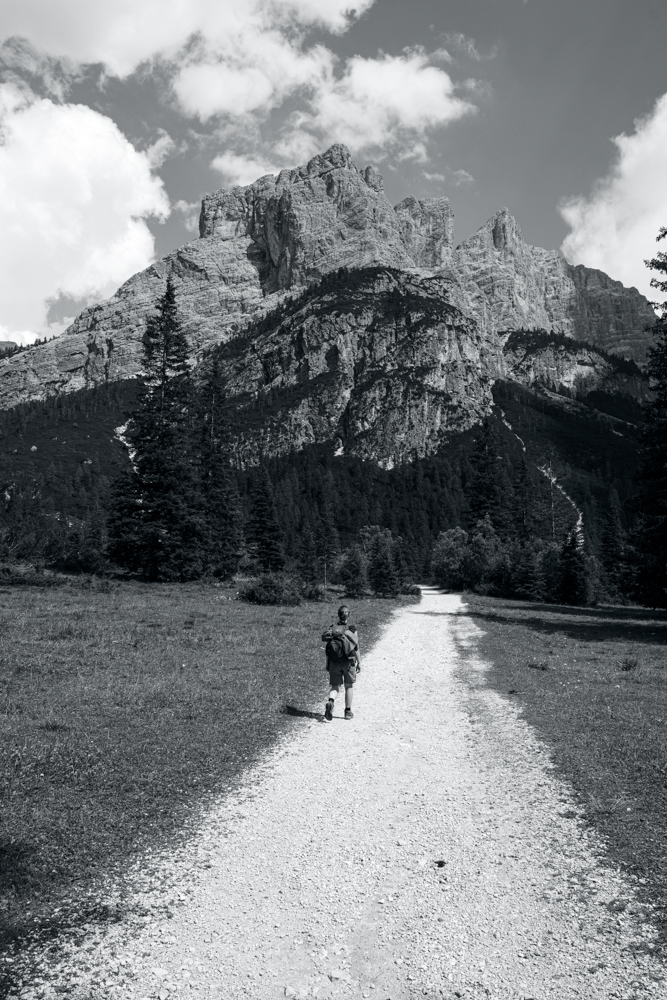
There are some things, only mountains can do: provide panoramic views, enable climbing and steep hiking, exhaust the visitors, and: thunderstorms. We witnessed the most intense thunder in quite a while during our time in the dolomites. Bright lightning. Thunderclaps and rolling thunder. Constantly. Elevating and frightening. Marvelous und destructive.
Lately, I have been discussing frequently what makes a good photo. In the end, as most things, it comes down to personal preference. Many rules exist, but many exceptions to any rule exist as well. For me, I have found that the best photos do two things: First, I am flashed when I see them the first time. It strikes me like lightning; I am stunned and in awe. Second, they keep me engaged and hold my interest – like the thunder rolling through the valley, they develop and keep giving as long as I keep looking. New forms, new details, new patterns.
It’s been a year now since I have my camera. I am looking forward to the next year and I am hoping to produce at least a small thunderstorm of pictures; flashing bright and rolling afterwards.
Alex Honnold free-soloed El Capitan in Yosemite; people might describe such an action as dangerous or inappropriate, or even call him tired of life. For me, it is about the exact opposite: It’s about using your life, about passion and emotion, about feeling alive.
What’s the point in our journey? Do we live the 9–5 weeks until we are 67 and die of illness afterwards? It’s difficult to know beforehand how to live a life that we don’t regret; after all there is only a single chance (from what I believe). This can be a constraining or liberating thought, a coin with two sides. Either: Be careful! Stay save! Or: Use your resources consciously to find satisfaction – even if it might come with risk. This does not need to be dangerous at all though: A walk in the woods, a calm hour in the evening with your favorite music, or a long conversation with close friends.
However, for me, feeling alive also sometimes brings along risk. But it is a deliberate and calculated risk that entails joy, freedom, or happiness. It also entails an honest confrontation with oneself: How far am I willing to go? How good can I assess my own abilities? What is really important to me? So important that I am willing to take a risk? And from time to time the answer is the distant peak at the horizon or the high boulder I am walking by. The boundary is always moving, sometimes towards the safe side, sometimes towards the more dangerous side. And in case of an unplanned end, it’s probably the car ride or the swim in the sea that finishes the journey anyway.
When I was a kid I read a lot (at least, that’s how I remember it). I loved the Famous Five; later I devoured Lord of the Rings, Harry Potter, and many less known fantasy series. But on the journey of growing up I lost the drive to read. I don’t know why or how. Looking back, it was presumably the natural limitation of time that struck and other hobbies that took over. I also never missed it consciously.
But lately, Mädchen Klitzeklein is pushing me to read again. I have the great advantage that she recommends me only those books that she seems fit and, thus, I feel obliged to pick up one of those books and start to turn the first page. As with movies, I specifically appreciate to not know anything about the content besides what the cover tells me. And then, I start to read; it takes a while to get used to a physical book after so many years; but it has its unique charm: no distractions, no home button to press, just the next page to turn. For some books I was hooked from the first page, in other books it took a while until I oriented myself and felt home in their unique world. And what I found should not surprise myself, as I already knew it as a kid: it can be an absolute joy to read – so why did I stop reading in the first place?
In my late teens, computer games replaced the story telling of books for me; and some games do it really, really well. Just to mention at least two, because they are very dear to my heart: There is for example Celeste, the heart-breaking story of Madeline, a girl plagued by depression and panic attacks who has the near-impossible goal of climbing a mountain. The game design is perfect as the player suffers and struggles together with the main character in this hard-core platformer. Very rarely have I been more engaged in reaching the end of a game. And then there is Ori, a visual master piece with a straight-forward but wonderfully told story about an orphaned child who saves the forest. These games have provoked strong emotions within me that felt real and unique as I find it rarely in stories. But with games, as with movies, your own imagination is never as provoked as when reading books. The words cannot stimulate your eyes and ears, and hence, what they create within your head is up to you and can become even stronger.
And here I sit and read, turn the page, and the next, and the next. First, it’s a small dip into another story, another century, another life. But with every page, I immerse myself more and more, get lost in the pages, dive deep into the narrative until the surroundings vanish and I participate, experience it myself to the fullest extent. I witness pleasure and delight, I undergo heartbreak and sadness, I live in another universe at another time, even if it’s only for 30 minutes.
What do novels mean? I have absolutely no idea, I just liked the title. But for me, they gave me a long forgotten glimpse into other worlds, into my own imagination, a reason to slow down, another perspective on life. Thank you for motivating me to take this journey, Mädchen Klitzeklein.
The last two books I read were Migrations by Charlotte McConaghy and Where the Crawdads Sing by Delia Owens. I don’t think they are for everyone, but I can still wholeheartedly recommend them both.
The sun sets with golden rays.
Thoughts creep in, are here to graze
the mind. With rising haze,
expands, obscures, distorts, delays.
What was, what is, appraise the days
to come: never ceases to amaze
in a multitude of ways.
And I ponder here and phrase
lose myself, the world ablaze,
deep within my inner maze.
In my first post on Decidability, I wrote about the Halting problem and how everyday life decisions seem undecidable. Still, we are deciding many things, from minute to minute, from hour to hour, that shape our life, surroundings, and possibly the future. But: Do we decide in the first place or is it arbitrariness? Does it matter which one it is? And if it is not arbitrary, how can we decide?
Only those questions that are in principle undecidable, we can decide.
Heinz von Foerster, Ethics and Second-order Cybernetics
Some time ago, I would have said that decisions are guided and derived from environmental data. The deciding person merges and weighs the available data to arrive at a conclusion on how to decide. However, this model has flaws: If the data would lead to a clear answer, there would be no need to decide in the first place; the data just gives the answer. Consequently, only if the data is insufficient to derive a clear answer, the need to really decide arises. Thus, decisions also always result in uncertainty; inherently, we are deciding only the things where the outcome is unclear. Also, in most cases it is an arbitrary choice which data is considered and how it is weighted; infinitely many and equally reasonable decisions are always available – the decision itself is arbitrary.
If you can’t decide between two options, throw a coin. Before it touches the ground you will know which side you want it to land on: Decision made.
My best friend; around when we were in 6th grade
I always liked the idea of this approach to decisions. While in essence it’s not very spectacular, this proposed trick addresses the time component of decisions: If a decision is difficult, we tend to postpone it to an uncertain moment in the future in the hope for more data (or that someone else decides for us). Throwing the coin makes the decision pressing and imminent; and, if, the correct decision cannot be induced by data but is arbitrary, this trick lets us make a decision right now. And this decision comes down to the gut feeling of the deciding person, but it doesn’t matter because the decision is arbitrary whatsoever. My version, by now, is simpler: ‘If you can’t decide between two options, throw a coin and take the option it selects.’
Thus, the coin method is congruent to the proposed mark or cross by G. S. Brown as used by Luhmann: There is no way to decide correctly. You never know the outcome, otherwise there would be no need to decide. The only thing that matters is thatyou decide in the first place.
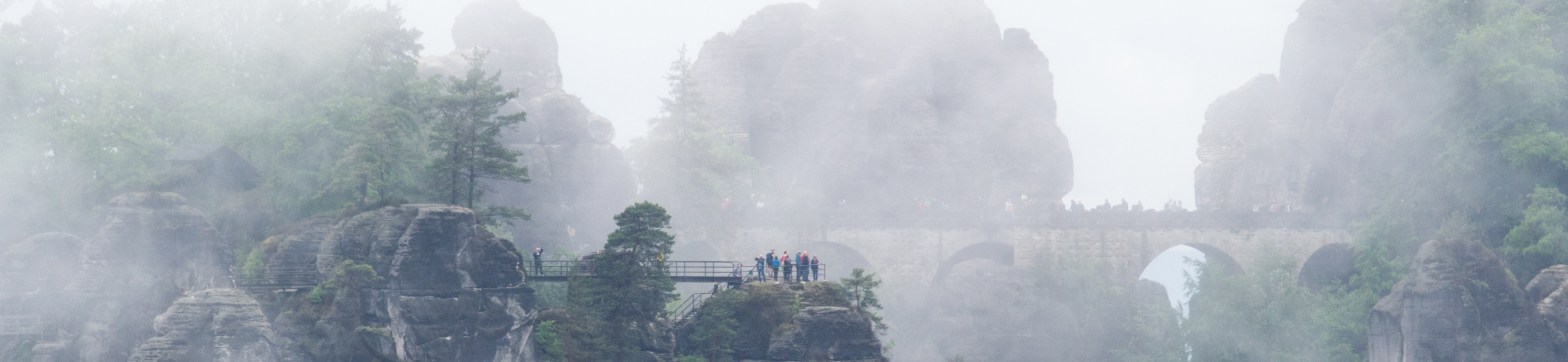
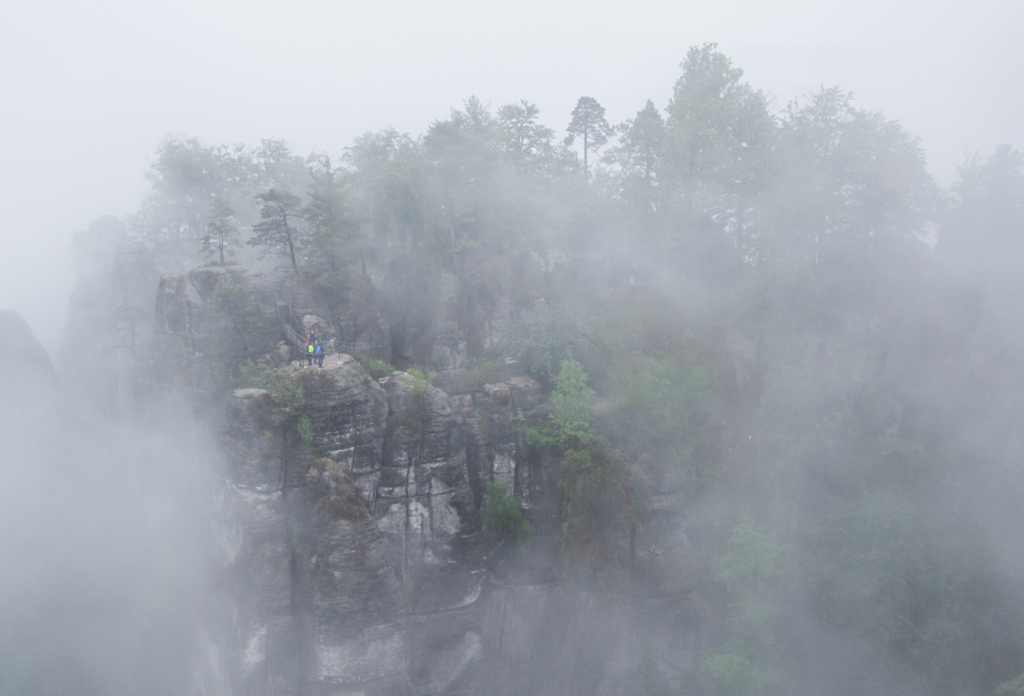
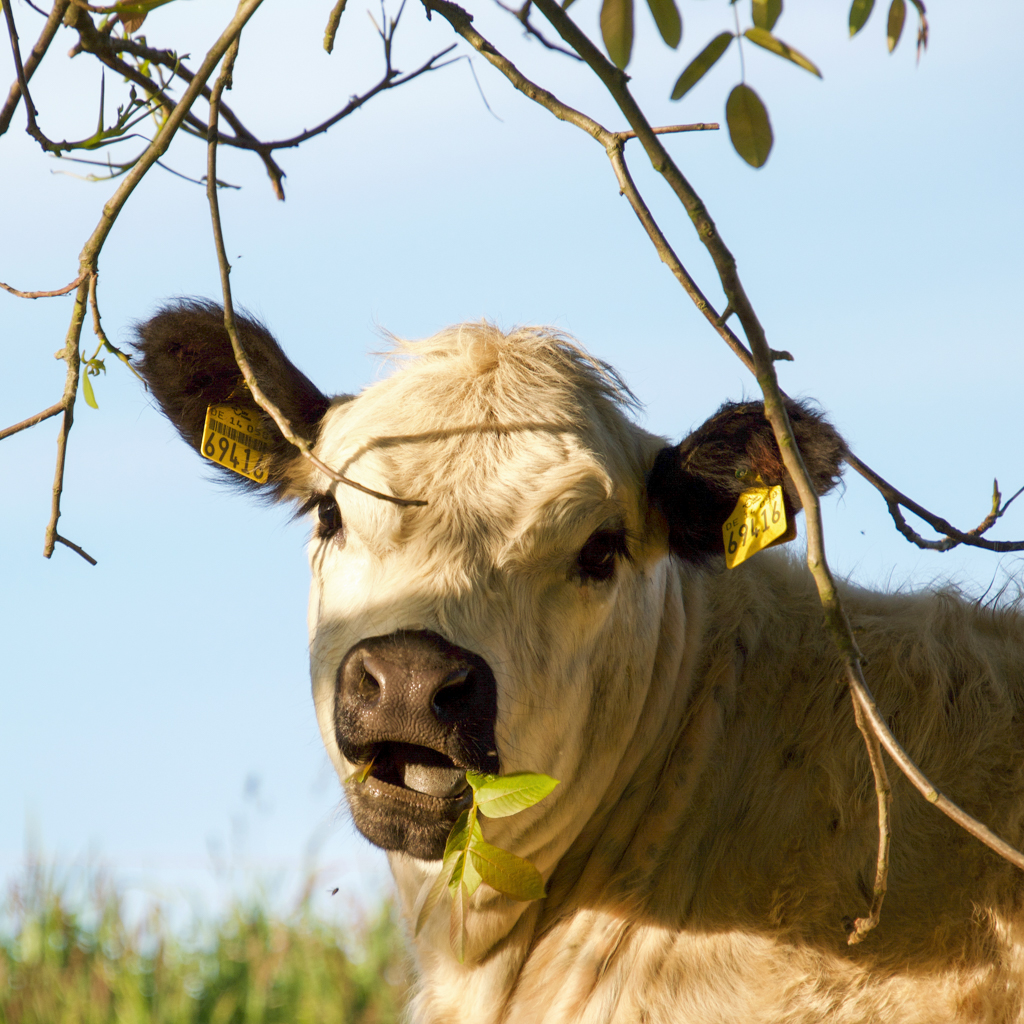
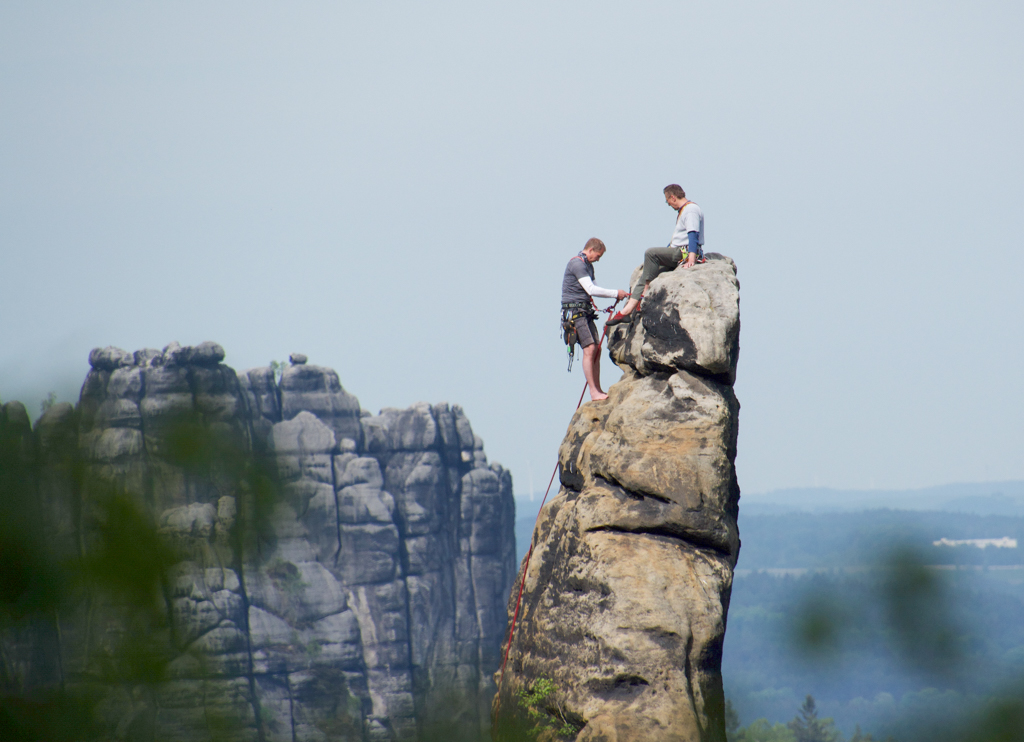
Thanks to input from my dad. This post probably deserves a re-write as soon as I have more time to properly study the provided material. Since I decided that all posts also have pictures, I chose some older ones from a vacation last year in Sächsische Schweiz. Back then, I still had borrowed his camera and had even less knowledge about photography than now…
Life is about decisions, large and small ones. What should I study? Which bread do I buy? Should I reach out to a long lost friend? Which approach to life should I take? What values are important to me? Do I buy the next lens or do I save up the money? Do I go outside for sports? Do I keep working for another evening? How do I want to spend the limited time I have in my life?
Some questions seem irrelevant, others may determine several years of our future life. So, how can we decide all these questions? Or: Is it even possible to decide all these questions? How should we approach and deal with any possibly life changing matter and decide: This or that? Now or later? Yes or no?
The more difficult the questions become that I face, the more I am convinced that they are inherently undecidable at any given moment in time. We do not have enough information to know all outcomes, the uncertainties are always large, and we cannot weigh in all factors because of their multitude and complexity. This also won’t change in the future. Maybe the options we decide on shift. Maybe it’s too late for a decision and we did not even have the opportunity to deliberately decide it ourselves. Some things we were sure that we chose correctly turned out to be terribly wrong; other things work perfectly even though we thought we made the wrong turn earlier.
Decidability is also infamous in computer science. In its simplest form it is known as the Halting Problem and was presented by Alan Turing. The problem formulation is as follows: Given an arbitrary algorithm and its input, is it possible to find another algorithmic solution that decides whether the given algorithm stops on the given input, or continues to run forever? If a solution can be found, then the problem is decidable. If no solution exists, then the problem is undecidable. In the case of the Halting problem, it can be shown that no algorithmic solution exists that solves the stated problem; thus, it is inherently undecidable. If you’re interested, keep reading for the proof:
We proof the above statement by contradiction. Imagine there exists an algorithm that can decide our problem statement: Given, as input, an arbitrary algorithm and its input, it can always decide whether this algorithm stops on the input or not. We call our deciding algorithm h and our input x. Given h, we now define a new algorithm h* that is a modified version of h: If h determines that the input algorithm stops, then h* keeps running in a loop. If h determines that the input algorithm keeps running, then h* stops. What happens if we feed our algorithm h* as input to itself (of which our original deciding algorithm h is part of)? This can be seen as a self-referential operation. We refer to the h* that is the deciding algorithm to h(h*) and to the input h* as x(h*). Both, h(h*) and x(h*) are the same algorithm. We have two possible outcomes: Either h decides that its input x(h*) stops – however, in this case h(h*) would keep running: a contradiction because x(h*) and h(h*) are the same algorithm. Or h decides that its input x(h*) doesn’t stop – but now, h(h*) would stop: again, a contradiction. Thus, the halting problem is not decidable.
To be continued in one of the next blog posts about how to decide anyways.
Freedom – the ability to live to ones own choices; the independence from society and imposed rules; the empty space between the obligations; the chance to chase opportunities as one desires; the brief feelings of lightheartedness; the vast sky above.
Freedom – limited by demanding work; restricted by self-imposed responsibilities; impaired by a global pandemic; overshadowed by worrying thoughts bound to circles; forgotten and lost in everyday repetition; the time constraint: one single life time.
Freedom – an evening walk in the sun; the 12th cookie in a row; an overnight trip with a van; getting up at 5 a.m. for sunrise; having shelter, food, time and money for varying hobbies; friends to rely on and partners to trust.
Freedom is many-faceted. This is the start of a mini series of different degrees of freedom I am lucky to have. Which degrees of freedom do you have?
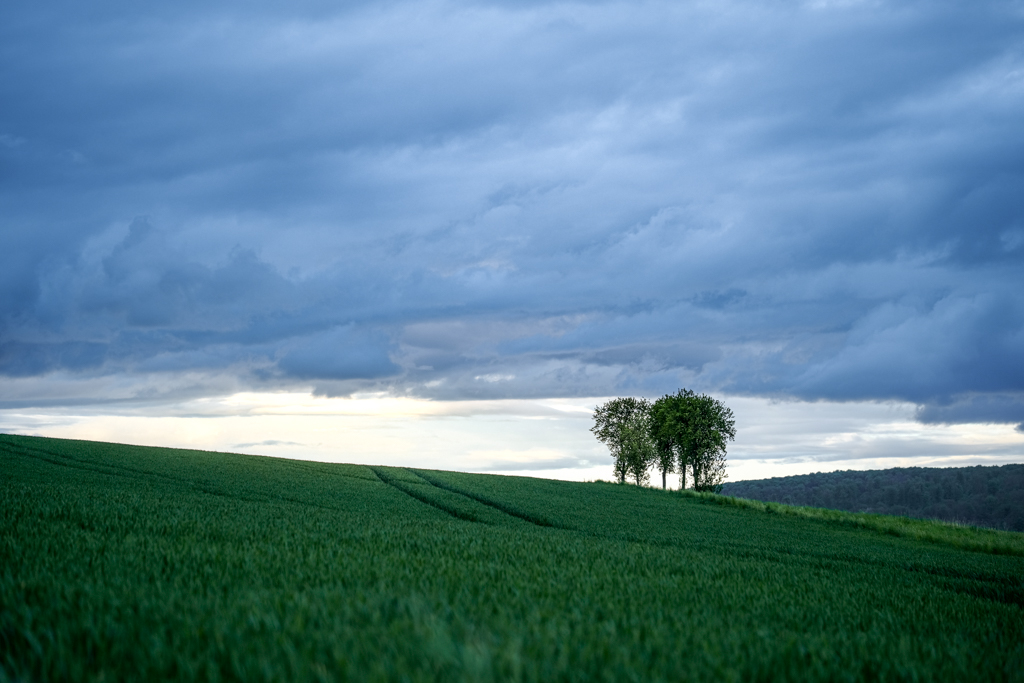
Already my last post had dramatic skies – we have a particular rainy May this year with up to 200% the rain as usual. However, the deep layers of the soil are still very dry from the last years. Anyways, for photography it gives interesting structures in the sky with strong contrasts in the landscape around our home town.







































 Punkt im Dunkeln
