
What do Novels Mean?

What do Novels Mean?

When I was a kid I read a lot (at least, that’s how I remember it). I loved the Famous Five; later I devoured Lord of the Rings, Harry Potter, and many less known fantasy series. But on the journey of growing up I lost the drive to read. I don’t know why or how. Looking back, it was presumably the natural limitation of time that struck and other hobbies that took over. I also never missed it consciously.

But lately, Mädchen Klitzeklein is pushing me to read again. I have the great advantage that she recommends me only those books that she seems fit and, thus, I feel obliged to pick up one of those books and start to turn the first page. As with movies, I specifically appreciate to not know anything about the content besides what the cover tells me. And then, I start to read; it takes a while to get used to a physical book after so many years; but it has its unique charm: no distractions, no home button to press, just the next page to turn. For some books I was hooked from the first page, in other books it took a while until I oriented myself and felt home in their unique world. And what I found should not surprise myself, as I already knew it as a kid: it can be an absolute joy to read – so why did I stop reading in the first place?

In my late teens, computer games replaced the story telling of books for me; and some games do it really, really well. Just to mention at least two, because they are very dear to my heart: There is for example Celeste, the heart-breaking story of Madeline, a girl plagued by depression and panic attacks who has the near-impossible goal of climbing a mountain. The game design is perfect as the player suffers and struggles together with the main character in this hard-core platformer. Very rarely have I been more engaged in reaching the end of a game. And then there is Ori, a visual master piece with a straight-forward but wonderfully told story about an orphaned child who saves the forest. These games have provoked strong emotions within me that felt real and unique as I find it rarely in stories. But with games, as with movies, your own imagination is never as provoked as when reading books. The words cannot stimulate your eyes and ears, and hence, what they create within your head is up to you and can become even stronger.

And here I sit and read, turn the page, and the next, and the next. First, it’s a small dip into another story, another century, another life. But with every page, I immerse myself more and more, get lost in the pages, dive deep into the narrative until the surroundings vanish and I participate, experience it myself to the fullest extent. I witness pleasure and delight, I undergo heartbreak and sadness, I live in another universe at another time, even if it’s only for 30 minutes.

What do novels mean? I have absolutely no idea, I just liked the title. But for me, they gave me a long forgotten glimpse into other worlds, into my own imagination, a reason to slow down, another perspective on life. Thank you for motivating me to take this journey, Mädchen Klitzeklein.
The last two books I read were Migrations by Charlotte McConaghy and Where the Crawdads Sing by Delia Owens. I don’t think they are for everyone, but I can still wholeheartedly recommend them both.

Maze

Maze

The sun sets with golden rays.
Thoughts creep in, are here to graze
the mind. With rising haze,
expands, obscures, distorts, delays.
What was, what is, appraise the days
to come: never ceases to amaze
in a multitude of ways.
And I ponder here and phrase
lose myself, the world ablaze,
deep within my inner maze.

Photo Post: P1

Photo Post: P1

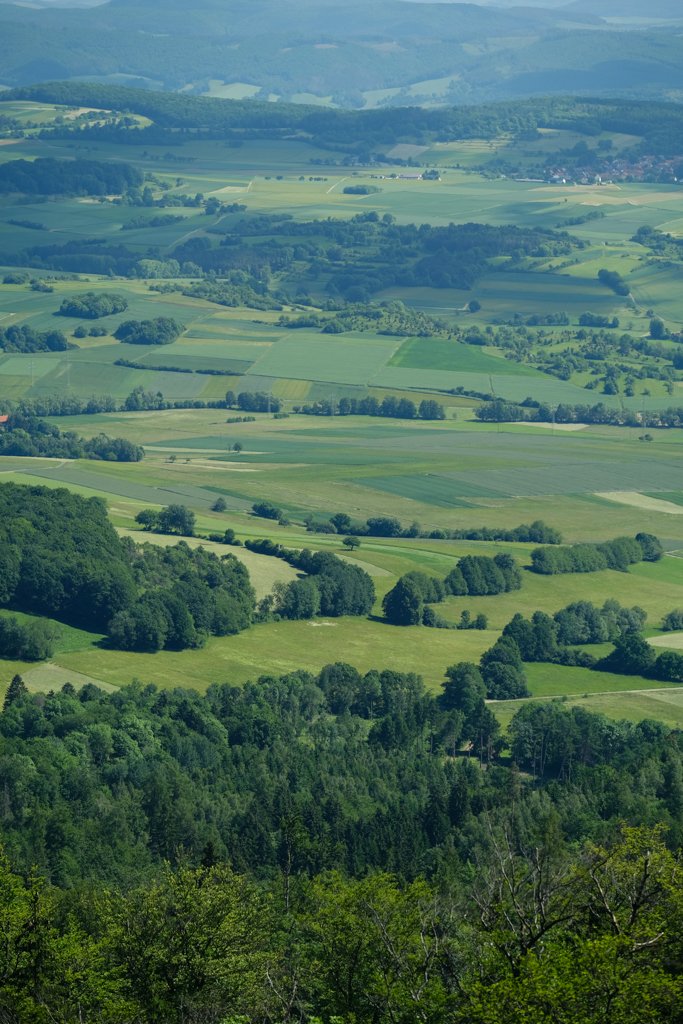
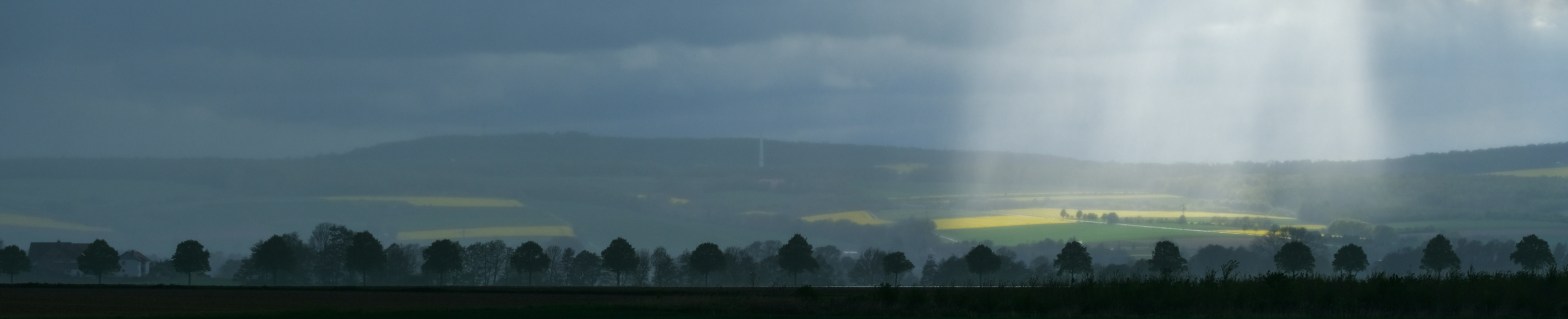
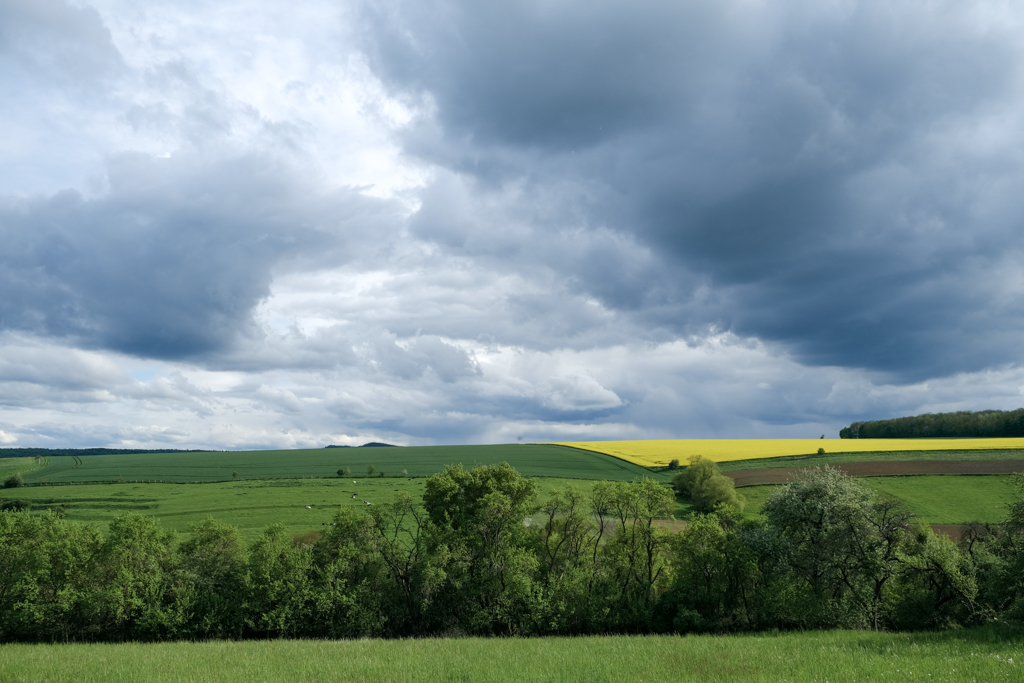
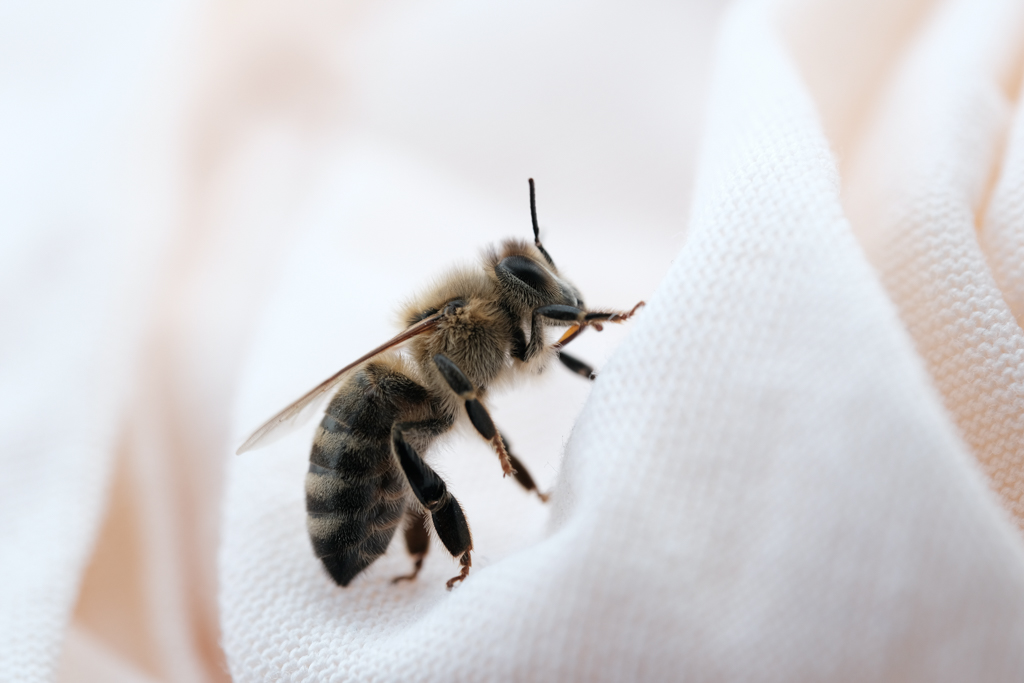
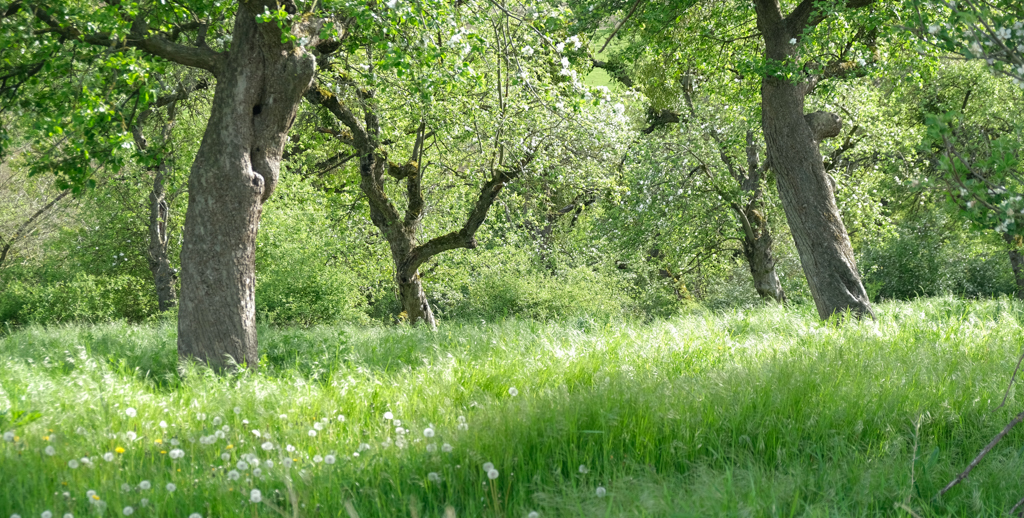
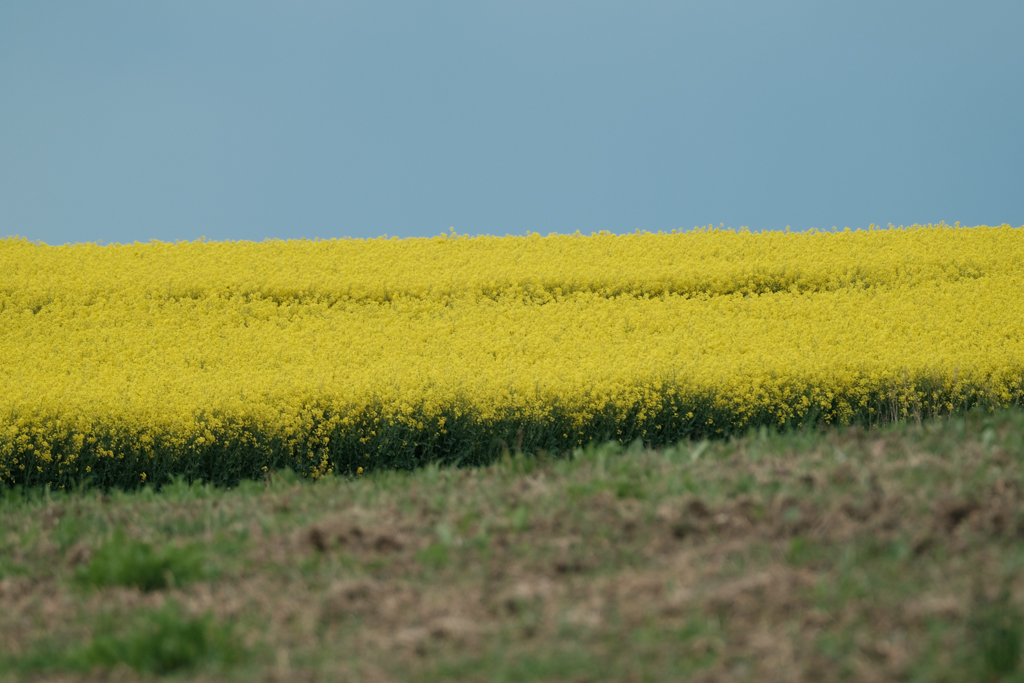
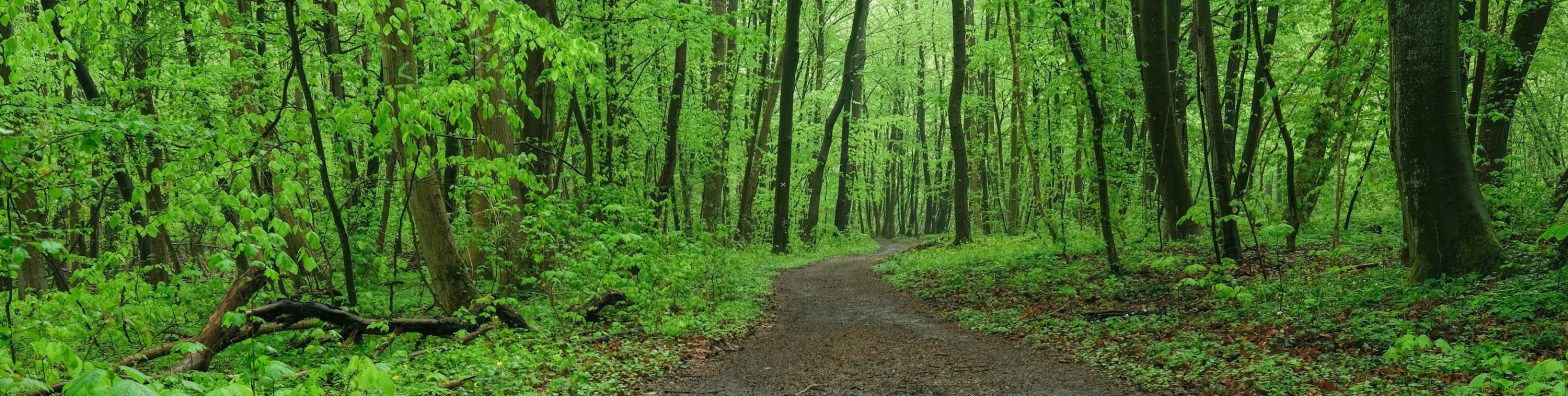
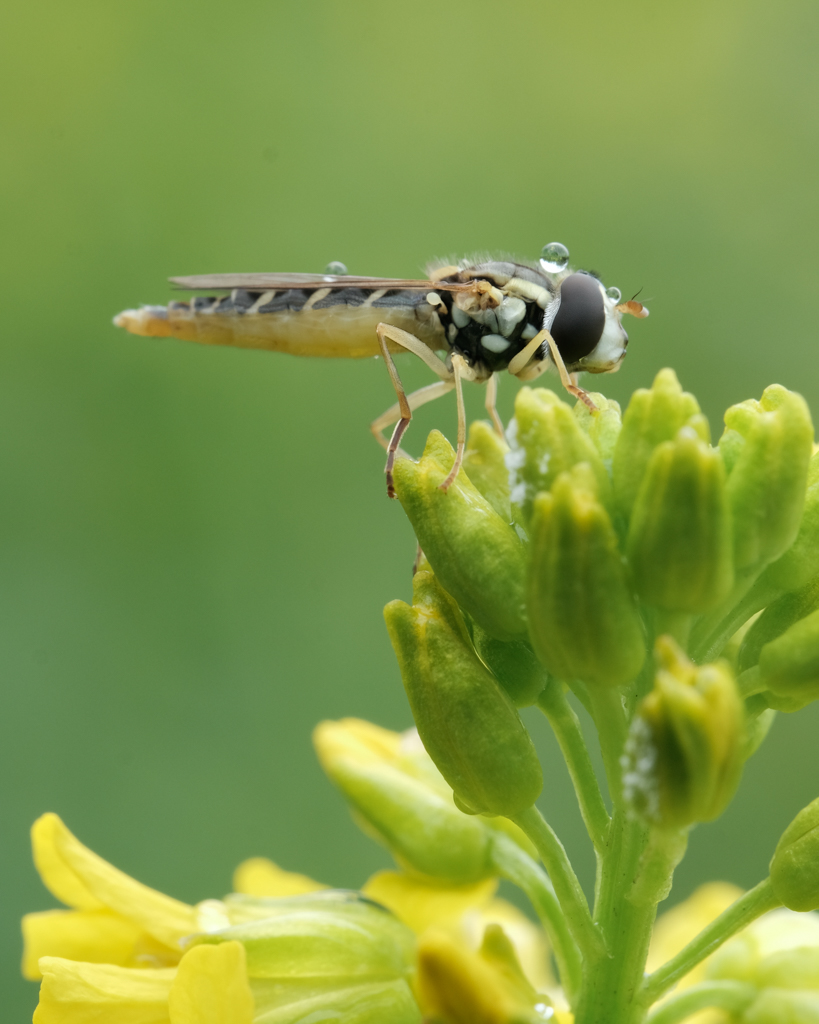
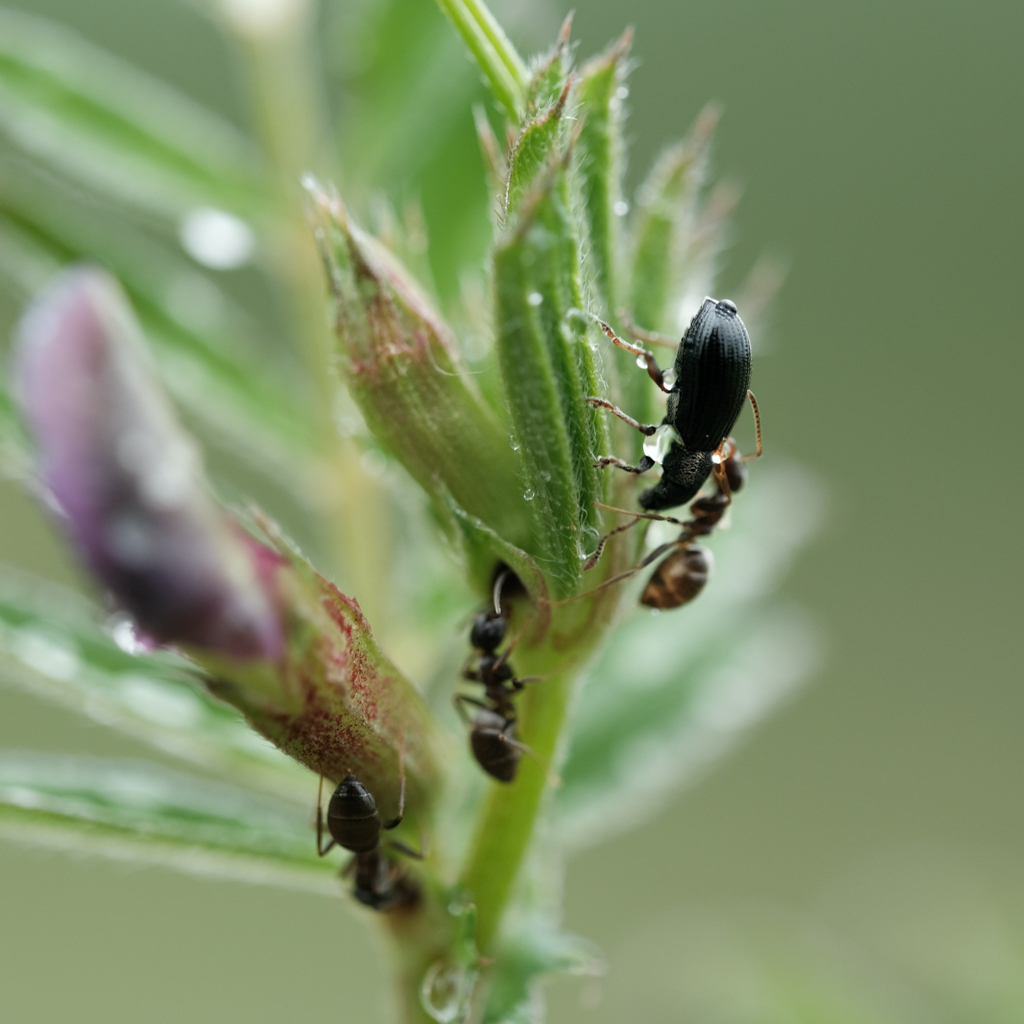
Last weekend we walked a hiking trail around the mountain Hoher Meißner. Unfortunately, the only time the alarm clock wakes me up lately is on weekends. The sun rose at 4:30 a.m., so in order to have good light, one needs to be up on time. While we were early, the sun already was high above the horizon when we started hiking. Nevertheless, the cold air and wet grasses made it feel like morning. The landscape was wonderful, but difficult to photograph during plain sunlight; thus the abundant insects had to serve as objects, including additional species of the soldier beetle, ladybugs, and bees.

DoF 3: Summer Evenings

DoF 3: Summer Evenings

Mini-Summer-Evening-Bucket-List:

  • Go outside
  • Eat strawberries
  • Listen to the clicking of your bike
  • Appreciate the barley fields
  • Smell the elderberries
  • Finish with ice cream
Birds at the river greet the evening.

Cantharis fusca & Triticum aestivum

Cantharis fusca & Triticum aestivum

Exactly a month ago, in my post on botanical gardens, I made the promise to inform myself (and you) about one combination of plant & insect I am coming across. Thus, I think it is time to fulfill this promise even though I did not manage to visit the botanical garden in the mean time.

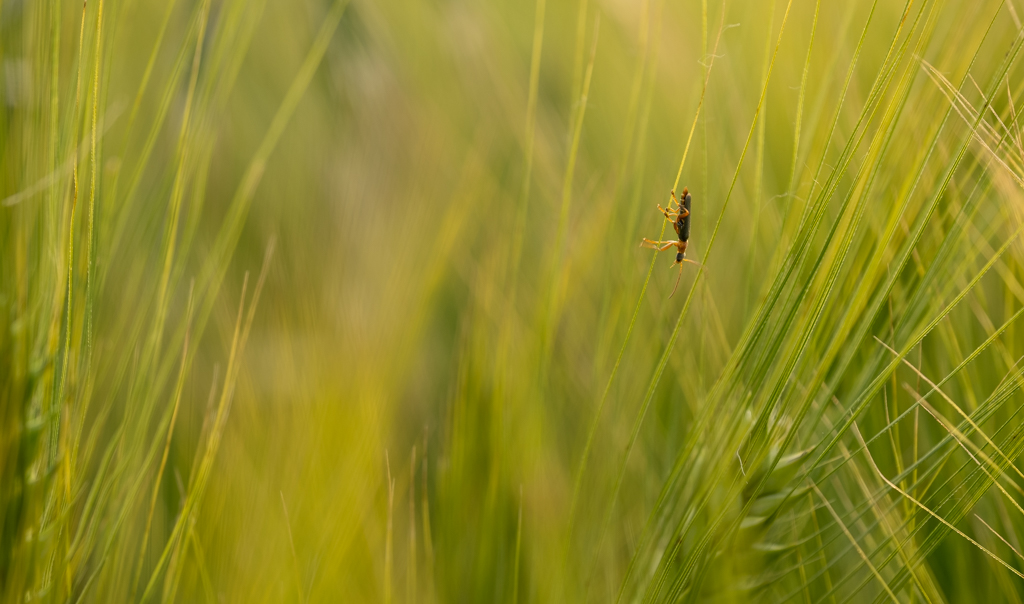
We stumbled across many individuals of this beetle species already on our hike on P23. However, we had no idea what kind of species it exactly is:

Last Friday, I finally managed to go outside again and did some macro photography. And, again, I saw multiple of these bugs in the grasses, weeds, and fields. It also felt like the first genuine summer evening: Warm air coated the landscape, undulating fields of barley stretched in golden rays, the city vanished behind endless rows of trees, and its inhabitants escaped the asphalt towards the deep blue bathing lake.

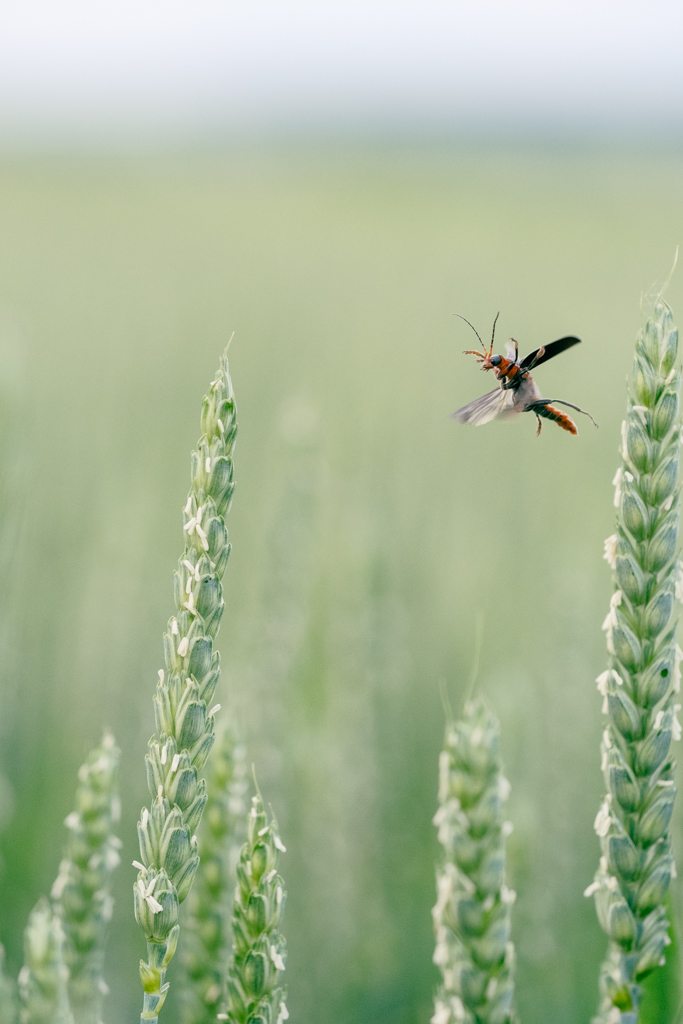
And I stood in the fields and waited. Waited for this bug, waited that it flies in front of my lens, and that I don’t miss to press the shutter. And then it came:

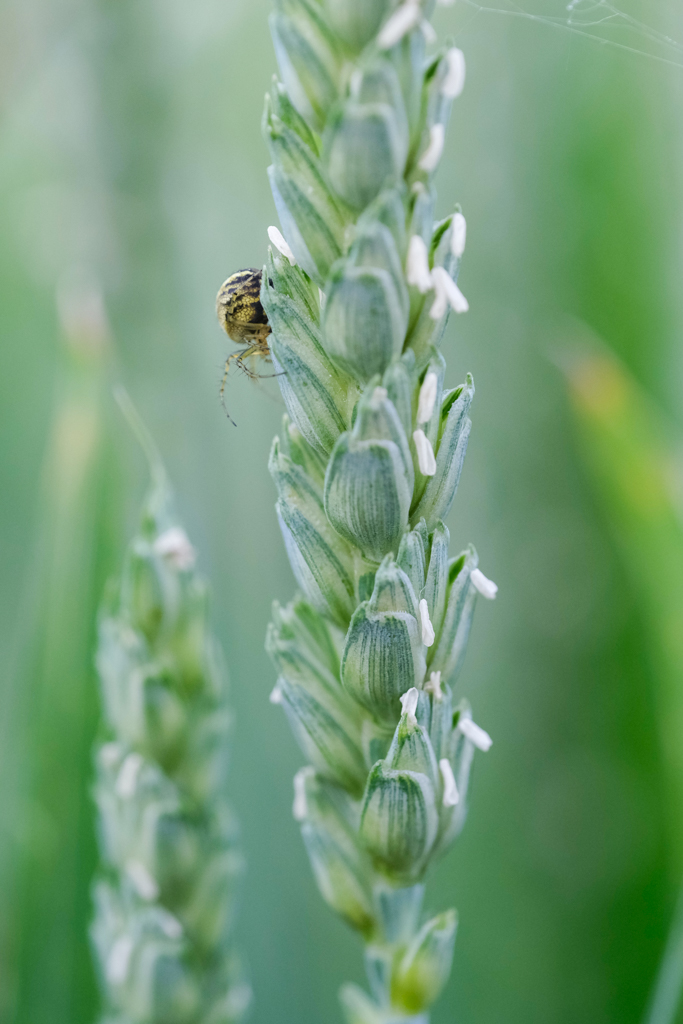
It is (presumably) a Cantharis fusca, a species within the family of Cantharidae, in English also known as soldier beetle or leatherwings. The last name refers to its soft body; this is also why it is called ‘Weichkäfer‘ in German. There are many different sister species and often they only differ by minuscule details, at least to the untrained eye. In Germany alone, there are 86 different described species; worldwide more than 4500 – for a single family of beetles! The diversity and complexity that nature creates can be mind-boggling. They are mostly colored red, black, or golden. A wonderful visual overview is given here.

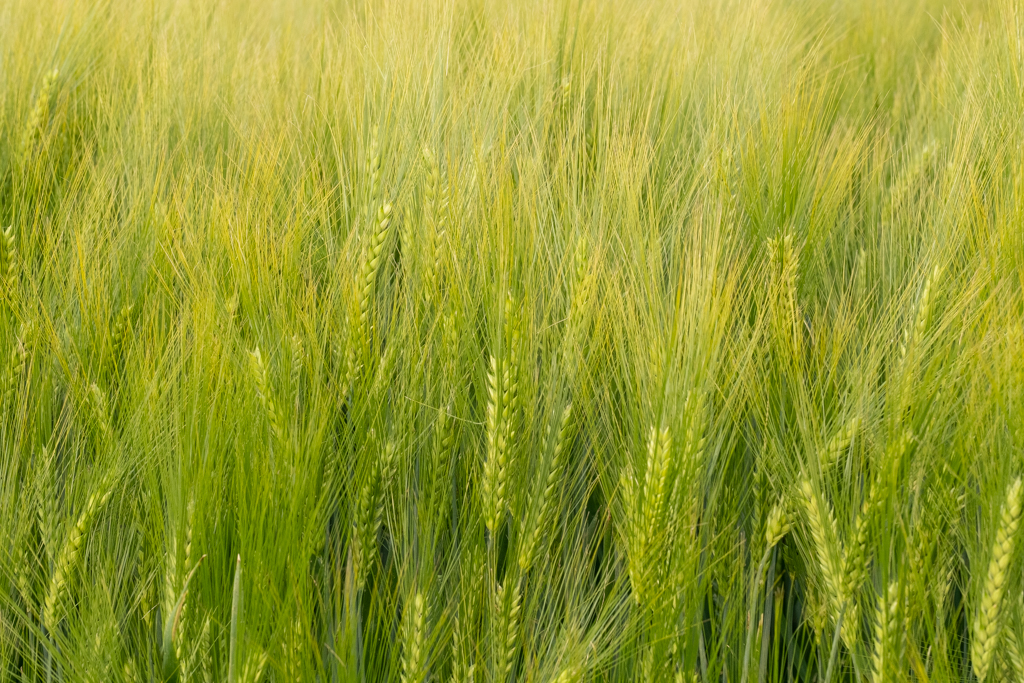
The plant it was landing on seemed rather uninteresting; most of all because it is so common on the fields in our area. At least, that’s what I thought at first:

It’s simple wheat – isn’t it? By now, I am not even sure anymore. Wheat is one of the most cultivated crops and it is an important source of food in uncountably many countries. The first record of wheat seems to be around 9600 years BC. This means, today we are 2000(!) years closer to Abraham, the patriarch of several religions, than Abraham was to the first use of wheat. I find it difficult to comprehend such time scales. However, this also means that there are countless different cultivated wheat species by now, including Common wheat, Spelt (‘Dinkel’), Durum, Emmer, Einkorn (the wild form), and many many more. Genetically speaking, a large difference between these species is the number of copies of each chromosome they have in their cells. While humans and many animals are diploid (they have two copies), it’s rather common in plants to have even more than two copies of each chromosome – this is referred to as polyploidy. (It also makes our life more difficult when dealing with their DNA sequences; but more on that at a different time.) The wild form of wheat is also diploid, but the other species are mostly tetra- or hexaploid. I still think that what I photographed is the most common form Triticum aestivum, but there are several more detailed distinctions to be made within this species.

Also, all information here is pure speculation from dubious internet research, also see this post on information.

Ray of Hope in a Landscape of Stimuli

Ray of Hope in a Landscape of Stimuli

I am stuck on a learning plateau and it’s exhausting: The current learning stimulus is not sufficient enough to induce further synaptic changes.

No matter which new skill is being learnt, it’s common to hit one or several plateaus throughout practice – and it’s also common to get discouraged by the vanishing progress with reduced or no visible improvement. But when I am starting something, I want to do it good. It sometimes feels like a curse: I will go every extra mile needed to achieve what I want to. And this has cost me not only a lot of time with missed days of relaxation and fun, but probably also some friendships, connections with people, and diverse experiences throughout life that I missed out on.

I juggled for many years, but getting beyond five balls just never really happened. Hours and hours, weeks and weeks, several years, I spent throwing stuff in the air, just to catch it one more time. While there was a lot to enjoy, it also involved many hours, alone, of focused practice to reach the next level. I also played piano for over ten years; but there, I got stuck as well. The problem was that I did not put in the required effort, even though the conditions were excellent. I learned some great techniques on the way from my last piano teacher on how to achieve continuous progress; however, I did not implement them until later in another hobby: climbing.

I am climbing now for eight years and it is the hobby where I have the most direct experience with plateaus. My piano teacher always knew the most important part and tried to explain it to me so that I can act accordingly: To overcome plateaus, the most important thing is to adapt the stimulus to your progress and vary it over time. This involves active analysis of your efforts and progress, knowledge and creativity for planning your next steps, and willpower and stamina to adhere to your plans. I have encountered many people in bouldering who wonder why they do not progress any more “even though they train as much as they did in the beginning when they progressed quickly”. But that’s the point: You cannot do the same training and expect it to work all the time! Body and mind will adapt and, thus, your training has to adapt as well. This doesn’t always mean you need to train more or harder, but often it means you need to change your training altogether.

And then, there is my beloved new hobby: Photography. Lately, I am also feeling kind of stuck. I am not satisfied with the results; as always, I want more. However, I did not implement the lessons I learned in climbing so far: I not only need to put in more precious time, but I also need new stimuli. I am eager for our next holidays, but I should also try street photography, portraits, city scapes, anything else from nature.

But maybe even more important: I think I have to learn how to set lower goals for myself. I have to learn how to be happy with the journey, even if it’s is slow, instead of focusing too much on the results. I have to stop moving my goal posts before I even reach them.

A Plea for Empathy

A Plea for Empathy

This read is meant genuine and was written with honest intention. Please take your time to read it properly and don’t read it on the side when you have no time.

People can be spiteful and violent, people can be nasty and devious: It’s the warlord who terrorizes an ethnic group, the president who declares war and is backed by the country, the company that fosters child labour without consequences. In our privileged daily life we are experiencing mostly the little misconducts of fellow humans: The person who jumps the queue when shopping groceries, the reckless car driver who doesn’t care about your bike, the ignorant dog walker that neglects his duty to use a leash, or the friend who talks ill behind your back.

This world can be a depressing one: It seems that everybody is in it for themself, no one cares about the others, and maximizing ones own profit is the goal. Suffering from this are the poor and the lonely ones, nature and the planet, minorities and discriminated, the polite and modest ones. And what else is left than to surrender to the overwhelming forces of negativity? What else is left than to join the circle of hatred, fear, and egoism?


Empathy.


Let me convince you that this is a better way. Don’t join the others, better bridge the gap between the others and you, because: we are all in it together. It’s not only you who had a bad day. It’s not only you who feels tired and offended by the doings of others. It’s not necessarily you who is in the right. And also, sometimes, it’s not important who is in the right to begin with. What is important is empathy. Be kind. See the good in other people. Embrace differences and allow for discrepancy. Engage in discussion, but not to win, but to understand the validity of other opinions. Retrace their line of thought; carry it on with better arguments. Only then you can get their side. And don’t make fun of the ignorant or uninformed. Instead, be kind and teach. Share your knowledge, humbly, and offer your wisdom that you were lucky enough to absorb in your life. It’s easy to judge, but most often it’s not your place to judge. Instead, support them in resolving their own struggles. Have compassion; show compassion. Help the weak and poor, help your friends, help the people you dislike. Don’t do it to feel better; do it honestly and because it improves someones life. Do it because you want to. Demonstrate courage. Don’t be the one who sees the wronging and summons a smart phone for the fleeting amusement of strangers on the internet. Don’t be the one who points at others when it’s your turn. Step in and act according to your beliefs. Be courteous. To the queue-jumping shopper, to the leash-less dog-walker, and to the reckless driver. Not because they are right, but because it’s the right thing. And because it makes the world a better place.


This doesn’t mean you should accept the wronging of others, nor does it mean you should welcome the brashness that someone displays. But it means you should question every bad thought you have about someone before jumping to conclusions, or worse, actions. And this won’t be easy. It will be difficult, exhausting, and demanding. And I get it: Your own day was difficult and you are tired. But this means it is even more important to practice, day in day out, to make it not your second, but your first thought in every situation: Do I show empathy? Do I judge? Do I know where the other person is coming from? And with enough practice, it will become natural: To be kind and welcoming. To be compassionate and courageous. To be courteous when the opposite isn’t. And to be it out of belief that it brings something good to this world and not to feel superior. And sometimes it won’t help, sometimes it will come to a tough point where empathy does not resolve. Then, stand up for justice and defend your beliefs. But always critically question your actions. And I know, this post reads like an idealistic vision. But I don’t think it is. And even if it were, what is there to loose in not trying? Go for it – to make this world a better place.

This post was closely related to my earlier posts on labels and shall remind myself to practice: Empathy, compassion, and kindness.

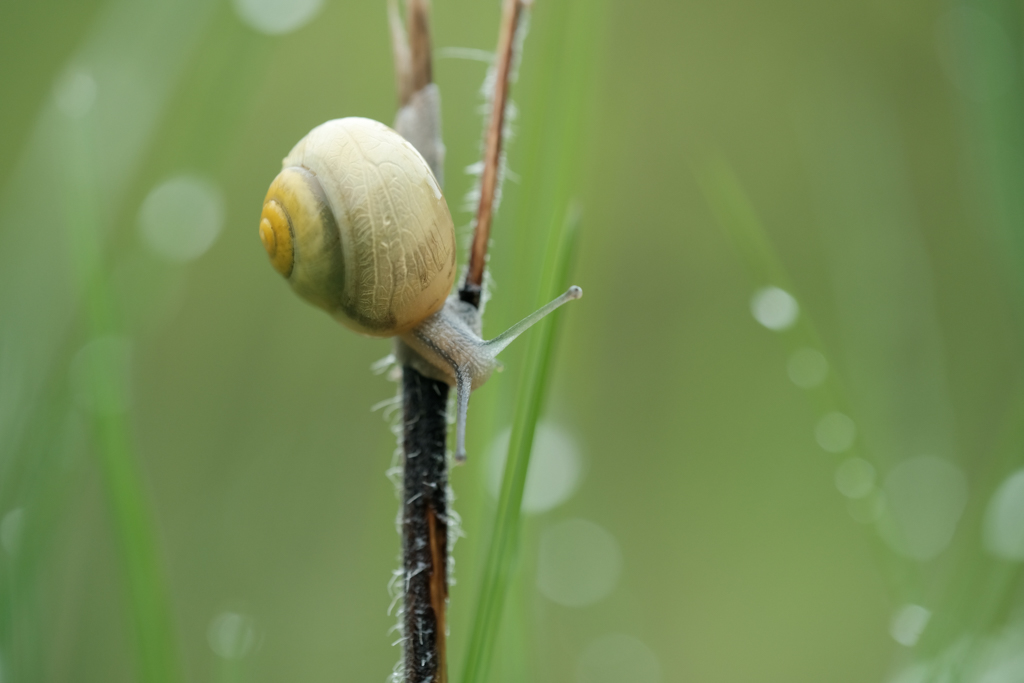
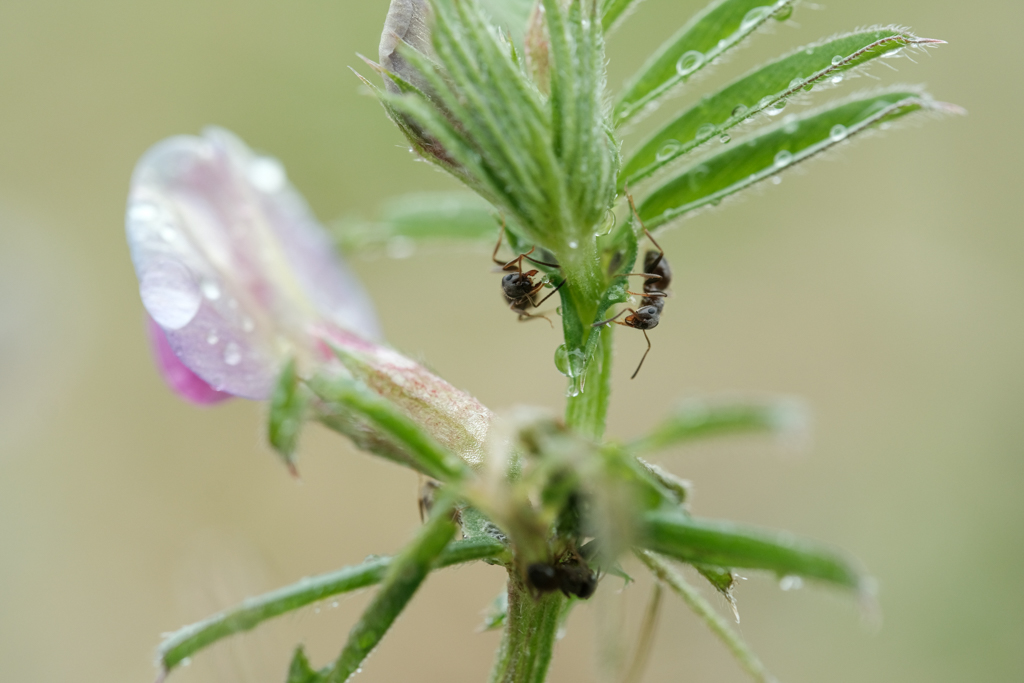
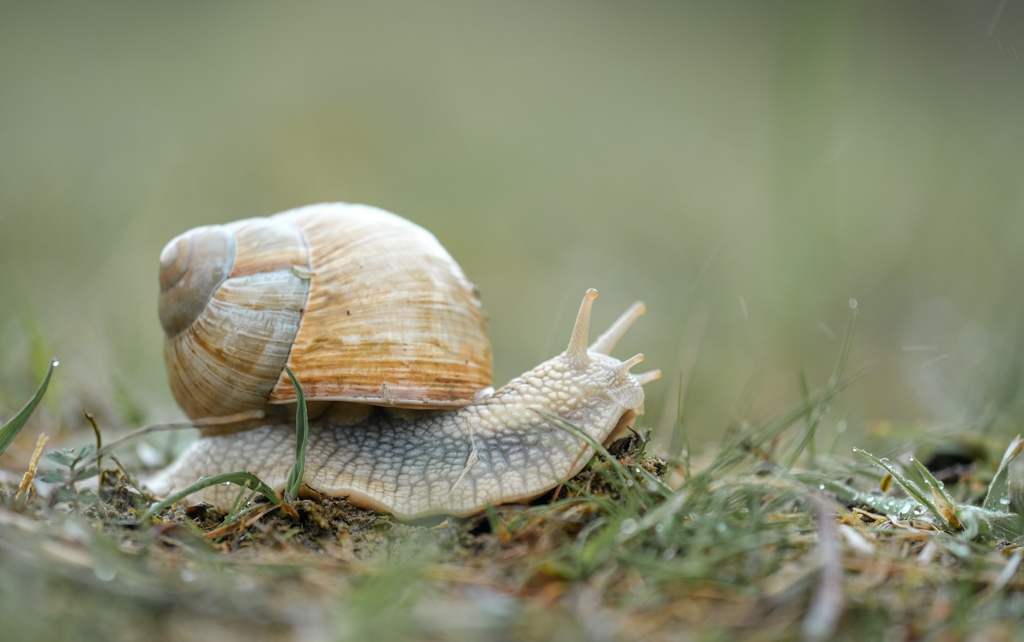
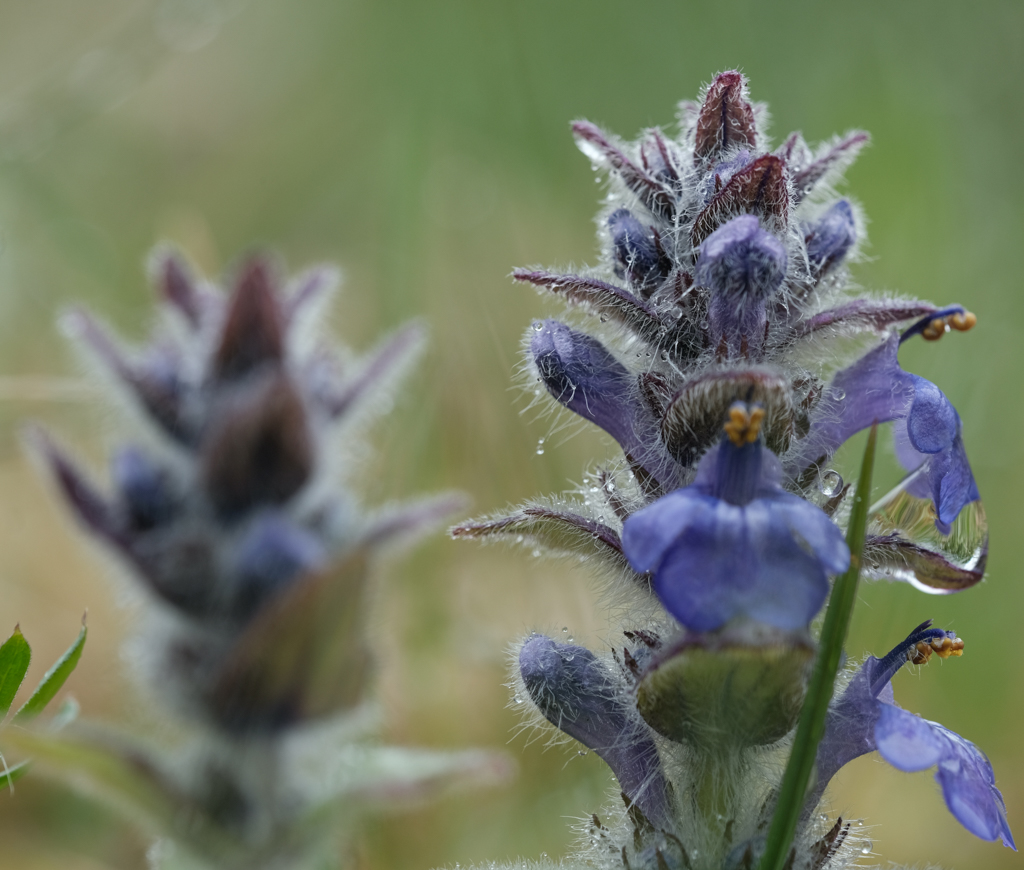
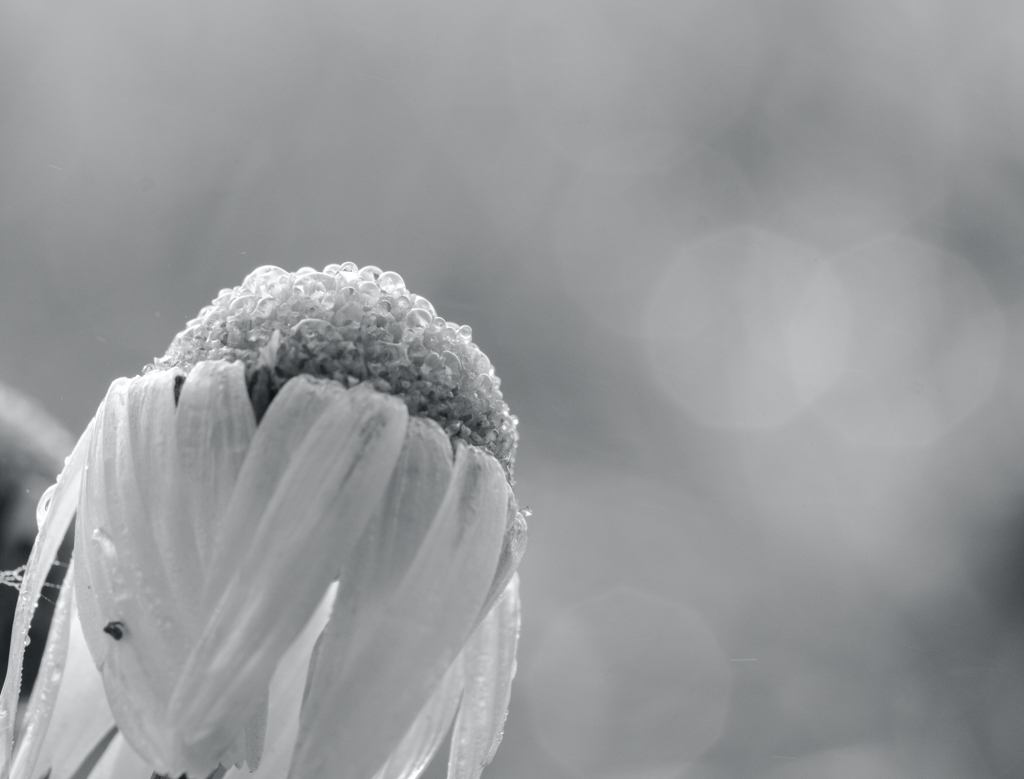
Also: My camera body is not weather resistant. But I received a rain cover as a birthday gift! That’s why there are so many snails on the pictures – I went out during rain for the first time and its so much fun: No people, and so many droplets everywhere on macro photos.

Replication / Innovation

Replication / Innovation

Replication is one of the basic building blocks of science. The replication crisis is still ongoing: many scientific studies regarded as milestones, especially in the social sciences, cannot be reproduced. Also in natural sciences it’s equally difficult to define experiment protocols in such a way that they can be successfully replicated. Replication is also one of the basic building blocks of learning: it can be seen in animals when they imitate their parents behaviour from a young age on. The same is true for humans, also later in life when picking up new skills: In every new hobby, we first have to replicate what someone has done before us.

I have had a few different hobbies in my life that I pursued thoroughly and in most of them I never got over the step of replication. Art seems to be somewhat different: Already the first picture I took is unique. But even though I am immediately creating something novel when taking any photograph, the techniques and contents of my shot are far from innovative. Instead they are also largely influenced by what I have seen from others, what inspired me, which techniques I got thought, and so on. The two lonely counter-examples for me, where I got beyond replicating, are probably 1) route setting for climbing (at least to some extent), which I see as an art, 2) and my work.

Only after I replicated for a long time, with different role models, from different styles, with different materials, I was able to slowly move on: from replication to innovation. I could find my own style by mixing what I learned. I could create a new method by expanding on learned skills. For work, this has required over ten years of education and, hence, over ten years of replication. But slowly I feel that I am not only replicating anymore. From time to time there is some innovation. And if I keep going, the same will apply to photography some day.

Completing the Last Step

Completing the Last Step

I finally did it! I started printing photos and I can’t stop anymore. And it is at least as much fun as I hoped for. But getting there was also quite stressful, so what happened?

As written in my last post, I bought a used photo printer on the internet as well as a full set of ink. In this case it’s the Canon Pixma Pro-1 that is running on 12 pigment ink tanks costing approximately 25€ per tank. When it arrived I enthusiastically started to test it out – and sadly had to realize that one of the print nozzles was clogged. No matter what I tried I couldn’t resolve the issue. Thus, I did not only buy an unusable printer, but also wasted a lot of ink during my iterations of cleaning the print head and trying to print. While I could get back the money for the printer, I still lost a lot of the ink. And more importantly: I couldn’t print even though I was eager to do so.

After two weeks of weighing my options I finally bought a second printer, also used, but this time in person. I had to travel two hours one way to get it; however, the hassle was worth it and this time everything went well: Not only does the printer work flawlessly (at least for now), but furthermore the seller gave me lots of high quality paper for free. And this paper is at least as expensive as the ink: Only later I realized that a single A3+ sheet goes for over 5€.

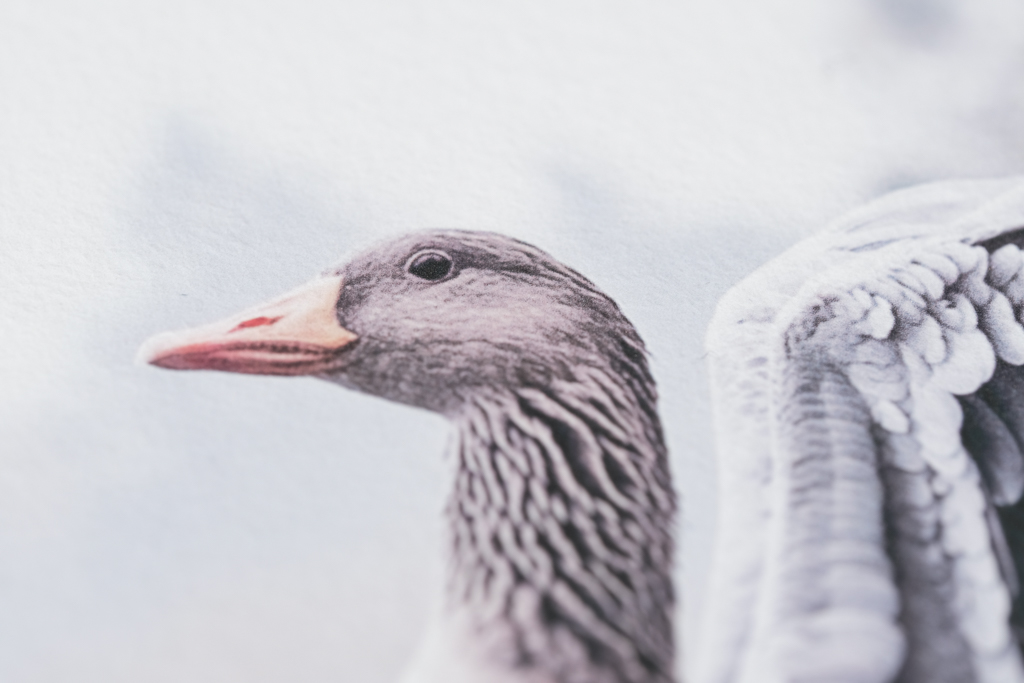
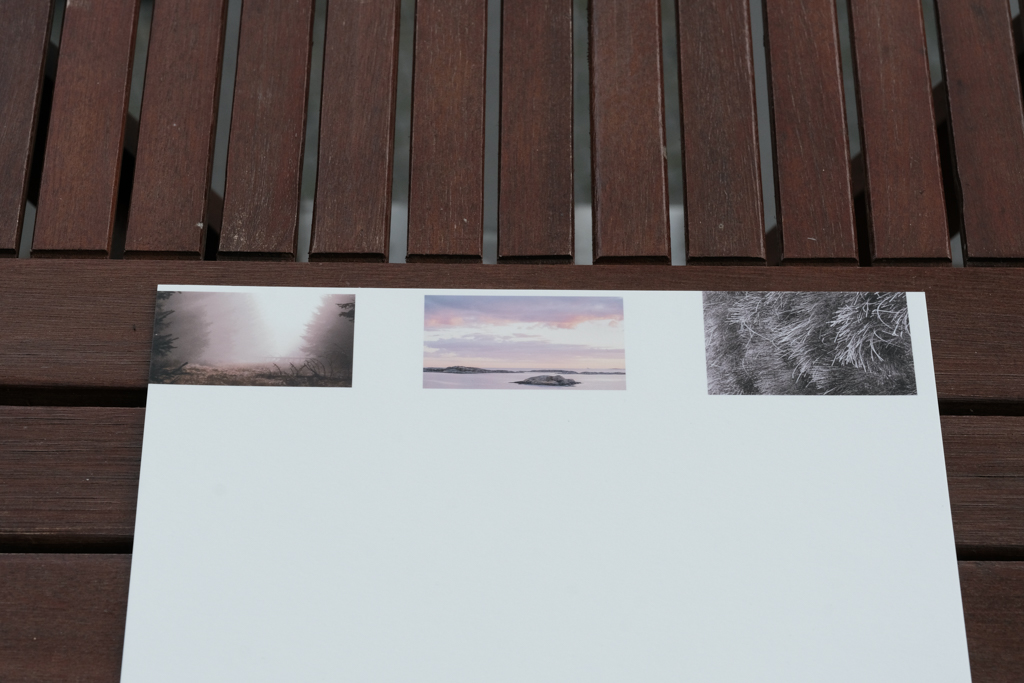
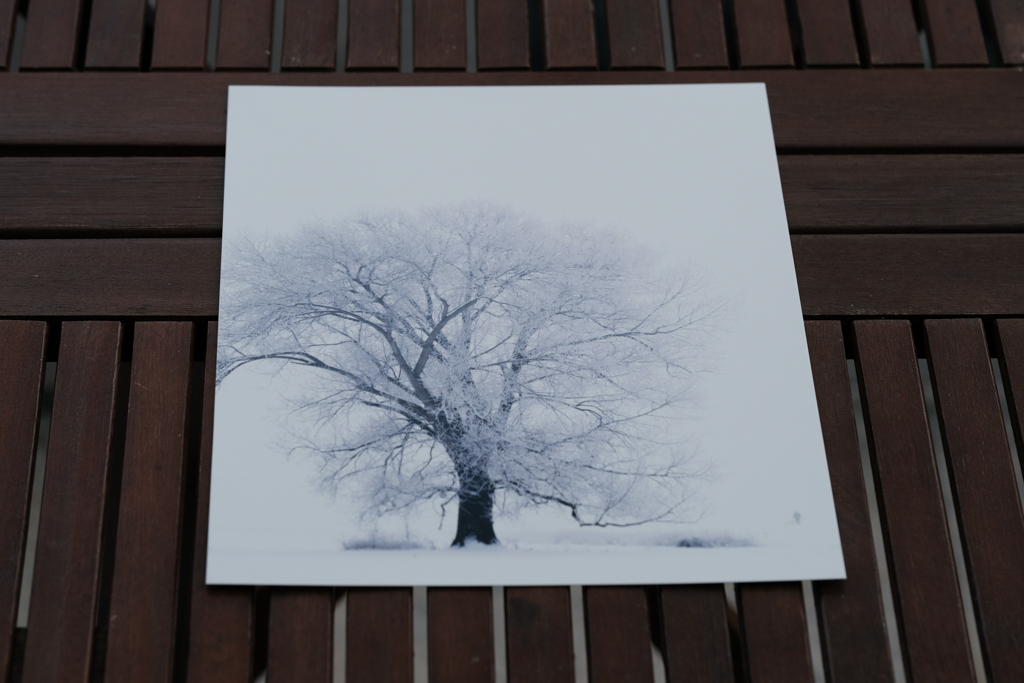
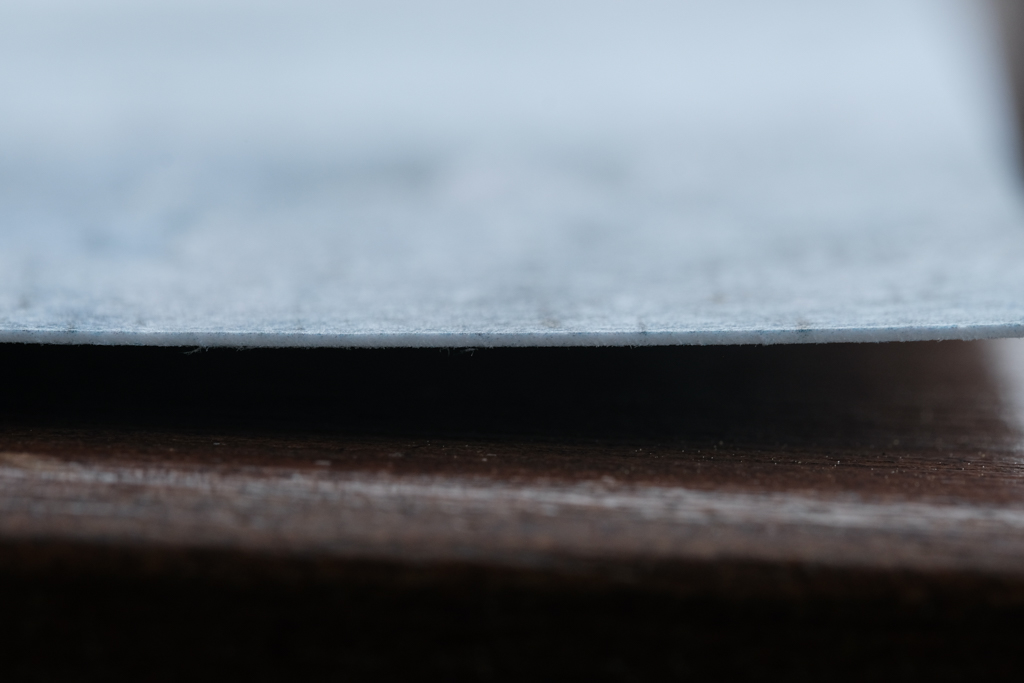
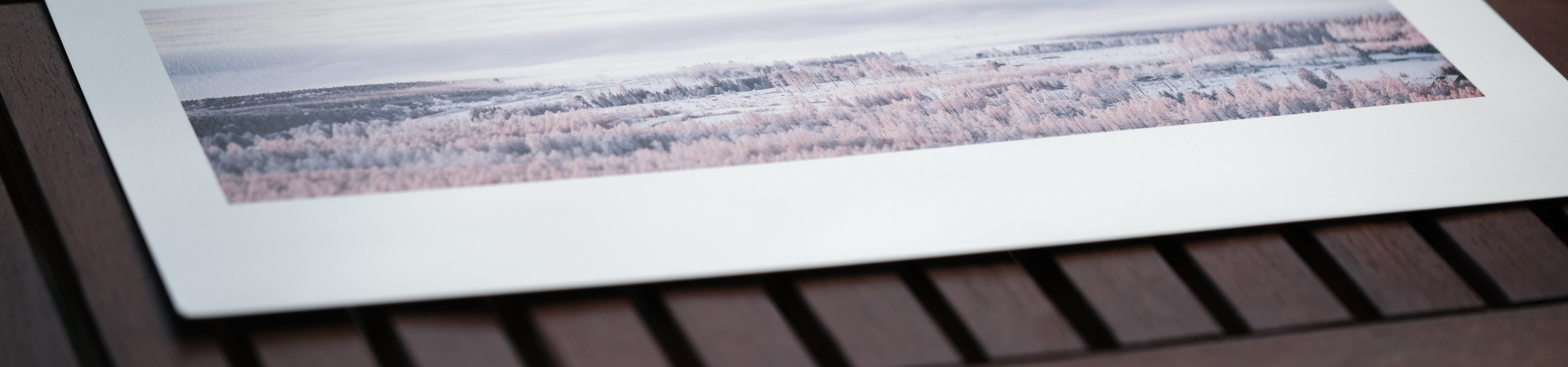
That’s it. My small adventure of buying a printer. What follows is my still ongoing adventure of figuring out how to use it properly. I still have very little knowledge of what I am doing; but the printer and paper already produce results I am really proud of. I tried to capture it on camera, but unsuccessfully. It’s very different to hold a print in your hand than to see a picture of it: The stunning overall visuals, all the little details when you examine the print closely, the texture of the paper, the smell of paper and ink, the weight of the print: I love it. And thus, I have chosen three of my first prints I will give some short additional information on:


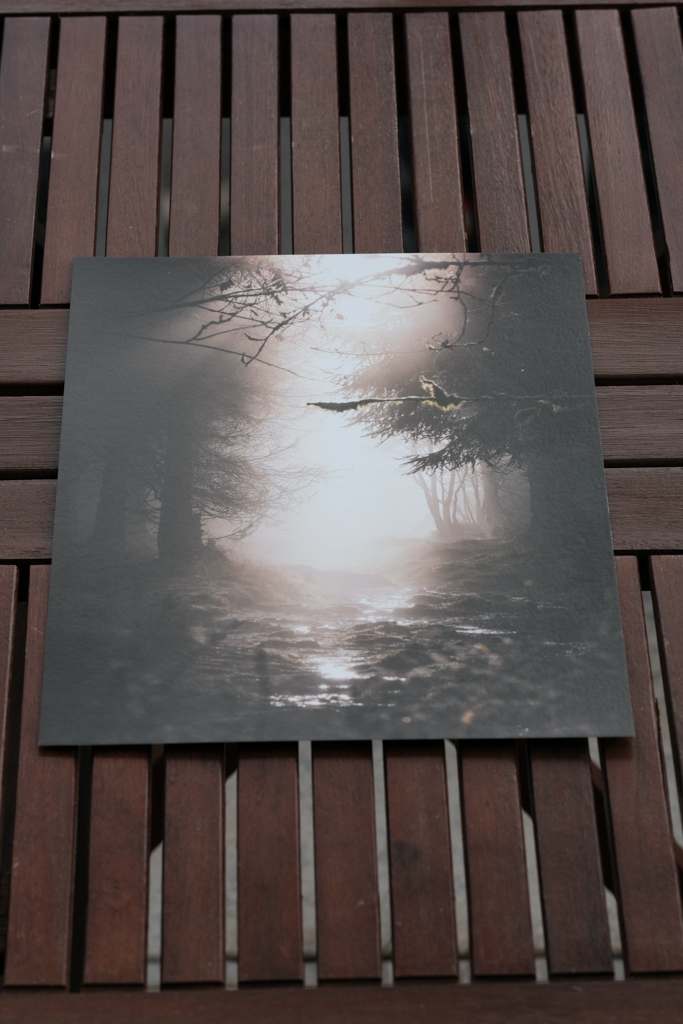
The first picture is one of my all-time favorites: Two goose in the morning fog at our local lake which is only a few minutes by bike. It’s printed on a matte and thick paper, the Hahnemühle Photo Rag, 308 gsm. Texture and details in the print are marvelous.


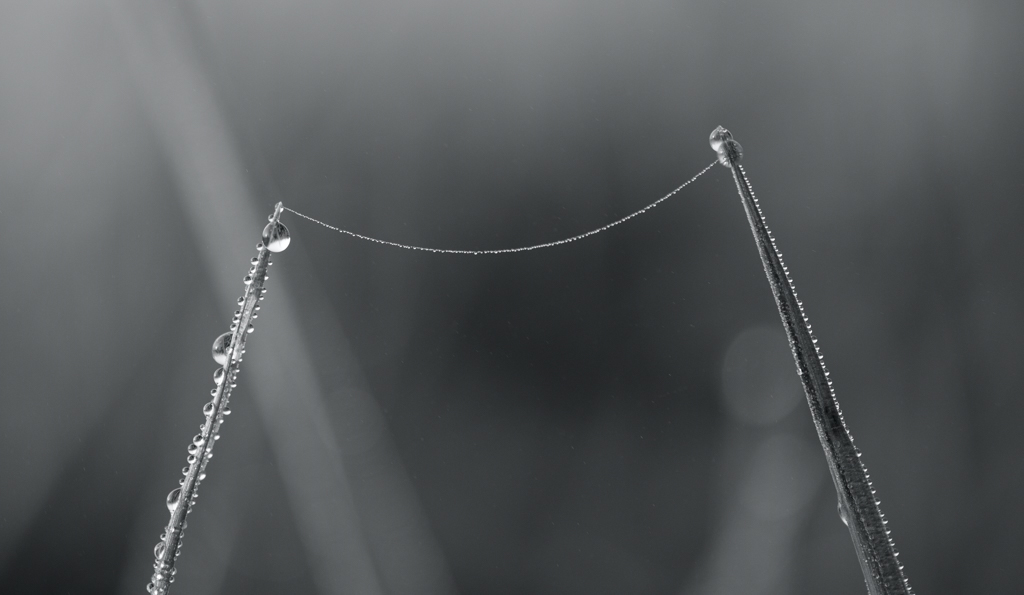
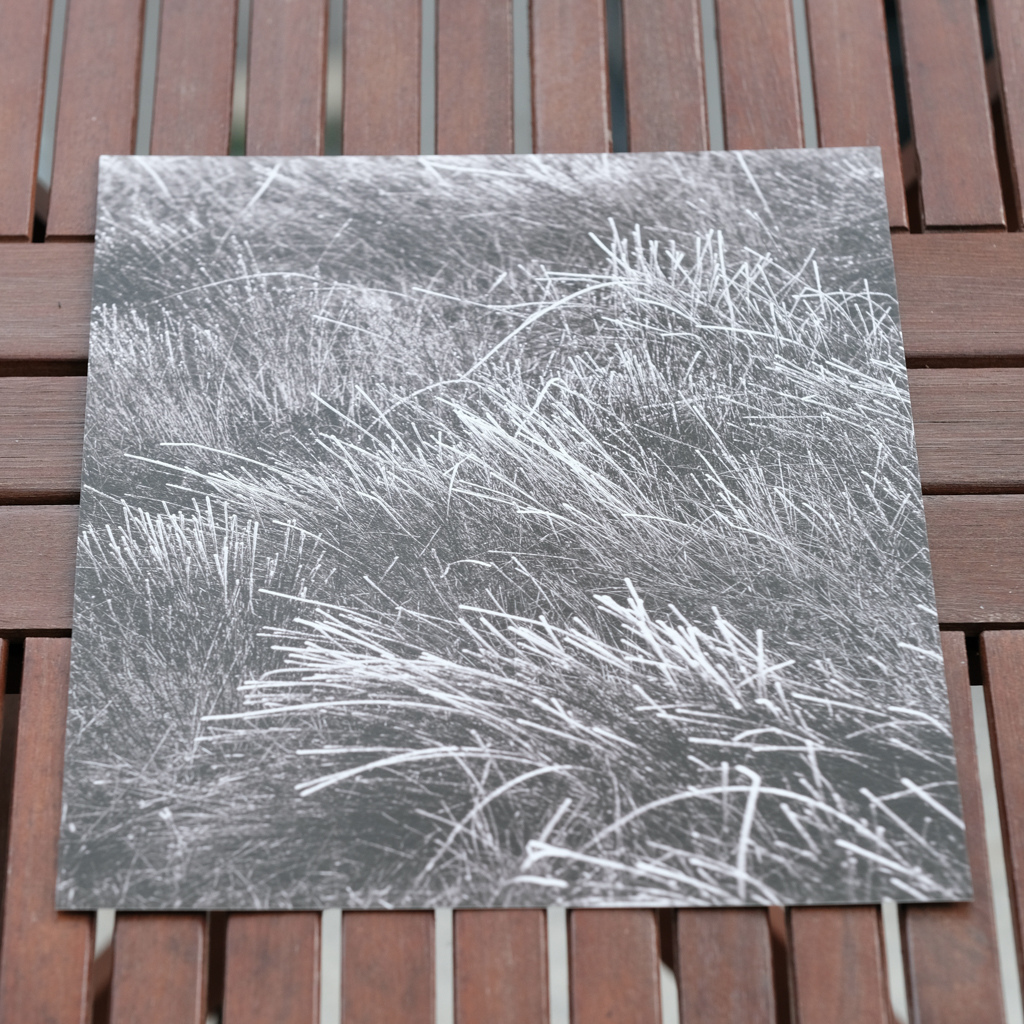
The second one is an abstract black and white photo of grass and frost I took in the Harz mountains when I went out to photograph the sunrise. It was one of my first dedicated photo trips and until today I never had such good conditions again. I think I still took several of my best photos so far on that morning. It’s printed on the Hahnemühle FineArt Pearl, 285 gsm, which is a semi gloss paper that works beautifully with contrasty black and white photos.


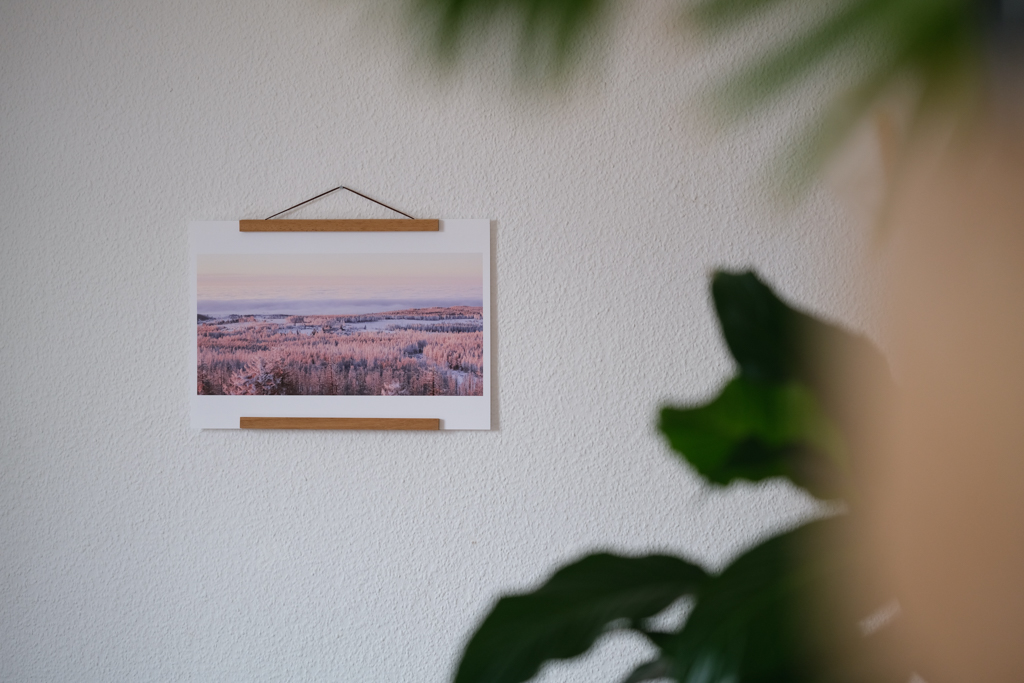
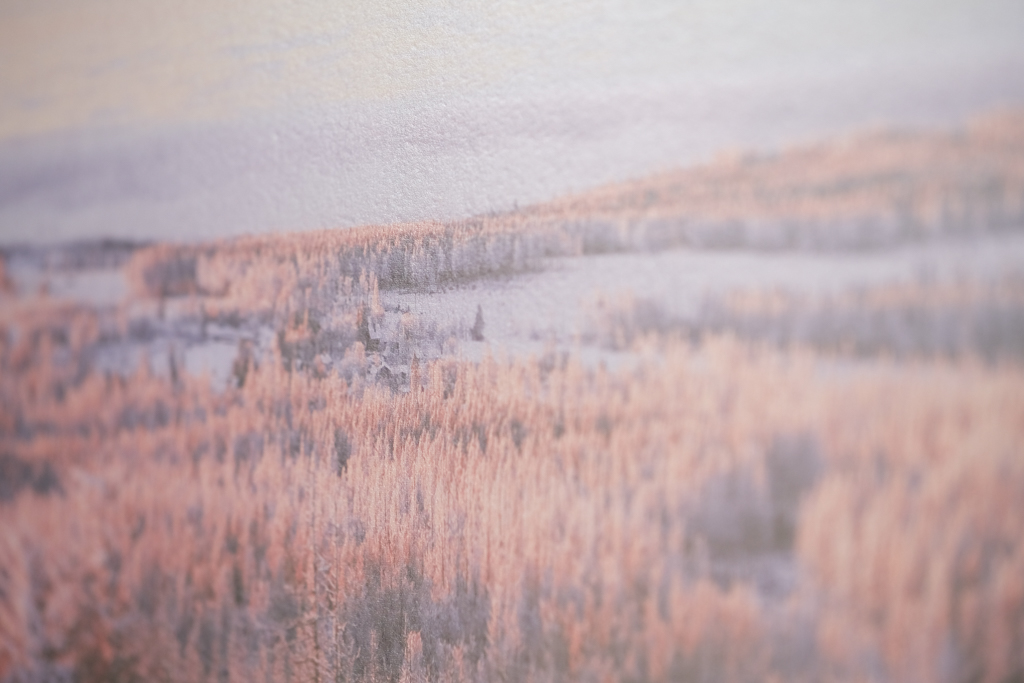
The last one is a picture from our early morning adventure I already talked about here. Clouds blend with rows of trees while the sun hasn’t quite conquered the horizon. Again, there is so much to discover on this photo when you hold it in your hand printed out. So many details I have missed before when just looking at the digital version. It’s printed on Hahnemühle Photo Rag Baryta, 315 gsm.


I have compiled an additional small collection of some detailed shots of further prints. For now, I have only printed A4 and A6 with one exception: I created one A3+ print of a photo from Mädchen Klitzeklein; it’s the one hanging already on the wall. For now, I only have to sell the broken printer again…

Time Flies

Time Flies

Time flies, day by day.

It speeds and leads
to paths unknown;
It has no needs,
proceeds alone.

In between, a lovely scene:
Fine cuisine, regards with love,
Outside wind blowing, doves above.
But it keeps going, the machine.

And one might ask:
"Why so? Which way?"
I know my task,
and thoughts don't stay.

Time flies, day by day.