No consistent system of axioms whose theorems can be listed by an effective procedure is capable of demonstrating its own consistency.
Gödel’s incompleteness theorem
A 1: Being happy requires time.
A 2: Being happy requires fulfilling work.
A 3: Pursuing fulfilling work for a comfortable life requires time.
A 4: Time is limited.
Theorem: Living a happy life is possible in our given time.
Some topics keep occupying the mind. And for the moment, again, it’s balance; or, as here, phrased as: completeness. Can something be complete? Work? A picture? Life? And what makes it complete? Is it the experiences we make? The amount of satisfaction we achieve? The accomplished perfection? And can we ever tell when it is complete, or can we just decide that it is? Or is it just a feeling of fulfillment that cannot be proven?
I’ve felt completeness once, however, in unfortunate circumstances. Maybe we need to accept, or even embrace, the incompleteness. The imperfection of the picture, the irregularity in life. Maybe this is the distinctive feature, the remarkable quality, that makes our existence worthwhile. That makes the picture special. That motivates us to keep going, to keep on pushing and to go out to find the rare human experiences that enrich daily routines. Incompleteness, as the 10th Dan that cannot be achieved, as the optimal algorithm that cannot be written, as the last theorem that cannot be proven.
Maybe, someday, I will know; and maybe someday you will know. For now, I’ll keep on trying to find the proof.
There is a common thought that the best ideas come in the most unexpected circumstances. While showering, while washing dishes, or while taking a walk. I agree that distraction and activities that leave room for thoughts to roam freely are important; but I also feel that the flip side is just as important and does only seldom get recognition: deliberate creativity.
The walls are empty, stripped from the grimy holds that decorated this section over the past weeks. Boulder problems climbed by hundreds of people are gone. Problems climbed by only a few will be forgotten soon. But the walls are not meant to stay this bleak – new boulders are to be created.
For now, however, the holds are neatly arranged into their boxes; by color and by manufacturer. Large wooden volumes lay on the floor and wait to be placed somewhere on 45 square metres of wall – to change the wall shape and angle. Where to start? Which volume to pick? Which holds go where? What movements to create? How hard should it be? Everything is possible. The number of options are uncountably infinite.
But still, the result cannot be chosen by chance. It needs to be assembled carefully and put together accurately. It needs knowledge, experience, empathy, strengths, and: creativity. The movements shouldn’t feel similar because it will be boring. If the movements are to funky, most people will be turned off as well. Most boulders need to have an element of interest while the body positions still feel familiar. They need to be challenging, but without overloading the customer. All elements of this job require a lot of creativity. So again: Where to start?
Waiting in the shower won’t solve the problem of being creative. And the same applies for taking a walk. The only thing that will solve the task is to dive right into it and start. Routesetting has taught me this important lesson: Creativity doesn’t come to me on its own. It does not always present itself in unrelated tasks. I need to actively seek it out. I have to explore my mind, feel the holds, inspect the wall. I need to place volumes at different angles, arrange the holds on the floor, move my body, move my thoughts. Holds go up, holds go down again. Holds go up, this time slightly better. I try to replicate a neat move I saw. I fail. Instead, I find something new – sometimes worse, sometimes even better. Problems that require specific muscles movements, boulders that require intricate movements.
And if everything goes well, a new set of boulders decorates the wall. For people to try hard, to invest, to train on, to feel accomplishment, to show off, to feel their body, to cheer for others, to fail and fall, to scale and accomplish their goals.
I notice the same in my field of work: mostly, the ideas do not come to me on their own. I need to sit down and actively explore them. I need to draw diagrams and pictures for some hours until a new potential idea emerges. In photography, I do not sit at home and wait for my subject to appear. I go outside, in all conditions, change my viewpoint, change my approach, and only then, if I am lucky, I create something interesting, sometimes even something creative. And lastly, when writing on here: It’s useless for me to wait for the next topic to peak around the next corner; I have to actively engage in thought. And even if it’s not creative, at least it’s about creativity.
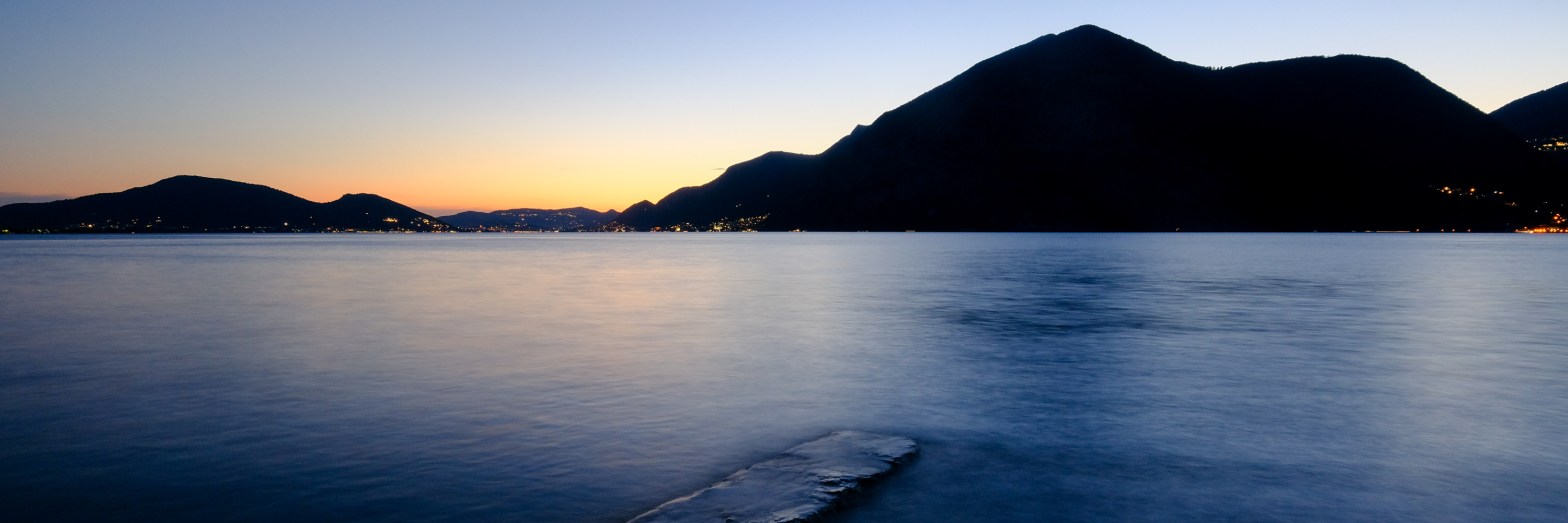
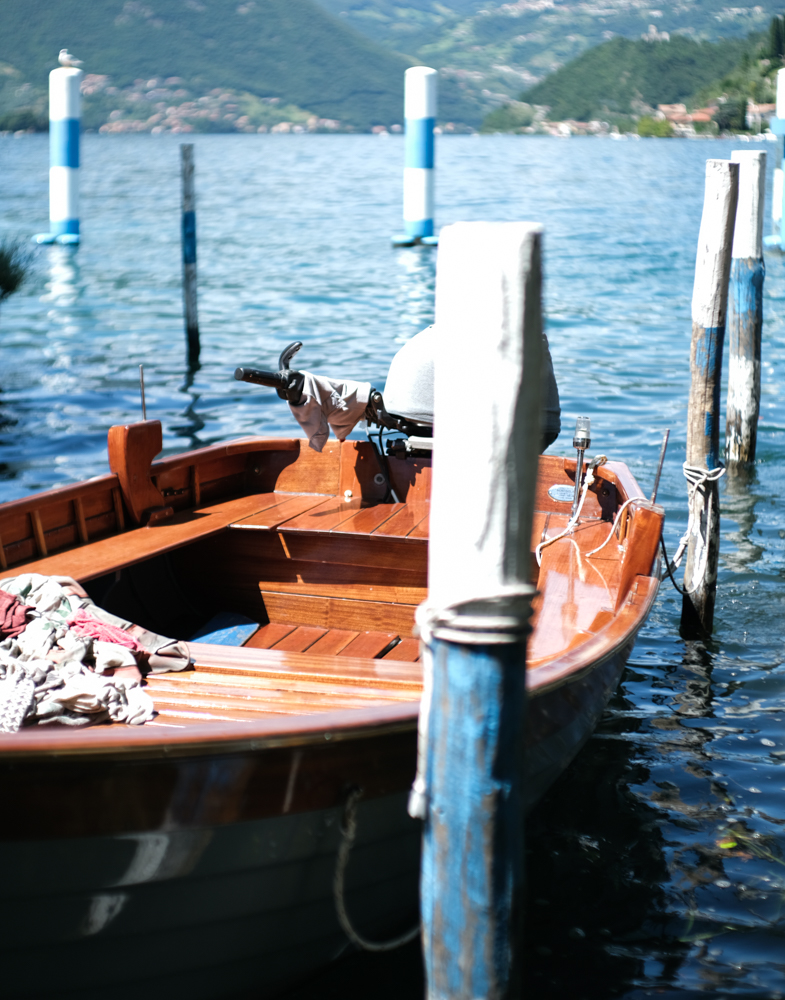
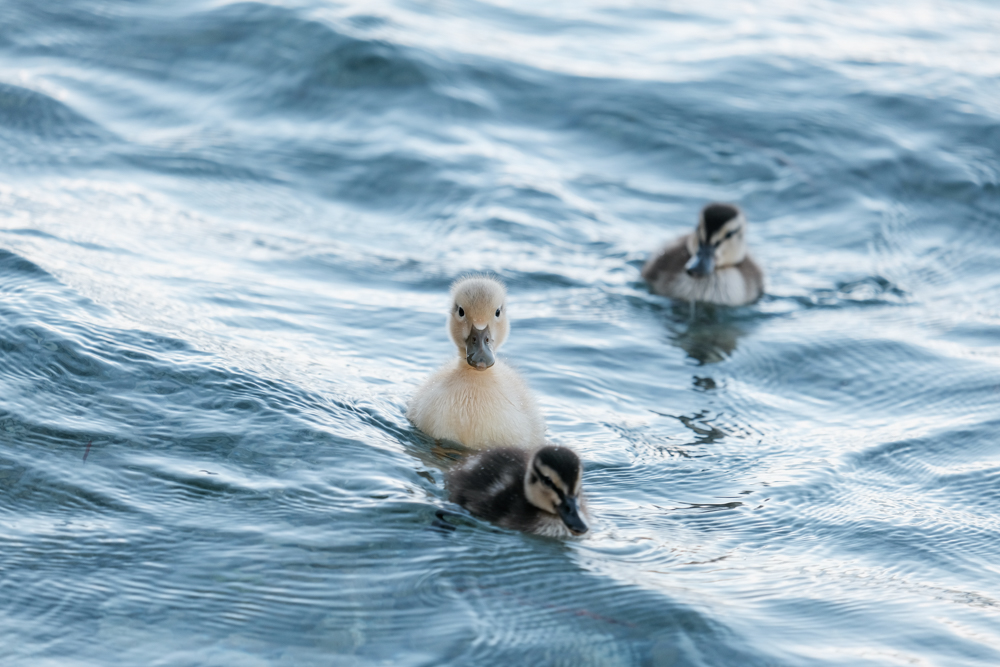
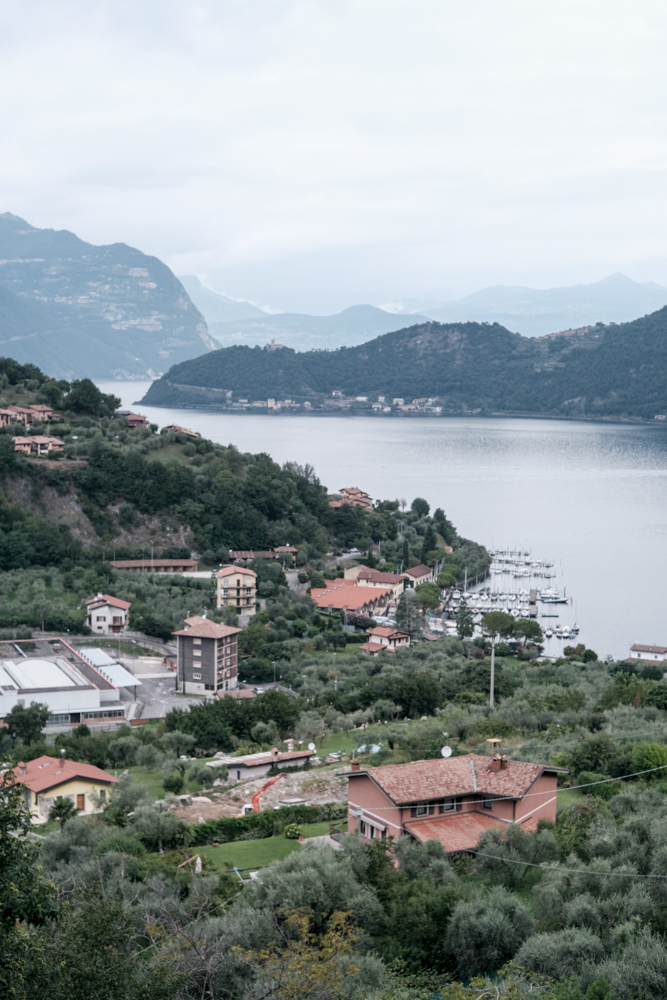
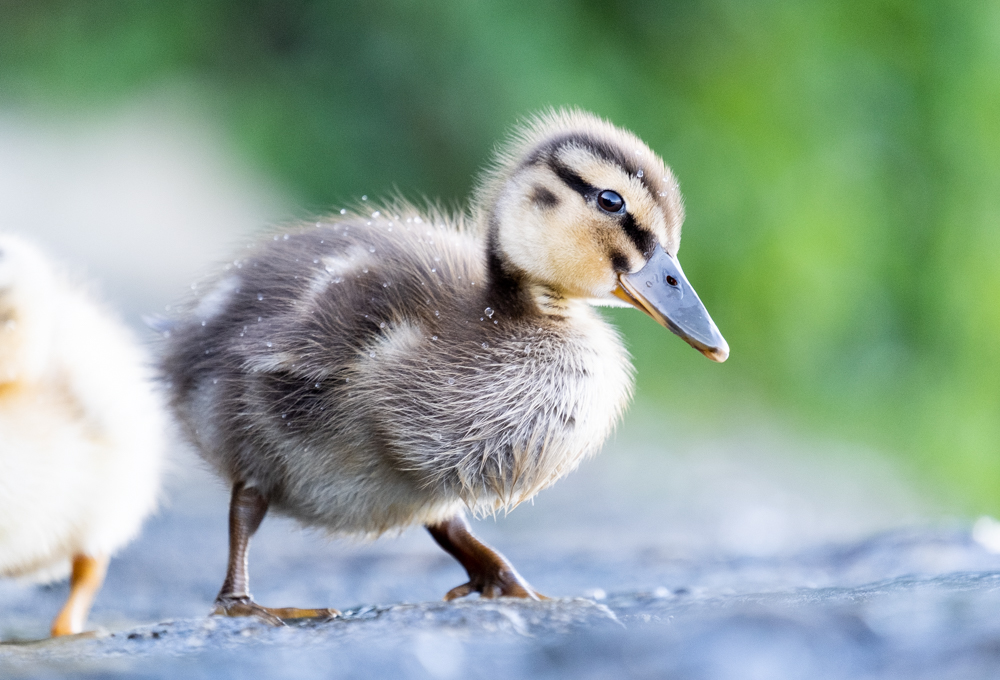
Also, the pictures aren’t to creative this time, but I still like them as they remind me of our wonderful vacations we had in Italy. Just look at those cute ducklings!
As climbers and boulderers we come into contact with rock; a lot. Probably more than most people (except geologists). This comes with a certain appreciation for different types of rock. Around our region alone we have a combination of granite, limestone, sandstone, and basalt. The granite is rough and sharp – during summer nearly impossible to climb without destroying your skin. The limestone is smooth and slick, sometimes with nasty and small finger pockets. In comparison to Fontainebleau, most of our sandstone is fragile and crumbly, however, it had always a certain charm on me with its intricate structures and fascinating shapes.
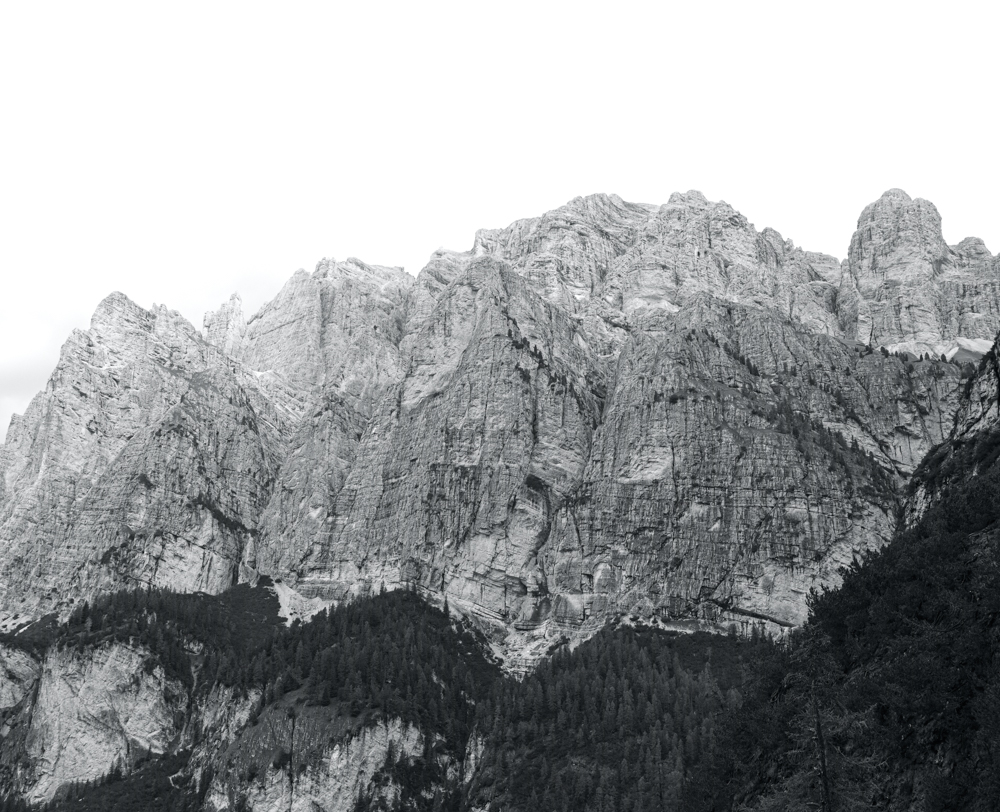
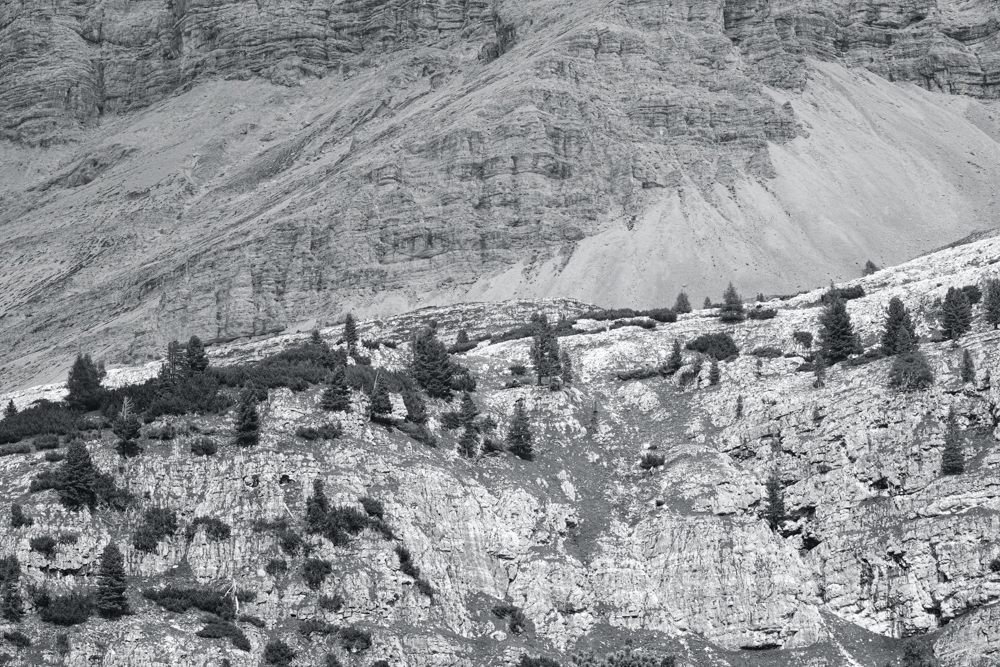
Thus, a boulder can be aesthetically pleasing, especially if a clearly defined line from bottom to top is visible that begs to be climbed. It can inspire, motivate me to push harder than before. I guess everyone who had the pleasure to wander through the woods of Fontainebleau can empathize. But seldom, I had the same appreciation for the rock of mountains when hiking as I have for rock while bouldering. The dolomites thought me differently.
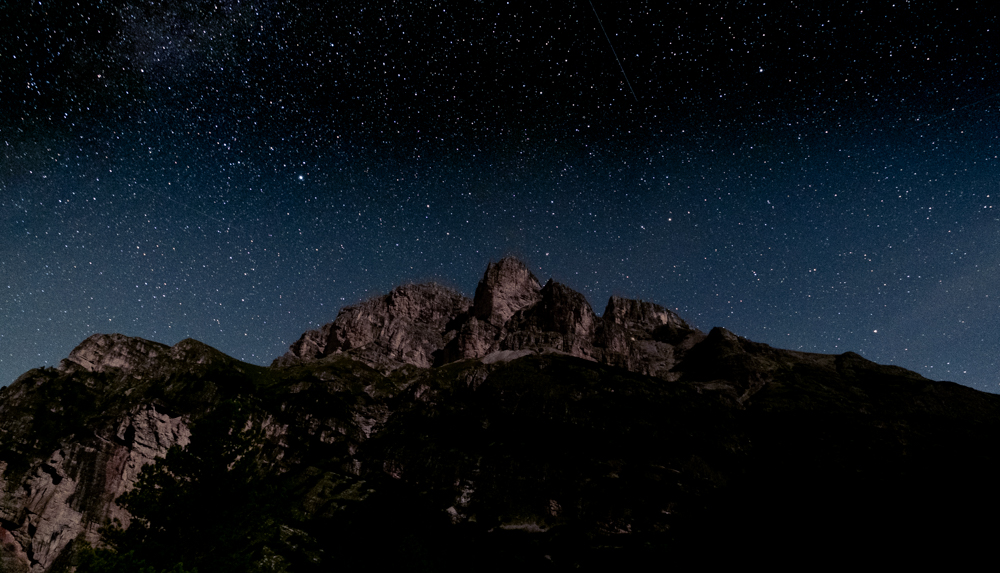
The masses are not here yet. Silent nature with the occasional gurgling of distant water: Calming. Few brown bears roaming the mountains: Concerning. Light is absent, stars occupy the dark canvas. Heavy breath, swampy steps, a steep ascent, a large plain to cross, another steep ascent. Never ending sedimentary rocks. Some ancient coral reefs, reaching into vast sky. Distant light. And finally: the mountains shoulder. Structures everywhere, patterns every. This rock is different. First views towards west. Rolling alpine meadows, interrupted by jagged peaks reaching high, layer by layer, color by color. Rocks on fire.
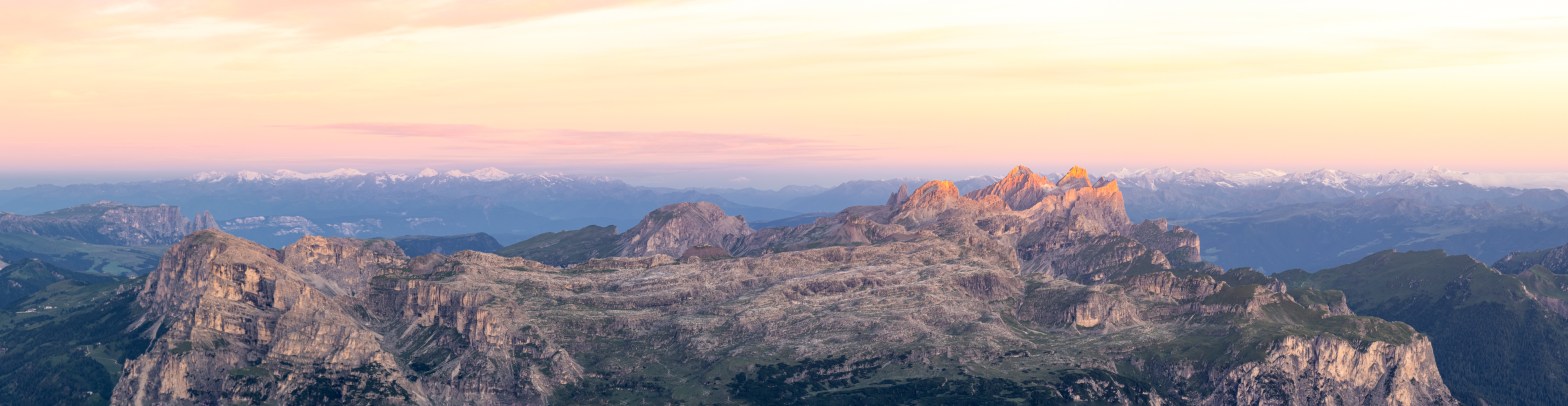
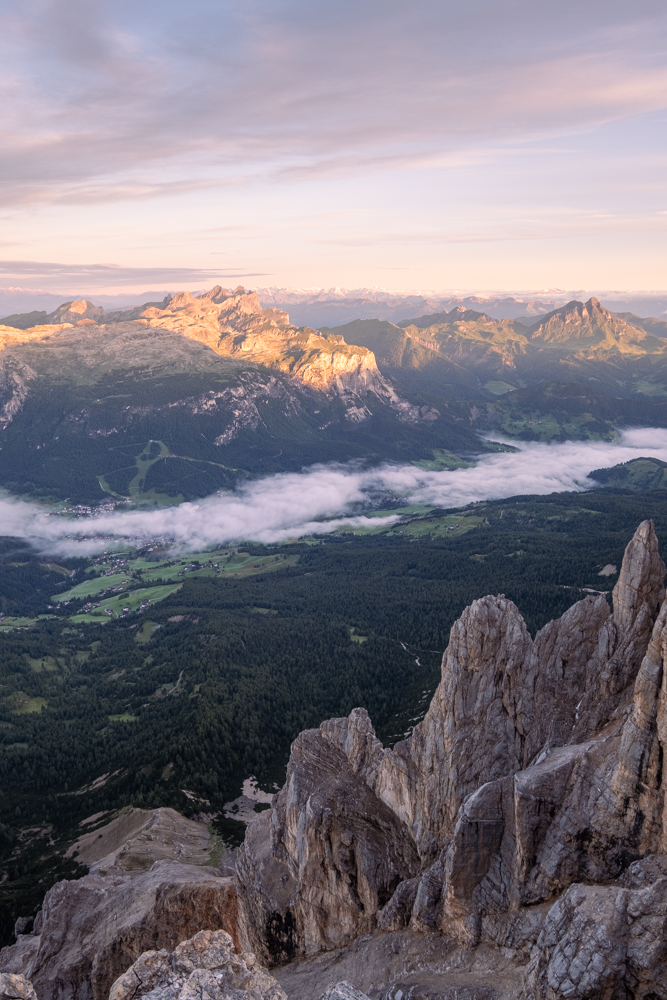
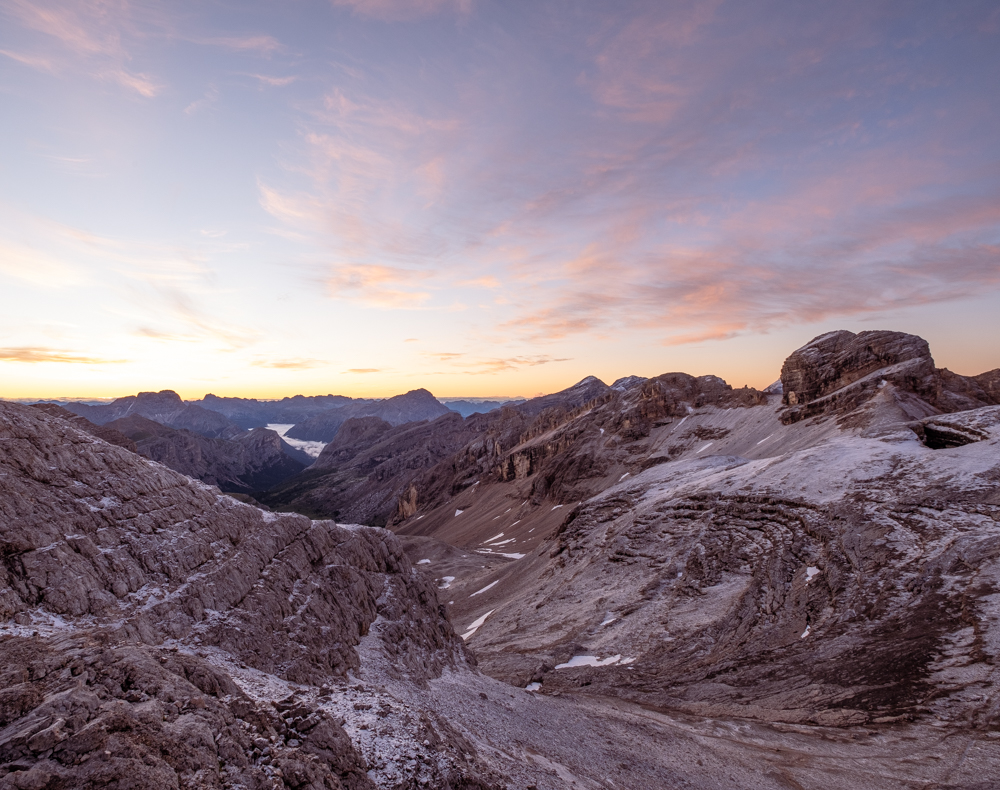
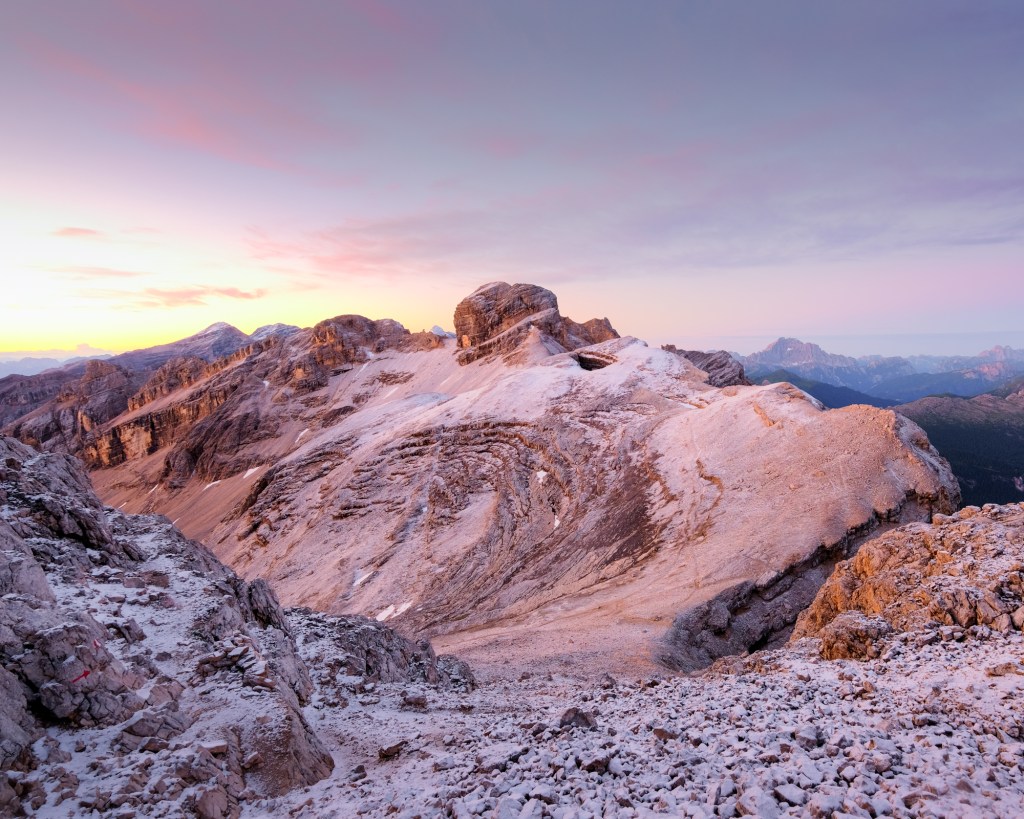
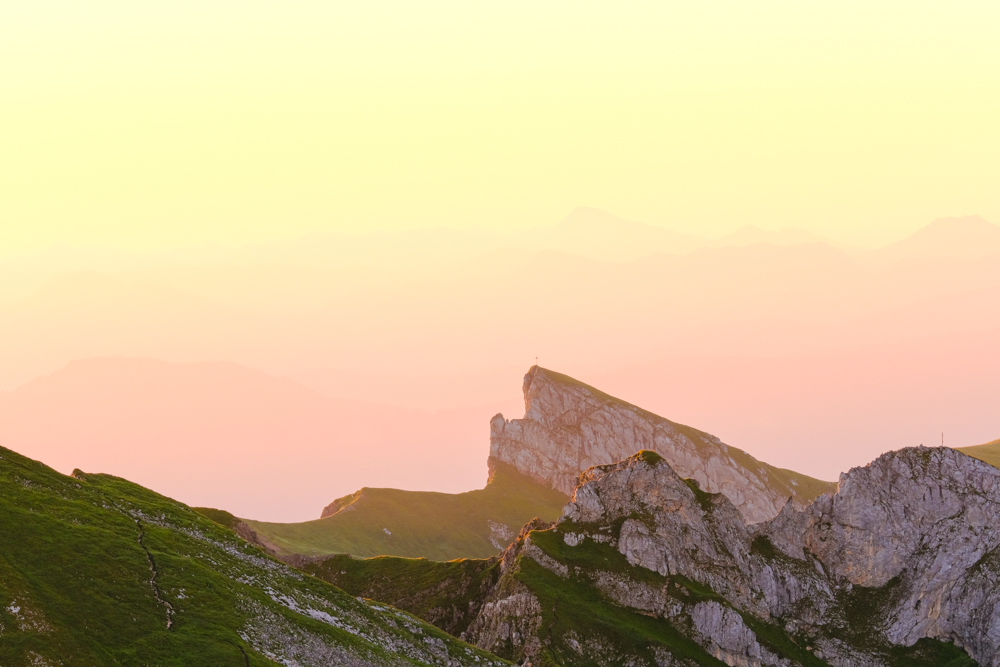
The Cunturines peak as seen from Lavarela after several hours of steep hiking. The colors are no exaggeration; the east side of every peak was on fire when the first sun rays hit.
We only stayed for two and a half days, most of which was characterized by heavy rain storms. But we used all the moments in between to explore the Fanes-Sennes-Prags national park. And I am confident when I say: I have never seen mountains as beautiful as these. Again, I started in the very early morning hours in hope to reach one of the closest peaks, Lavarela. But this time I underestimated the pure scale of this monumental landscape and could not quite reach the summit after 3.5 hours of hiking. It didn’t affect the view with a large panorama towards west. I guess this was and will be my nature highlight of 2021.
There are some things, only mountains can do: provide panoramic views, enable climbing and steep hiking, exhaust the visitors, and: thunderstorms. We witnessed the most intense thunder in quite a while during our time in the dolomites. Bright lightning. Thunderclaps and rolling thunder. Constantly. Elevating and frightening. Marvelous und destructive.
Lately, I have been discussing frequently what makes a good photo. In the end, as most things, it comes down to personal preference. Many rules exist, but many exceptions to any rule exist as well. For me, I have found that the best photos do two things: First, I am flashed when I see them the first time. It strikes me like lightning; I am stunned and in awe. Second, they keep me engaged and hold my interest – like the thunder rolling through the valley, they develop and keep giving as long as I keep looking. New forms, new details, new patterns.
It’s been a year now since I have my camera. I am looking forward to the next year and I am hoping to produce at least a small thunderstorm of pictures; flashing bright and rolling afterwards.
The night is young, but the warmth of the last day has already faded. The cold creeps beneath my jacket. It’s 1:30 a.m., the goal in mind is Hochiss: the highest mountain of the Rofan mountain range at 2299 meters height above sea level. Thus, 1359 meters in altitude to go. Lone clouds are scattered across the sky and the moon peaks cautiously behind to throw dark shadows. During the first 20 minutes I pass the small village Maurach; a single car turns up the music as it passes. Then, I leave the streets and houses, and with them the dim lighting of civilization that seems to be present everywhere. I need a brief stop to retrieve the headtorch deep within my backpack; it hasn’t been used for a long time. After only 30 meters I need to change the batteries – and then the mountains begin, then I walk.
The headtorch bounces around in the dark forest, as do my thoughts in my head, mind and legs wander around together: Have I packed everything? Will I arrive in time for sunrise? Will I find the correct way? What will we eat tonight? How does the story of my current novel turn out? How fast are raindrops when falling from the sky? How good is the vision of cows at night? Will my knee hurt again?
All senses are sharpened, every noise of the forest seems loud and intense; but in comparison to the days, humans and nature are mostly sleeping. The path is steep and gets even steeper with every step. The stone I want to step on quickly jumps out of the way. Startled, I watch the toad disappear in the wet grass and everything goes back to silence.
From time to time I look into nature, and sometimes it looks back: small dots in the dark, reflecting the light, belonging to hidden bodies: Is it a sheep? A bear? An ibex? Sometimes their movement gives it away, sometimes they stay anonymous. The rabbit is pretty obvious though as it hops across the meadow, as are the cows with their bells that cling revealingly. Walking and thinking goes together, especially when alone. Thoughts come and go, as the surrounding landscape, from forest to meadow to rocky paths. Sometimes thoughts are easy and without any obstructions, but suddenly a steep and slippery slope awaits around the next corner.
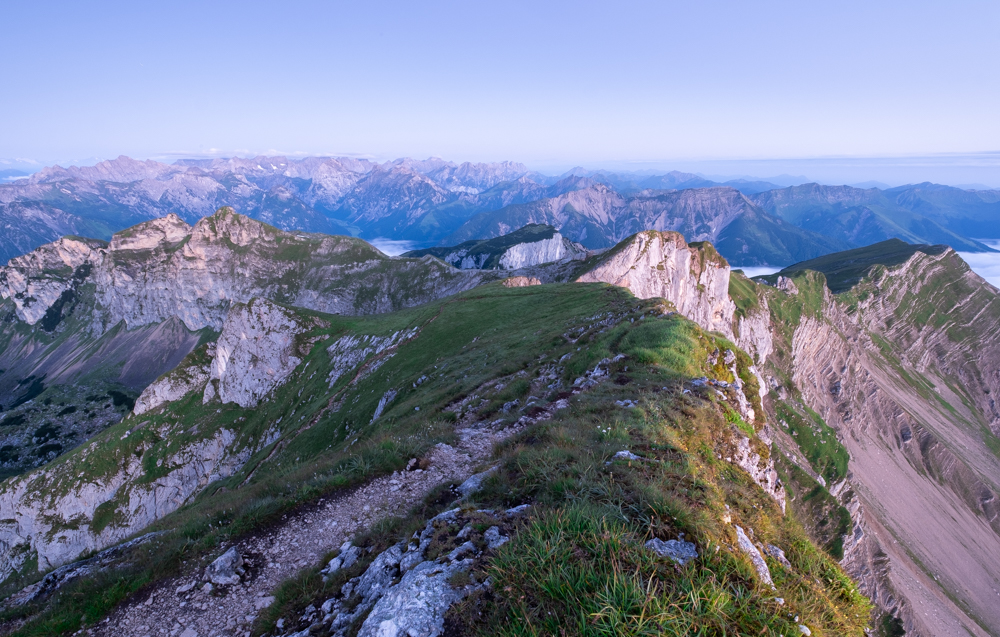
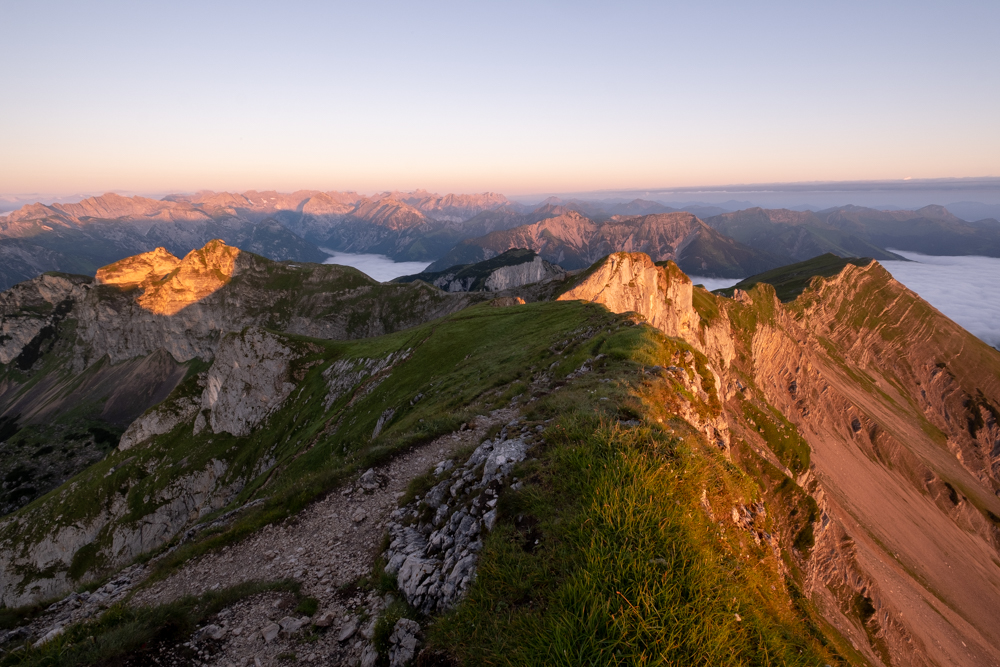
I am fast, faster than anticipated at least. Another more difficult section waits below the summit; especially with limited light. Already at 4:10 a.m. I approach the last ridge towards the lone cross on the peak. Darkness makes it difficult to guess the distance but it doesn’t look too far. And indeed, 5 minutes later I am there: On top of the world – not exactly, but at least on top of the Rofan mountains, the Hochiss. I shut off the headtorch and look around at this miraculous scene illuminated by moon and stars: It’s simply breathtaking. 360 degrees of stunning views. Most haze got washed away by the severe rain falls the day before. A clear summer morning with crisp air. No other person in sight. Other peaks stretch below in every direction. The east-facing walls are already glowing in warm light.
Sweat and wind are never a welcome combination, especially when it’s also freezing cold. I try to dry my clothes from the sweat and put layers on layers on layers to stay warm. Gloves in July; later that day people will be amused by the thick jacket at my backpack. But later that day, the sun will also burn down on the innocent hikers and I will get a sunburn because I didn’t consider sunscreen when I started in the middle of the night.
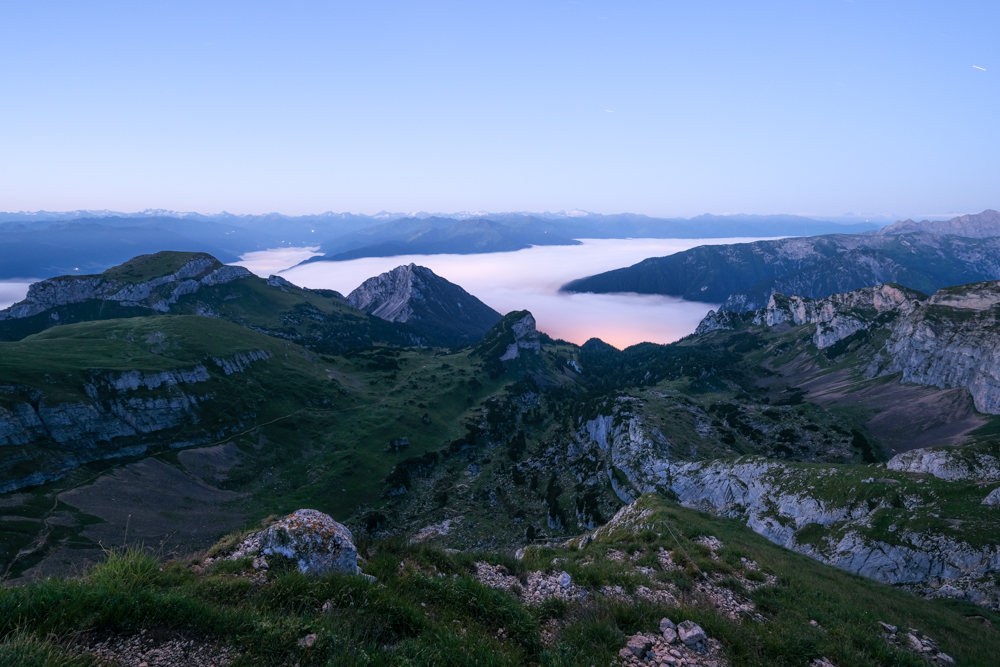
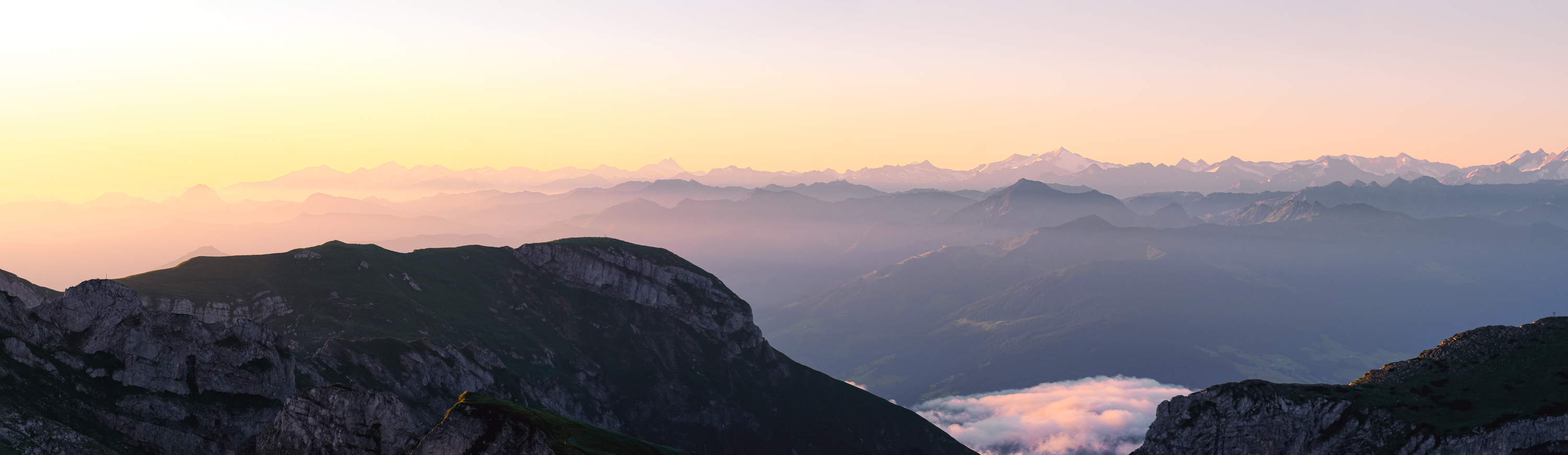
Back to now: Already 90 minutes before sunrise it’s clear where the spectacle will occur: In the east, the very edge of the sky has started to shift towards a pale yellow. With every minute it conquers the sky and gets more intense. We follow our 360 degree view clockwise and see the huge mountains in the distant that belong to Berchtesgaden. The tones are shifting more towards a fiery orange, magenta, and lavender purple.
Towards south, Zillertal and Inntal are covered in a sea of thick and low clouds; just to the right of Inntal, the large mountains of the Karwendel are hiding in dark blues. In front of this spectacle, I can see all the way back to my starting point, the path winding below, towards the muted lights of Maurach.
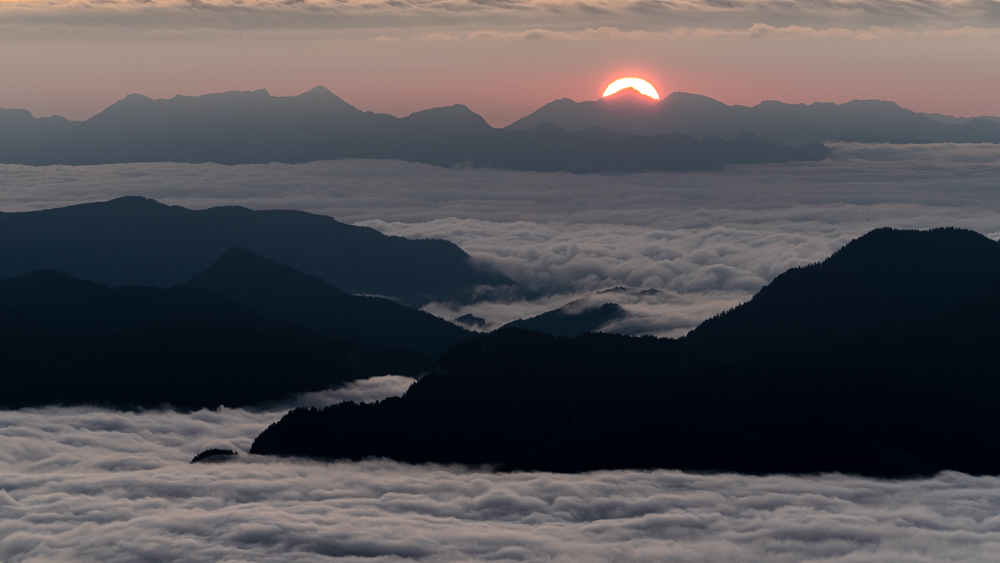
It turns out that being early is better than being late. The time flies and I nearly miss the moment I came for. Secretly, the sun is already looming behind a far mountain. I have to change lenses and all settings in order to take a picture, but it’s already too late to properly prepare it. I did it no favor in banning it on canvas with the structure of the clouds across the valleys til the mountains at the horizon. The sun also seems as big as I have never seen it, as it covers the tip of a single mountain in the distance.
The light stays magical for another 15 minutes, but then, the miracle is over. After 5.5 hours, the second part of the day starts: Hiking across several other peaks to the summit Rofanspitze to meet up with Mädchen Klitzeklein. In the other direction, this can be done as a long via ferrata over five peaks; on my route, I am doing two of the peaks (Hochiss and Spieljoch) and go around two other ones (Rosskopf and Seekarlspitze).
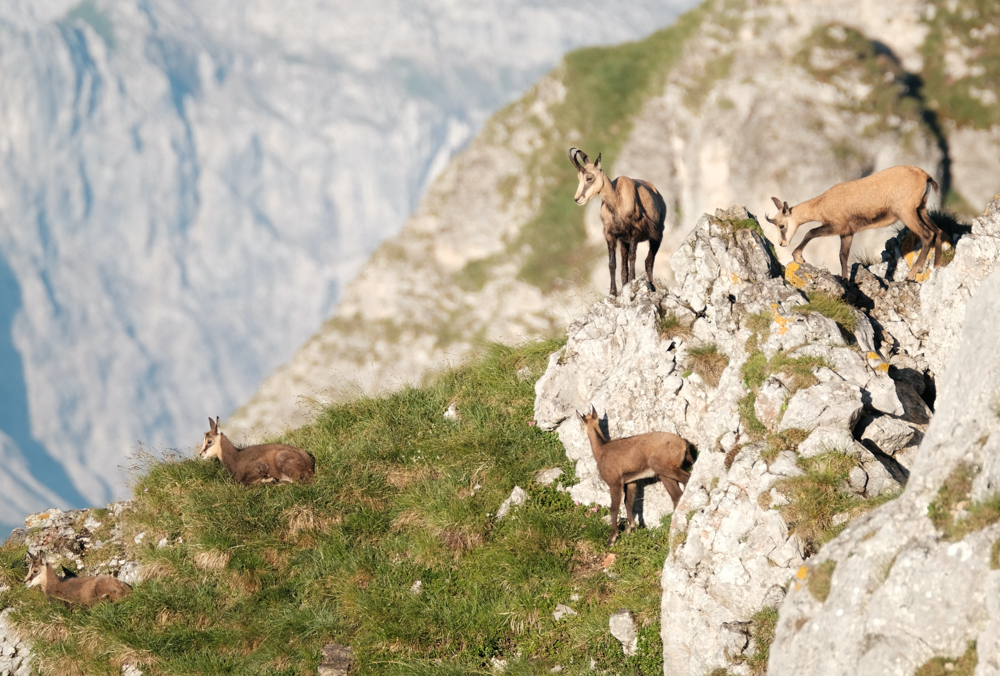
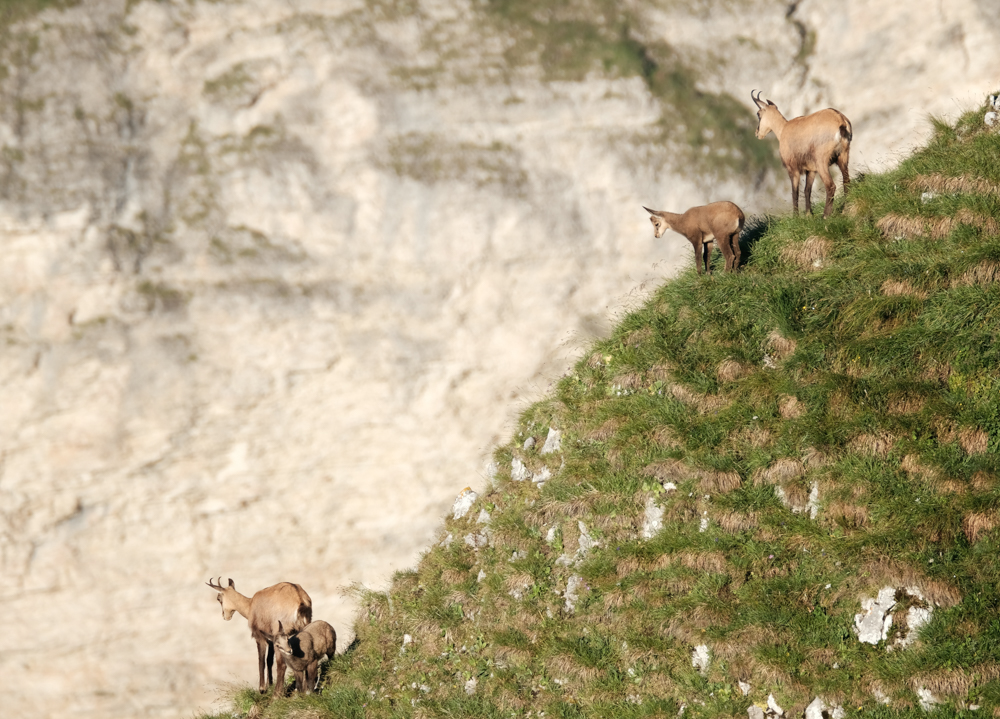
On the way back I am first meeting some of the mysterious nightly lurkers. This time, they aren’t scary at all, skipping around the rocky hillsides like its a 5+ route. At 7:30 a.m. I also meet the first person who does his regular morning walk from his private cabin towards the peak. He is surprised to have oncoming traffic at this time.
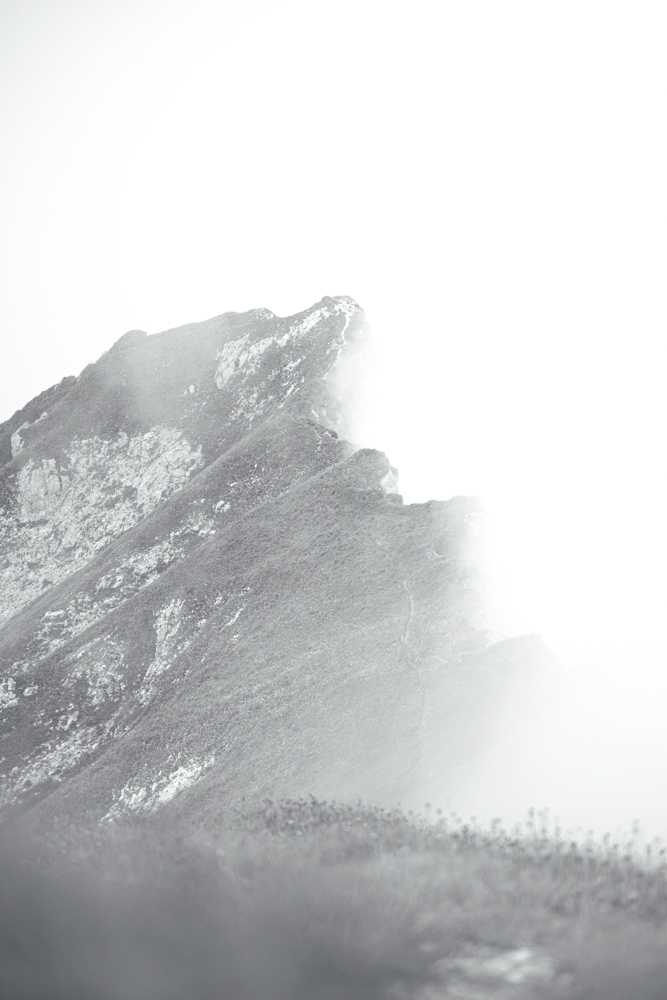
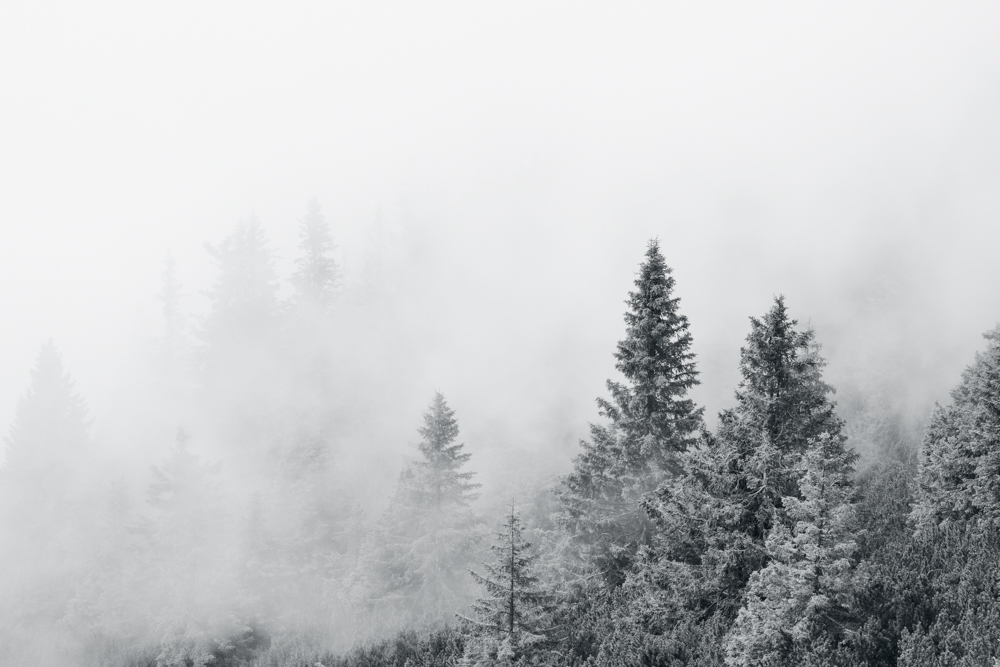
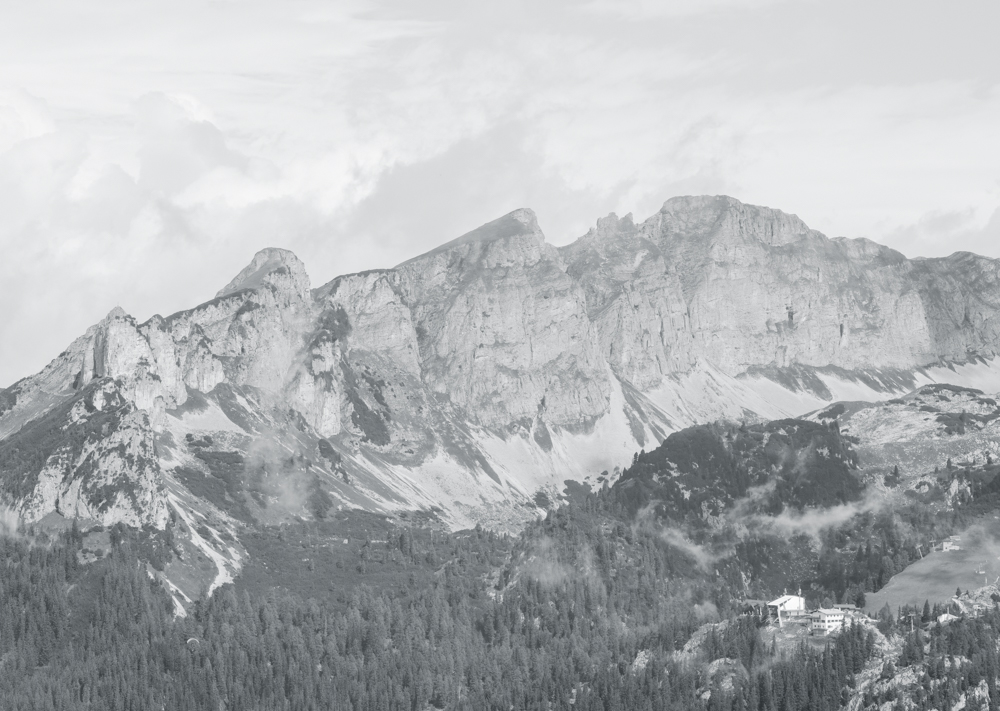
After another two hours of fast hiking, my power is abandoning my body. Also, concentration is dwindling away – as is probably yours after this unusually long post. My day ended, comfortably, with the cableway back down and a lot of food and early sleep. So I’ll leave you, as usual, with some final photos.
Alex Honnold free-soloed El Capitan in Yosemite; people might describe such an action as dangerous or inappropriate, or even call him tired of life. For me, it is about the exact opposite: It’s about using your life, about passion and emotion, about feeling alive.
What’s the point in our journey? Do we live the 9–5 weeks until we are 67 and die of illness afterwards? It’s difficult to know beforehand how to live a life that we don’t regret; after all there is only a single chance (from what I believe). This can be a constraining or liberating thought, a coin with two sides. Either: Be careful! Stay save! Or: Use your resources consciously to find satisfaction – even if it might come with risk. This does not need to be dangerous at all though: A walk in the woods, a calm hour in the evening with your favorite music, or a long conversation with close friends.
However, for me, feeling alive also sometimes brings along risk. But it is a deliberate and calculated risk that entails joy, freedom, or happiness. It also entails an honest confrontation with oneself: How far am I willing to go? How good can I assess my own abilities? What is really important to me? So important that I am willing to take a risk? And from time to time the answer is the distant peak at the horizon or the high boulder I am walking by. The boundary is always moving, sometimes towards the safe side, sometimes towards the more dangerous side. And in case of an unplanned end, it’s probably the car ride or the swim in the sea that finishes the journey anyway.
Life is about decisions, large and small ones. What should I study? Which bread do I buy? Should I reach out to a long lost friend? Which approach to life should I take? What values are important to me? Do I buy the next lens or do I save up the money? Do I go outside for sports? Do I keep working for another evening? How do I want to spend the limited time I have in my life?
Some questions seem irrelevant, others may determine several years of our future life. So, how can we decide all these questions? Or: Is it even possible to decide all these questions? How should we approach and deal with any possibly life changing matter and decide: This or that? Now or later? Yes or no?
The more difficult the questions become that I face, the more I am convinced that they are inherently undecidable at any given moment in time. We do not have enough information to know all outcomes, the uncertainties are always large, and we cannot weigh in all factors because of their multitude and complexity. This also won’t change in the future. Maybe the options we decide on shift. Maybe it’s too late for a decision and we did not even have the opportunity to deliberately decide it ourselves. Some things we were sure that we chose correctly turned out to be terribly wrong; other things work perfectly even though we thought we made the wrong turn earlier.
Decidability is also infamous in computer science. In its simplest form it is known as the Halting Problem and was presented by Alan Turing. The problem formulation is as follows: Given an arbitrary algorithm and its input, is it possible to find another algorithmic solution that decides whether the given algorithm stops on the given input, or continues to run forever? If a solution can be found, then the problem is decidable. If no solution exists, then the problem is undecidable. In the case of the Halting problem, it can be shown that no algorithmic solution exists that solves the stated problem; thus, it is inherently undecidable. If you’re interested, keep reading for the proof:
We proof the above statement by contradiction. Imagine there exists an algorithm that can decide our problem statement: Given, as input, an arbitrary algorithm and its input, it can always decide whether this algorithm stops on the input or not. We call our deciding algorithm h and our input x. Given h, we now define a new algorithm h* that is a modified version of h: If h determines that the input algorithm stops, then h* keeps running in a loop. If h determines that the input algorithm keeps running, then h* stops. What happens if we feed our algorithm h* as input to itself (of which our original deciding algorithm h is part of)? This can be seen as a self-referential operation. We refer to the h* that is the deciding algorithm to h(h*) and to the input h* as x(h*). Both, h(h*) and x(h*) are the same algorithm. We have two possible outcomes: Either h decides that its input x(h*) stops – however, in this case h(h*) would keep running: a contradiction because x(h*) and h(h*) are the same algorithm. Or h decides that its input x(h*) doesn’t stop – but now, h(h*) would stop: again, a contradiction. Thus, the halting problem is not decidable.
To be continued in one of the next blog posts about how to decide anyways.












































 Punkt im Dunkeln