This read is meant genuine and was written with honest intention. Please take your time to read it properly and don’t read it on the side when you have no time.
People can be spiteful and violent, people can be nasty and devious: It’s the warlord who terrorizes an ethnic group, the president who declares war and is backed by the country, the company that fosters child labour without consequences. In our privileged daily life we are experiencing mostly the little misconducts of fellow humans: The person who jumps the queue when shopping groceries, the reckless car driver who doesn’t care about your bike, the ignorant dog walker that neglects his duty to use a leash, or the friend who talks ill behind your back.
This world can be a depressing one: It seems that everybody is in it for themself, no one cares about the others, and maximizing ones own profit is the goal. Suffering from this are the poor and the lonely ones, nature and the planet, minorities and discriminated, the polite and modest ones. And what else is left than to surrender to the overwhelming forces of negativity? What else is left than to join the circle of hatred, fear, and egoism?
Empathy.
Let me convince you that this is a better way. Don’t join the others, better bridge the gap between the others and you, because: we are all in it together. It’s not only you who had a bad day. It’s not only you who feels tired and offended by the doings of others. It’s not necessarily you who is in the right. And also, sometimes, it’s not important who is in the right to begin with. What is important is empathy. Be kind. See the good in other people. Embrace differences and allow for discrepancy. Engage in discussion, but not to win, but to understand the validity of other opinions. Retrace their line of thought; carry it on with better arguments. Only then you can get their side. And don’t make fun of the ignorant or uninformed. Instead, be kind and teach. Share your knowledge, humbly, and offer your wisdom that you were lucky enough to absorb in your life. It’s easy to judge, but most often it’s not your place to judge. Instead, support them in resolving their own struggles. Have compassion; show compassion. Help the weak and poor, help your friends, help the people you dislike. Don’t do it to feel better; do it honestly and because it improves someones life. Do it because you want to. Demonstrate courage. Don’t be the one who sees the wronging and summons a smart phone for the fleeting amusement of strangers on the internet. Don’t be the one who points at others when it’s your turn. Step in and act according to your beliefs. Be courteous. To the queue-jumping shopper, to the leash-less dog-walker, and to the reckless driver. Not because they are right, but because it’s the right thing. And because it makes the world a better place.
This doesn’t mean you should accept the wronging of others, nor does it mean you should welcome the brashness that someone displays. But it means you should question every bad thought you have about someone before jumping to conclusions, or worse, actions. And this won’t be easy. It will be difficult, exhausting, and demanding. And I get it: Your own day was difficult and you are tired. But this means it is even more important to practice, day in day out, to make it not your second, but your first thought in every situation: Do I show empathy? Do I judge? Do I know where the other person is coming from? And with enough practice, it will become natural: To be kind and welcoming. To be compassionate and courageous. To be courteous when the opposite isn’t. And to be it out of belief that it brings something good to this world and not to feel superior. And sometimes it won’t help, sometimes it will come to a tough point where empathy does not resolve. Then, stand up for justice and defend your beliefs. But always critically question your actions. And I know, this post reads like an idealistic vision. But I don’t think it is. And even if it were, what is there to loose in not trying? Go for it – to make this world a better place.
This post was closely related to my earlier posts on labels and shall remind myself to practice: Empathy, compassion, and kindness.
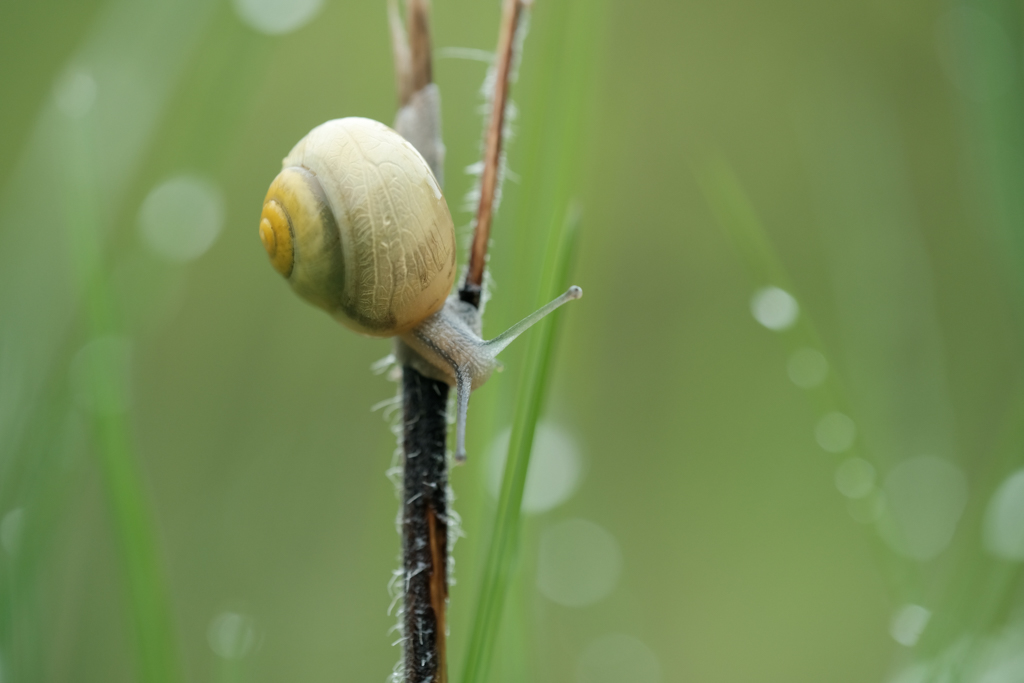
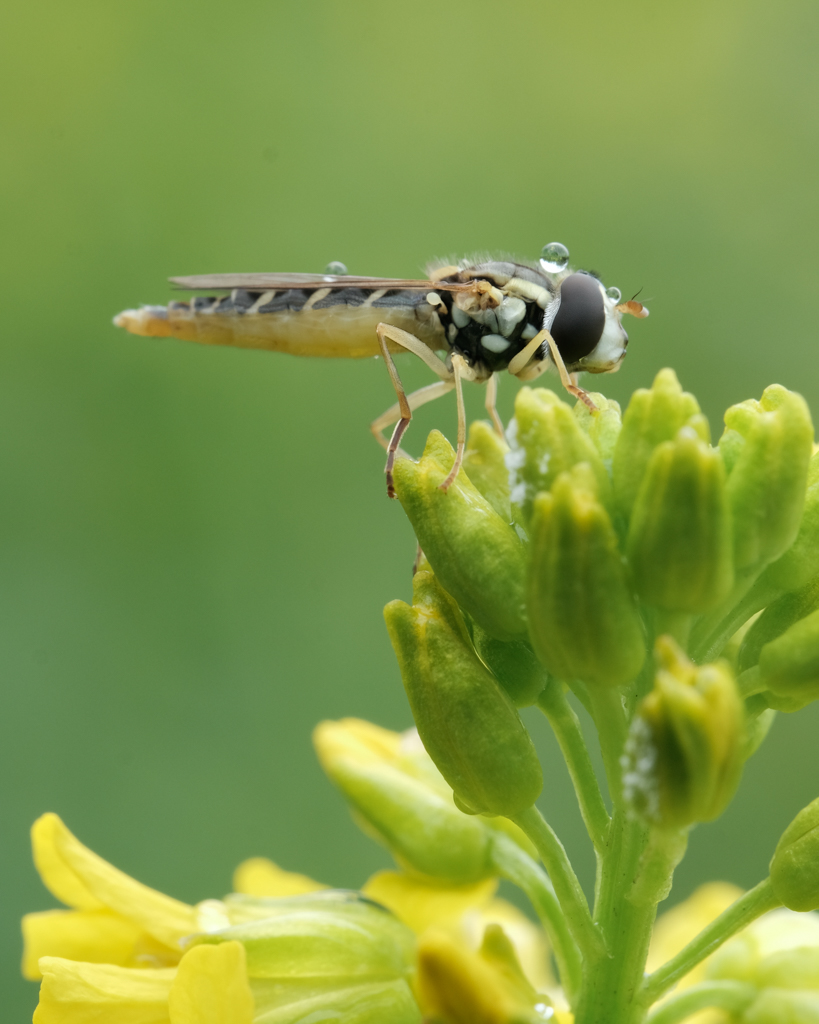
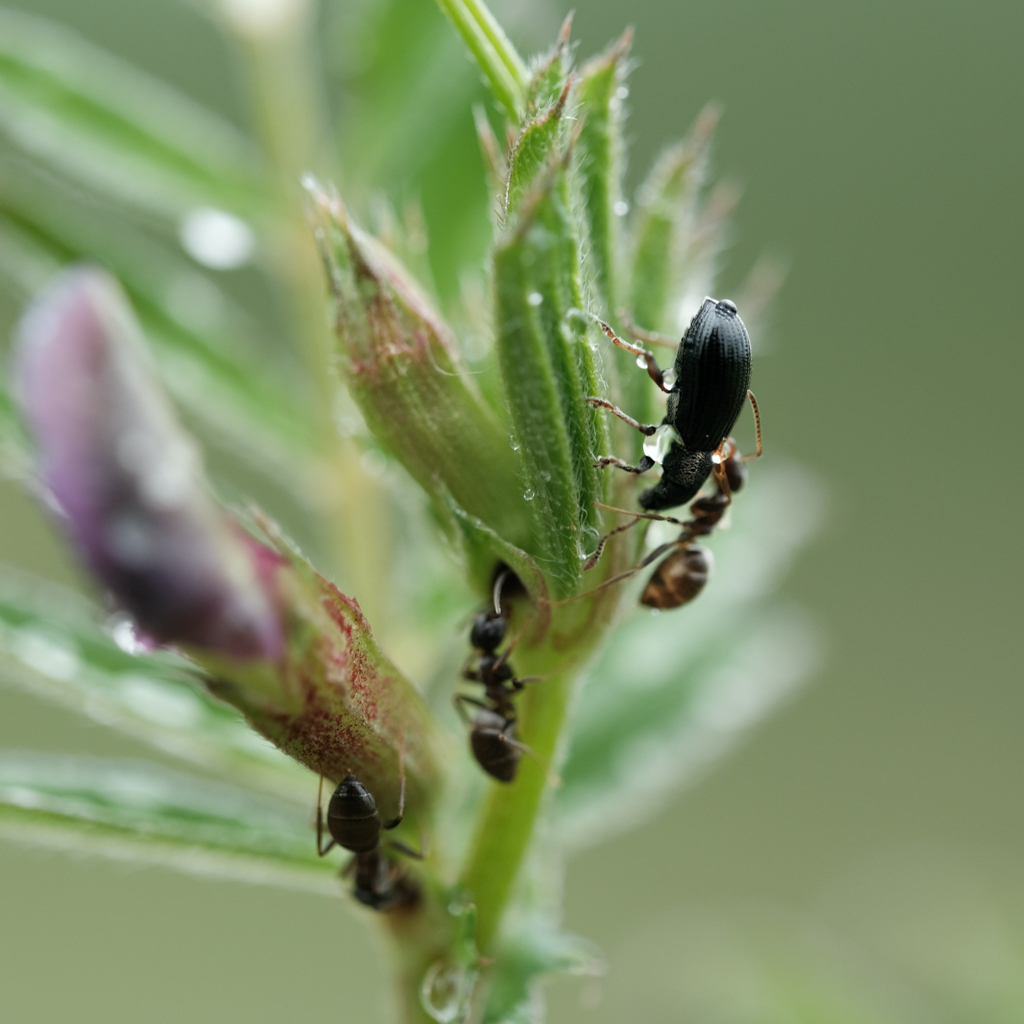
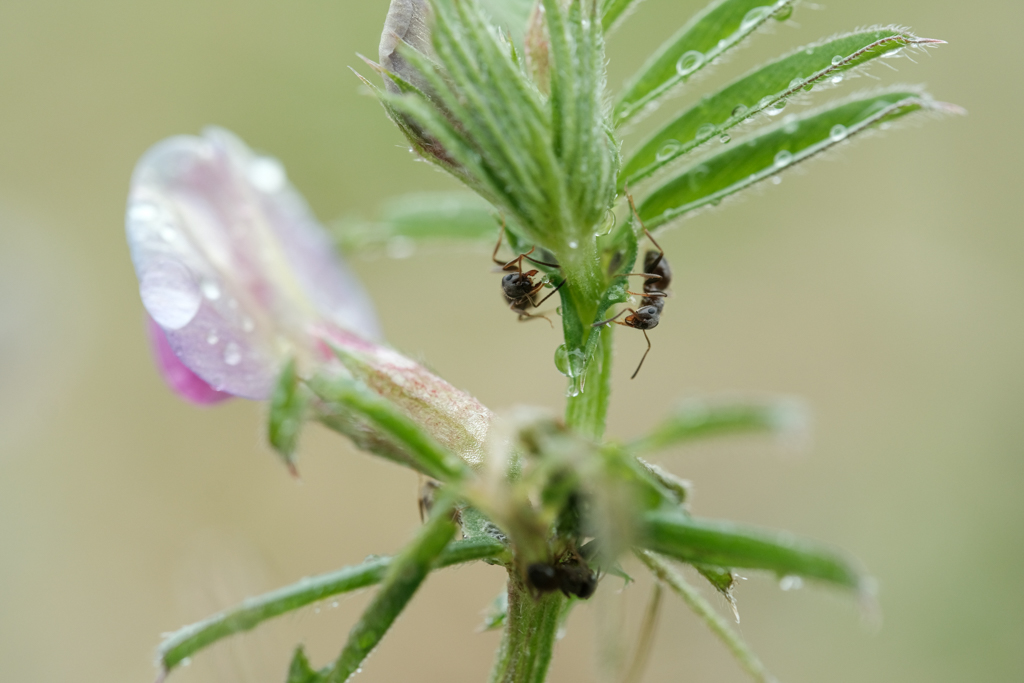
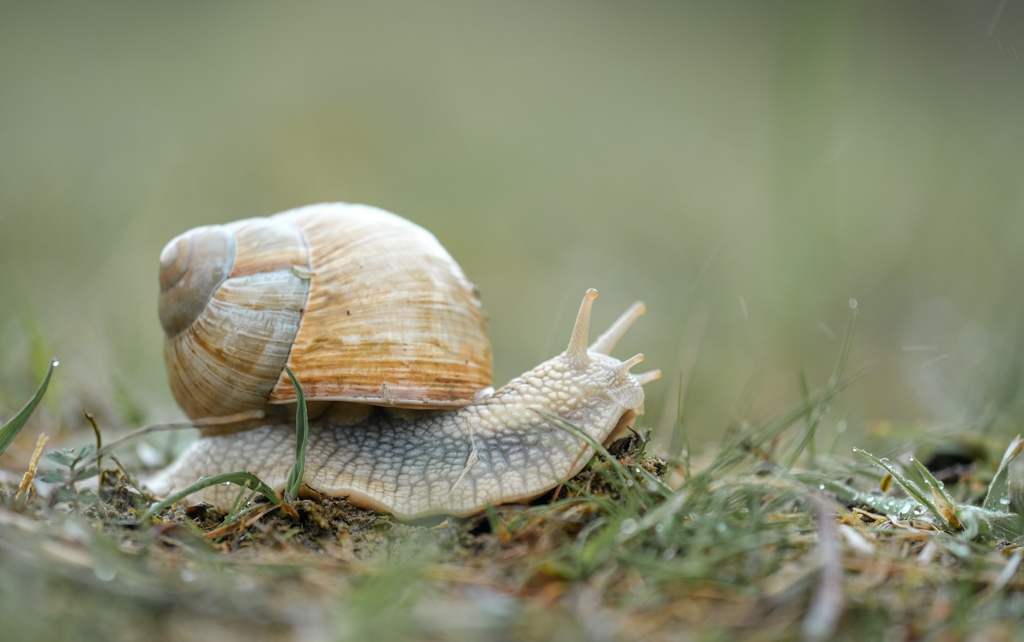
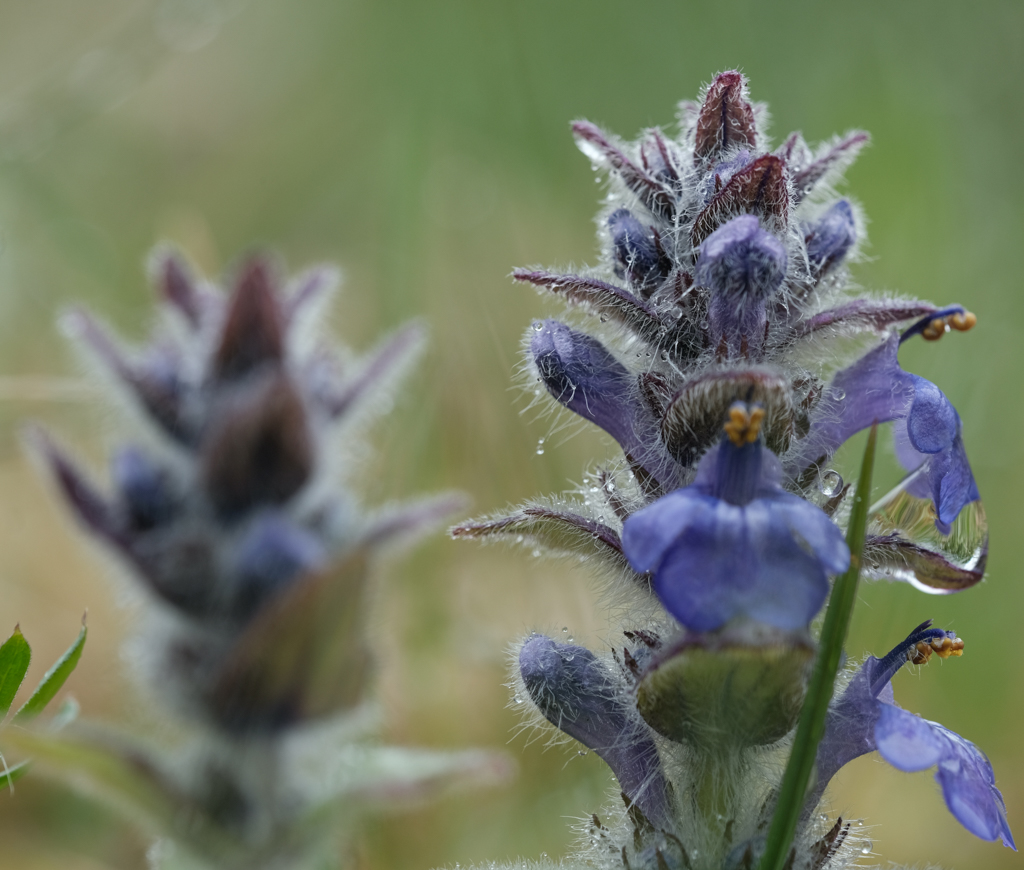
Also: My camera body is not weather resistant. But I received a rain cover as a birthday gift! That’s why there are so many snails on the pictures – I went out during rain for the first time and its so much fun: No people, and so many droplets everywhere on macro photos.
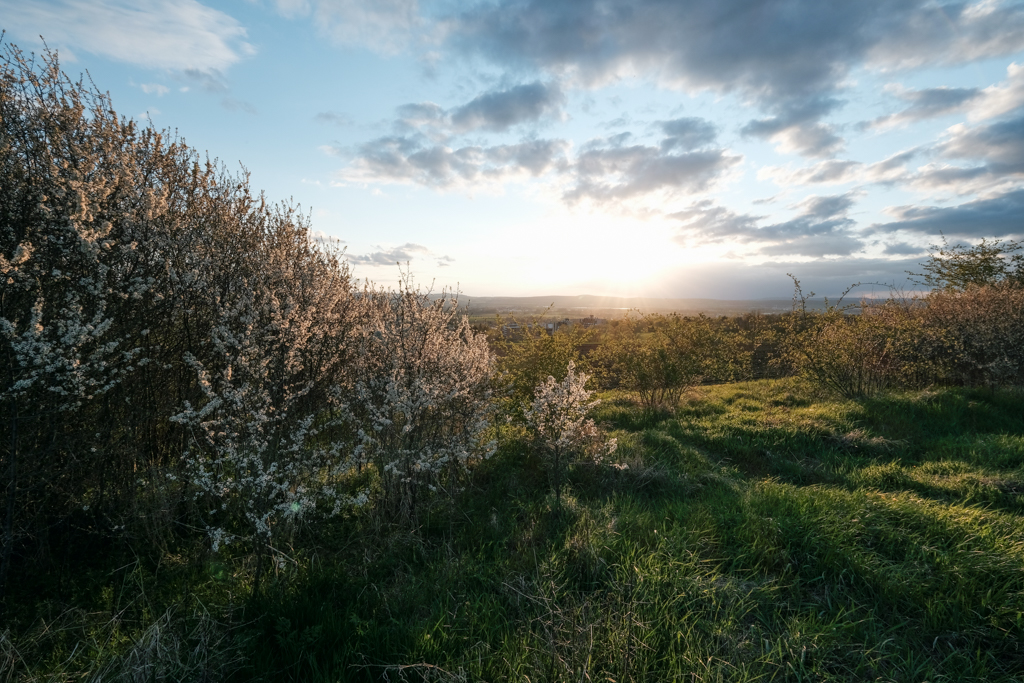
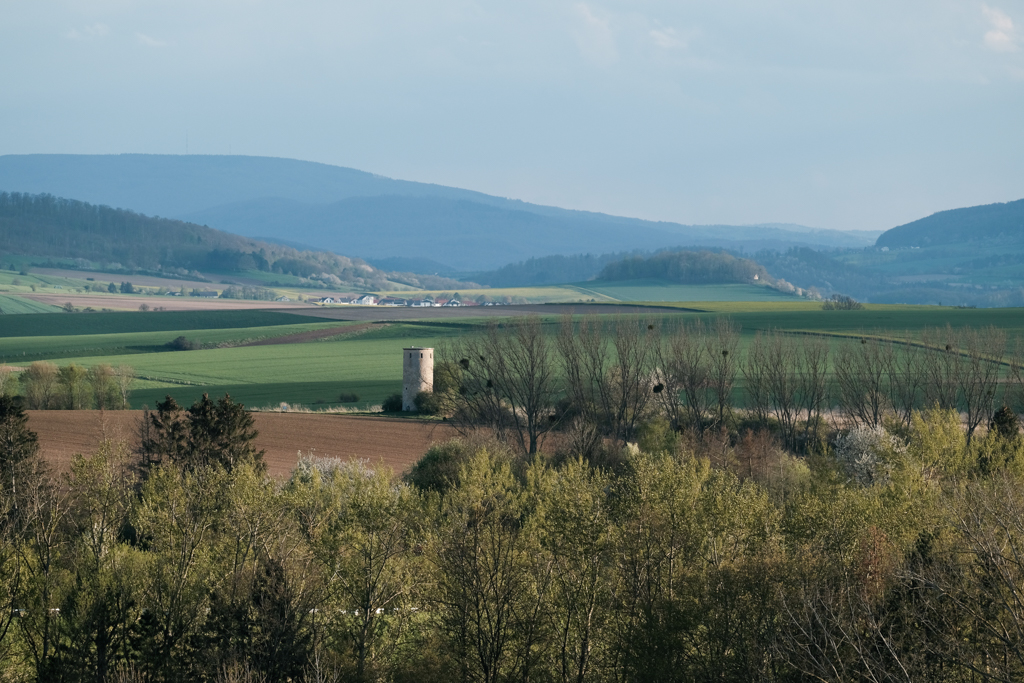
There has been too little time to appropriately maintain the blog lately. Lots of work, some routesetting, and other hobbies devour my time. I also often feel restless when I have some free space, it feels like I need to use these hours in some meaningful or productive way – whatever that means. When I have a free evening I mostly go outside to take some pictures. Last week I was on a small hill south of our home town for the sun set. After many days of rain, the sun finally showed again and all plants sprouted, especially the hawthorn.
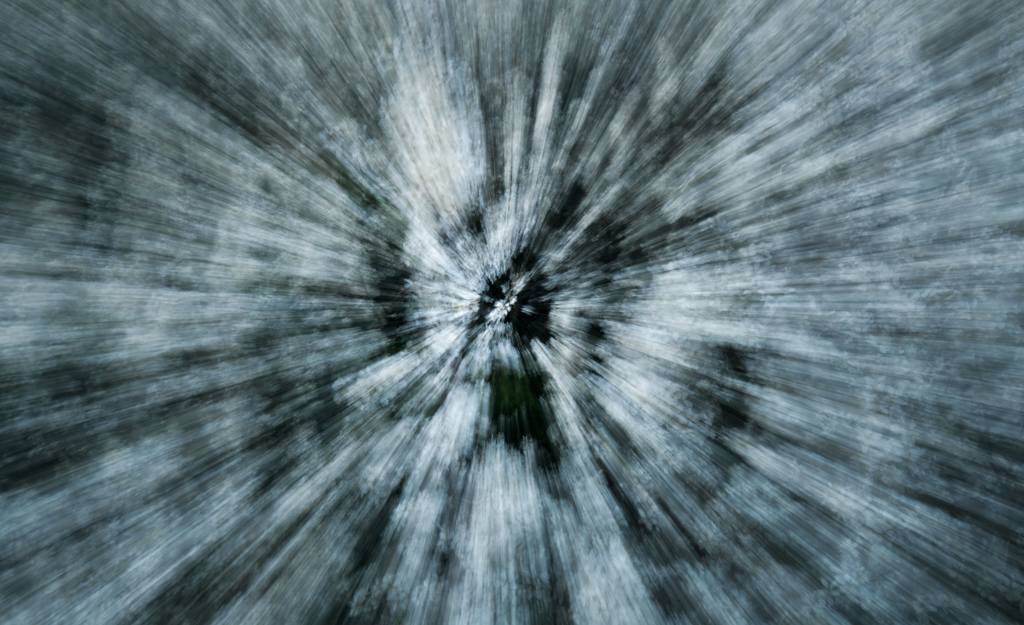
After shooting panoramas and macros, I also tried some new techniques for abstract nature photography as such images always appeal to me when I see them online: Images where it is unclear what exactly is depicted, images that leave room for interpretation but follow patterns. The first 100 tries were uninteresting, but then I changed settings substantially and started playing with the lens zoom while shooting longer exposures:
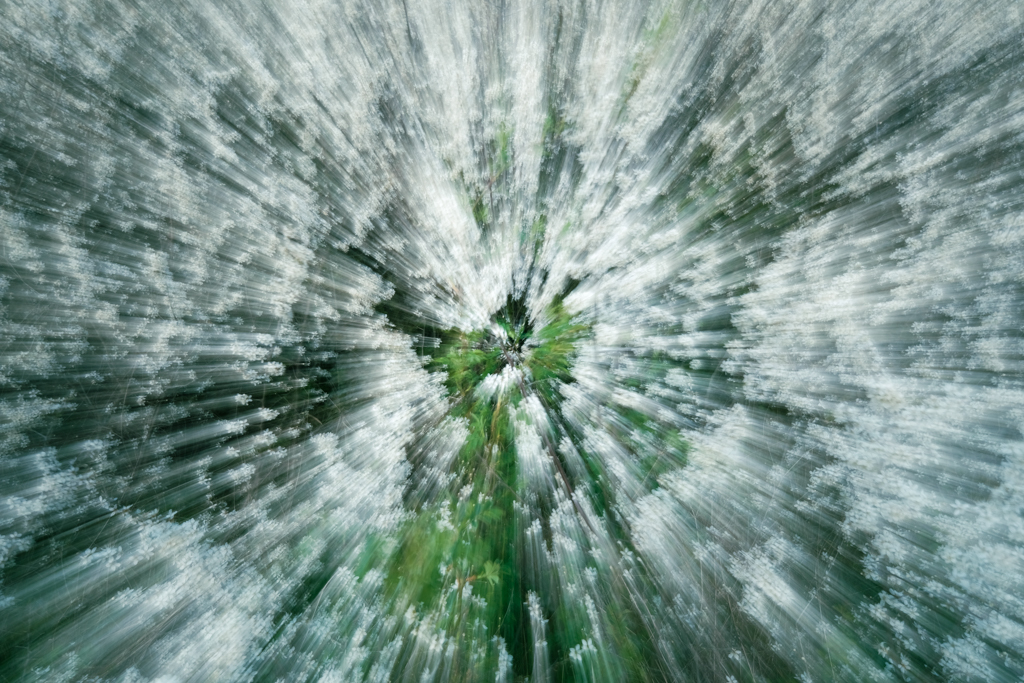
After another 300 photos I felt somewhat satisfied with the results that also were quite unique from what I have seen. The hawthorn and my 10-24mm lens made a nice combination with the evening light, resulting in textured hawthorn spirals:
When I started the blog I had little idea in which direction it would evolve. So far, I like the loose combination of computer science topics and everyday life observations accentuated with my latest pictures. However, the writing often takes longer than taking pictures and my backlog of pictures is slowly building up. Thus, I am thinking about some new blog post format that mainly consists of pictures, but I didn’t come up with an appealing idea yet. If you have any, please let me know! Additionally, I would like to make some longer blog posts about specific interest of mine (if time allows), as well as integrate further hobbies into the catalog of potential topics. So, in general, the blog will probably become more diverse, as the hawthorn pictures in this post: Sometimes great vistas, sometimes specific details, and sometimes quick abstracts.
On several occasions I have been asked by family and friends: ‘Do you edit your photos?’ I understand where the question comes from and probably would have asked other photographers the same question myself before I bought a camera. But when you start taking pictures the answer becomes irrelevant, and also more philosophical. The question assumes that the truth can be captured; that there is a real representation of the environment. And this is simply not true. It is impossible to depict the world as it is and every representation is disconnected from the environment and just represents itself.
Pastel colors illuminate receding mountain ranges separated by morning haze; 45 minutes before the rising sun.
Thus, when people ask this question, what they often really mean is: ‘Do your photos look like it did in reality?’ And again, there is no right answer. Different people see different things in reality, pay attention to different details, some see green and red, others only see browns instead. Additionally, the effect of a scene is not only influenced by sight, but also many other senses that cannot be transported in a simple photo. So maybe the photo looks somewhat like the reality to me, but not to you.
An additional layer that is often forgotten: The picture is already hugely edited in camera. The photo receptors just capture some limited amount of light which is very different from reality. Besides this raw data, cameras often produce JPEG-images with already applied color profiles that interpret the raw data. This profiles can boost colors, contrast, or luminosities; or decrease them. Let’s take one of the easier settings that is present in all modern cameras: the white balance. The idea is to tune the information received from red, green, and blue light photo cells to display neutral colors (white, grays, or black) as such. The automatic white balance often fails during sunrises or sunsets because there are no neutral colors in the frame: everything is tinted with deep blues, shy purples, defiant magentas, or lush yellows. Take a look at the following two pictures. Both show the exact same frame only with different in-camera white balance settings:
Two different settings of white balance on the same photograph; 20 minutes after sunrise.
So which one is more correct? Impossible to answer. It depends on what I want to show and what you want to see in the image. Because cameras are not as powerful as computers, it often makes much more sense to edit photographs in a specific software instead. Then, you can fine tune the picture without depending on the limited options that are present in the camera.
So, yes! I edit my photographs! Sometimes only in camera, sometimes heavily in software. It depends on what I want to show. Sometimes the edited photos look more accurate to my perceived reality than the unedited photos; sometimes I use editing deliberately to transfer a feeling or message and don’t care about a ‘realistic’ depiction. Sometimes the photo is perceived as unrealistic even though it’s straight out of camera. Sometimes a photo is perceived as realistic even though it’s heavily edited. Ultimately, photography is just one of many arts, I will create what appeals to me, and if it also appeals to someone else: even better.
The color of light is getting warmer with the rising sun and illuminates the meadows below.
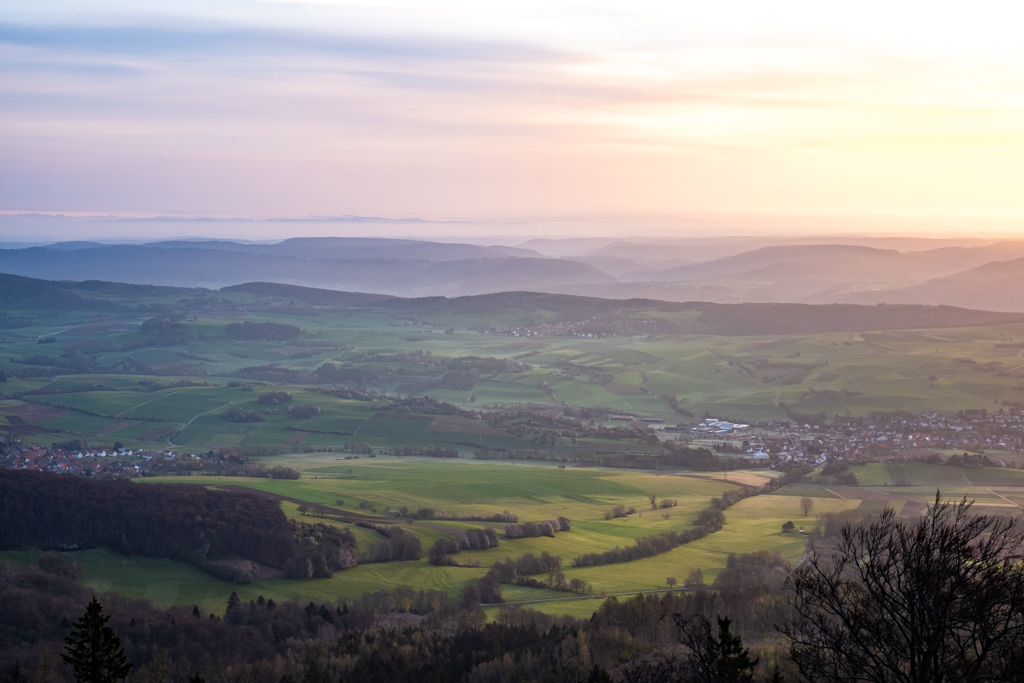
All these photographs were taken on last Saturday. Again, my dad and I started at 4 a.m. in the morning to view the sunset. This time not in the Harz Mountains but from a smaller peak in Hessen close to Hoher Meißner. During the two hours on the peak we saw many different colors and I tried to represent all of them in the next pictures. Enjoy.
Preface: This post will be a difficult one and is mainly meant for myself.
I guess most people think that drowning isn’t particularly nice. And I agree: it’s not; at least in the beginning.
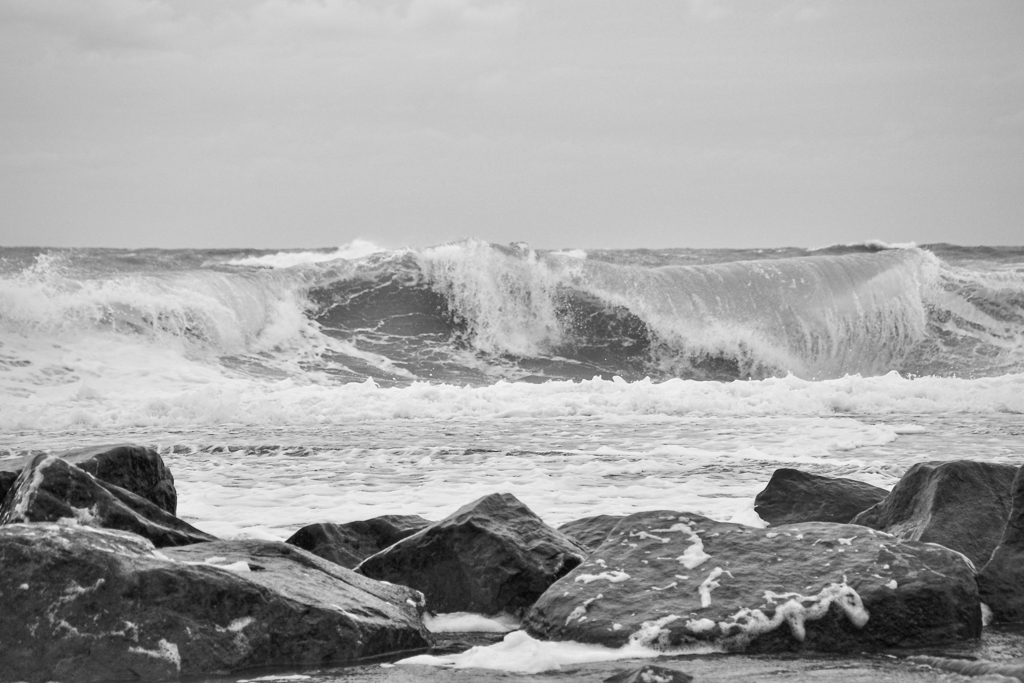
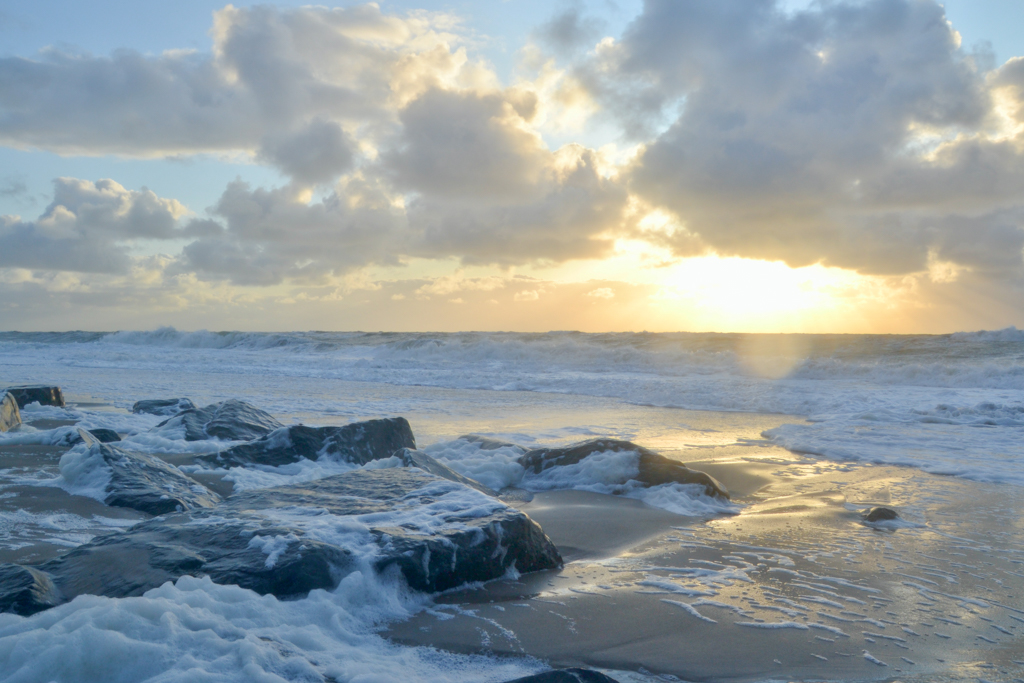
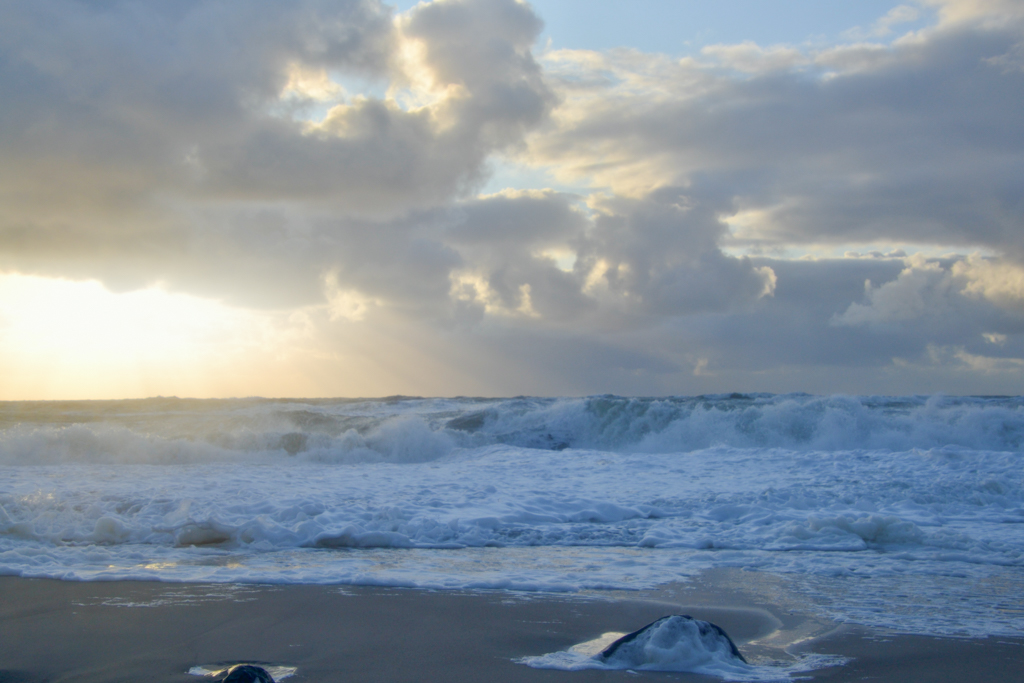
(Nearly) Every year, for 10 years, a group of friends and I have been on vacation to the same coast section of the North Sea in Denmark. And every year, we enjoyed swimming in the troubled sea, with high waves breaking onto the shore. Why? Because it is a lot of fun: getting lifted by the waves, struggling to keep your balance, hearing the roaring sounds of wind and water. We also thought we know about the dangers and can judge them. But actually, we, or at least I, could not.
And in 2018, I experienced it first hand: As always, we went for a swim during a stormy day, with high waves continuously crashing around us, sometimes far out on the ocean, sometimes only at the last moment when rolling onto the rocky beach. As always, we were staying really close to the land: I was able to feel the ground between most of the waves. And as always, we were watching out for each other; quite a large group this time, some in the ocean, some on land, all of us with the sharp wind in our faces and salt on our lips.
But this time is also different: The waves are irregular and hard to predict, water and wind are cold and unrelenting, and I think I am in control — although I am not. After several minutes of childlike pleasure of dancing in the waves, I slowly realize that I am feeling rather cold. It’s not an abnormal feeling for me: I am rather skinny and my body always cools down quickly in the water. I decide that it’s time to get out and I start to paddle towards the land. It seems only a few metres away and the warmth of the towel already feels in reach. I take some steps and some strokes, always between two breaching waves. Ride the next wave, two strokes, two steps; ride the next wave, two strokes, two steps.
30 seconds later it feels like I should have reached the coast; but I realize I have not gained a single inch. The feeling of cold has already turned into an intense feeling of freezing; my limbs feel numb, my teeth start to chatter. I take stronger strokes, but only get more exhausted. And the waves don’t care. Ride the next wave, two strokes, two steps; ride the next wave, two strokes, two steps. And then: I don’t ride the next wave, it rides me. After I am back on the surface, I try to pull myself together and look around: I did not notice before that we have drifted off from the people on the coast who are already further away than I thought. But next to me is a good friend, still dancing in the waves and enjoying the elements. But it doesn’t feel right to call for help: The coast seems still close, I am a physically fit guy, not a great swimmer, but I have been in this ocean many times before. I can also still sometimes feel the ground below my feet, between the never stopping waves rolling in. And: What should I even tell him? How should he help me?
Another 30 seconds later, I feel as uncomfortable as I have never felt in life before. I still have not made any progress; the harder I try, the less progress happens. I feel a glimpse of fear creeping into my heart and it’s enough that I try to reach out to him, just a few metres away in the water. I tell him I am feeling uncomfortable and that I do feel like I am not able to reach the coast. But the wind carries away every single word from my lips into the far distance. I try it a second time. I try it a third time. And now, the fear isn’t creeping anymore, I am not dancing in the waves anymore. I am an immobile object that gets thrown around in the ocean as easily as a little pebble of sand in the wind. In only one minute I have lost any bit of control I thought I had. And suddenly, there is no weighing up of my manliness against some unknown fear of showing weakness, there is no more time to loose. Suddenly, I realize how serious it is: I need help. And I need it now. I scream, and finally I get noticed. It still takes a few more screams before the seriousness of my situation is clear to him. The next wave crashes above me and my body is slammed into masses of water. There is no sense of up and down, there is only water everywhere. I loose all sense of orientation. I still have air left, but the attempt to find back to the top depletes most of it. Suddenly, I am above the water again, take a deep breath in a hopeless try to fill my lungs again. But the next wave already slams into my body. And it repeats: wave after wave after wave after wave after wave after wave after wave after wave, second after second, every breath shorter than the one before.
I feel that my body slowly disconnects from my thoughts. I cannot feel my limbs let alone control them in any serious attempt. At some point in time, the air gets too scarce. And these few seconds, which feel like eternities, are also the ones where I experience panic and fear as I never done have before. It occupies the mind, every bit of it, fills your bones and muscles, and drowns you a second time, emotionally. There is no deciding any more. The body does what it needs to do: Fights the waves, fights the cold, fights towards land. And the mind does what it needs to do: It does not accept the unthinkable but also doesn’t see a solution. There is only fear. And, like the cold, it paralyzes my body a second time. And the waves keep coming, endlessly rolling above me. And my lungs keep filling, but not with air anymore, but with salty water instead. And slowly everything around fades away. I cannot see anymore, I cannot hear anymore, I am trapped within my brain unable to do anything about my fate.
And then it changes. I do not feel the raging ocean or the sharp winds, I do not feel the freezing cold or the rocks on the bottom of the ocean in my face. More importantly, the fear goes away and the panic is silenced. It’s gone. Completely. No more thoughts about what I might miss out on in live. No more thoughts about the persons I am leaving behind. Family. Friends. Hobbies. Work. It’s meaningless. The feeling that replaces these thoughts is much much stronger, it is more powerful. It is Happiness. It is tranquility. Absolutely impossible to put into words, but there it is: absolute salvation. Life can be strenuous, life can be exhausting, life can be difficult, and life can be disappointing. This right here is the opposite. No more distress, no more struggles, no more obligations, no more fear; no more life. If this is what the ending feels like, I am not afraid anymore. I am ready. I am free.
By now, my friend in the water has reached me and tries to push my body towards the shore line. Also, the people on land have noticed. And as you might guess, I got rescued by my friends early enough, but from my point of view it was as close as it could be. What I remember from the last minutes is not much and it’s mostly about my internal feelings. My body cooled down so quickly that I was not able to comprehend most of my surroundings any more. When I got pulled ashore I could not breath, nor see, only barely stand, or talk.
I had to learn that being back on land does not mean that it’s over either. First, it took several hours until my body could navigate this foreign world again. Then, it took some weeks to get my thoughts back in order. The following months after the incident, there were several occasions where I woke up in the middle of the night with panic attacks. For a few seconds I would not realize where I am or what was going on, but only experience the unrestrained panic I experienced in the cold water. And then, it took years to comprehend what this experience means for me, and this process is still ongoing. The year after, not a single one of us went swimming.
When I am writing about it, as I do here for the first time publicly, my hands still shake and my breathing is fast. I have been swimming two times since: The first time in an indoor pool where I could not finish 25 metres without the edge right next to me. As soon as I felt exhaustion in my muscles, I got panic attacks. The second time was in a lake close by and it was already far better. But I still hesitate when to go for the next try.
For me, the scary thing is not that I nearly drowned. I already nearly drowned once before as a little child but cannot remember much. Later in life, I got almost run over on my bike by a really fast car. And I have probably had other close incidents that I am not even aware of, as probably all of us have. For me the scary thing is to remember the feeling of the real happiness I could experience in these last brief moments. It was the most pure feeling I have ever experienced. And I struggle to comprehend it; even more to communicate it properly. I think it’s simply impossible to even remotely describe it, how it was, or what it was; and there is nothing I have found so far that resembles it. Remembering this can make life feel dull from time to time. But the more time passes the harder I can grasp how it felt.
So why am I still here? Because why not. I can be rather certain that there will come the day where I will get to experience that same feeling again; this inexpressible emotion, this other-worldly perfection and completeness I am craving for sometimes. But I learned that there is no hurry. And every moment I have on this world is one moment more that I can cherish for what it is. And thus, every moment here can also feel special no matter how difficult it might be. And it also reminds me: It doesn’t really matter what I am doing here; I have to create purpose myself. Only then I can find some sense.
I think drowning is nice. But it’s not; at least in the beginning.
Addendum: I struggled a lot with these experiences. Not only in the beginning, but also later on. Back then, I also searched intensively for reports from other people on the internet because I wanted to know how they felt, and how they dealt with an equal experience. But such reports seemed to be quite rare; this is also why I decided to share my own report here, even though it is difficult. By now I am fine; but I also got (some) professional help and advise anyone who is unsure, to seek out for help as well. I also have only talked rarely, or not at all, about this with friends and family. Because when speaking it’s even harder to find the right words. So to everybody who is reading this and has not heard about it before: I want to apologize that I can only pass on my thoughts in this form for now instead of telling you personally. And if you wondered: all photos are from the exact same stretch of coast, but from other years.
Being out at sunrise feels exciting. Nature awakes and prepares for the day, people jog in circles, in life and around the lake, traffic noises drown the early birds; and we stare and wait for the orange dot at the horizon. When it arrives, the frozen fog begins to shine, flowers begin to bloom, our cameras begin to click, and birds win the second round against the traffic. And then the excitement gives way to everyday life, routines are repeating themselves, and we join the others and continue our own circle, in life and around the lake.
Being out at sunset feels calming. Nature slows down and prepares for the night, people vanish from the streets, windows light up the city; and we relish the moment, above, reflect on the day, fool around with the last rays of a distant star, devour bread and cookies, and, for a moment, forget the before and after: we live in the present, love in the present, are in the present. Briefly after, it’s already over – darkness settles, cold air creeps under clothes, and we join the others, return from the moment, and prepare for a new week.