Sanft durchdringt sie alle Weite,
federleicht durchbricht sie Licht,
sie gibt Halt,
die Zeit steht still und jede Pflicht
verblasst, fast sagenhafte Kraft
durchdringt den Geist und wohnt im Kopf,
und es hallt
der leise Ruf des fernen Tals.
Ein letztes Wort,
ein letzter Satz,
laut geschwiegen,
stark verdorrt die feinen Triebe, dort,
wo leises Existieren platzt,
und Leben Platz hat, Raum hat,
nichts zu viel ist, dort,
dort fliegen sie und wiegen sich
ein letztes mal im Winde.
Verschwiegene Geliebte,
kriegende Besiegte,
dort erliegen sie
geschwinde
uns'rer Gier:
Schwalben der Nacht.

Komm, spring hinüber,
mach schon, komm,
kopfüber in
die letzte Schlacht.
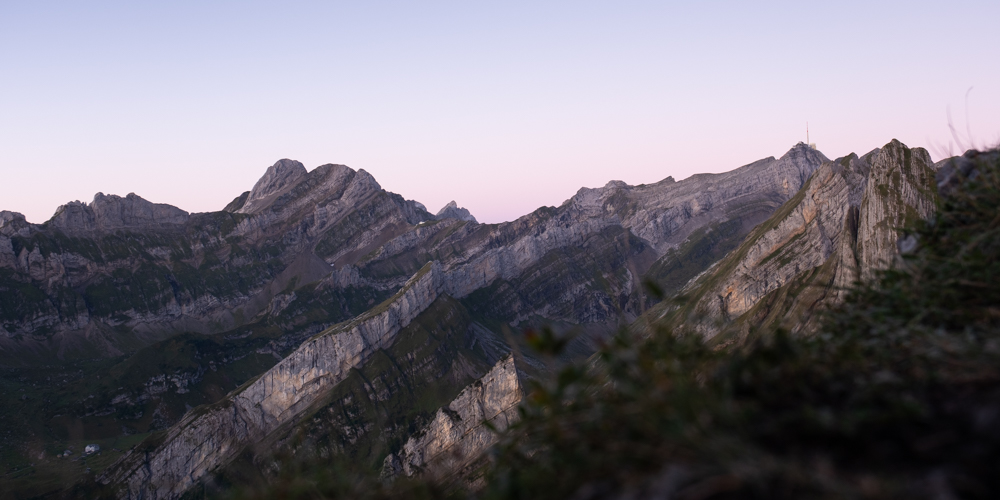
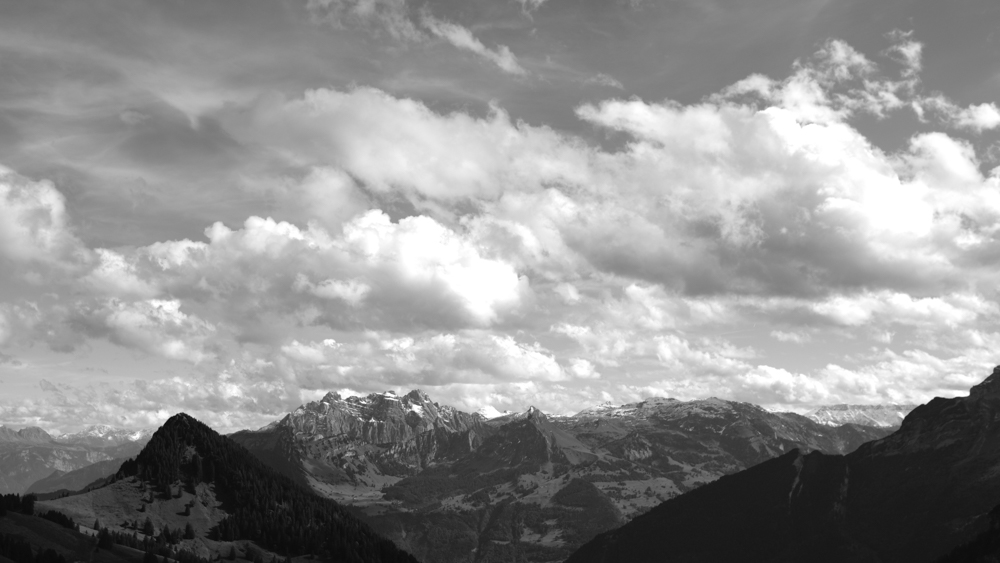
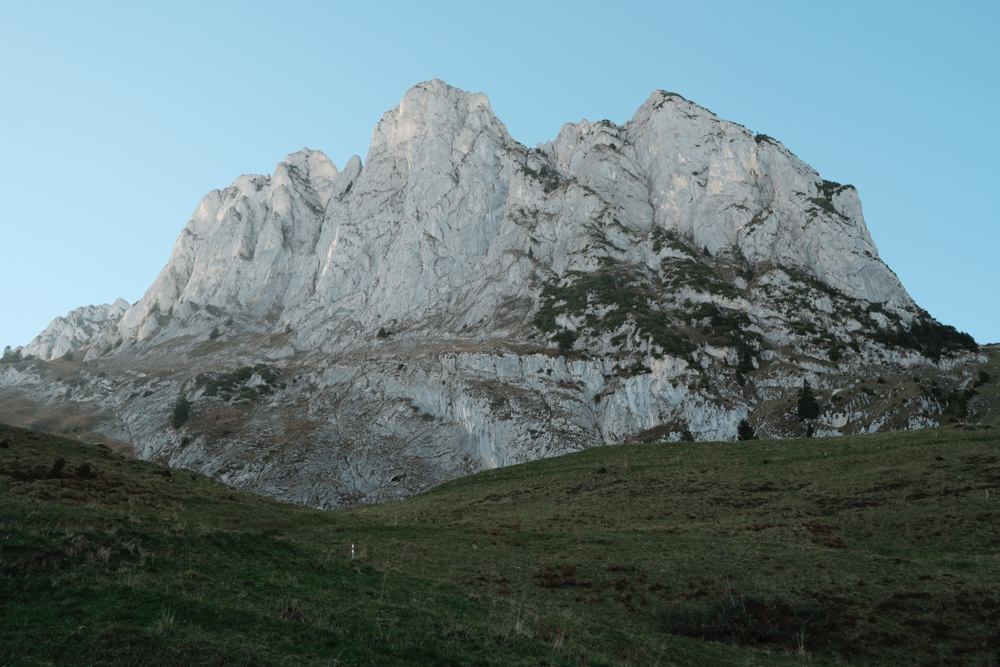
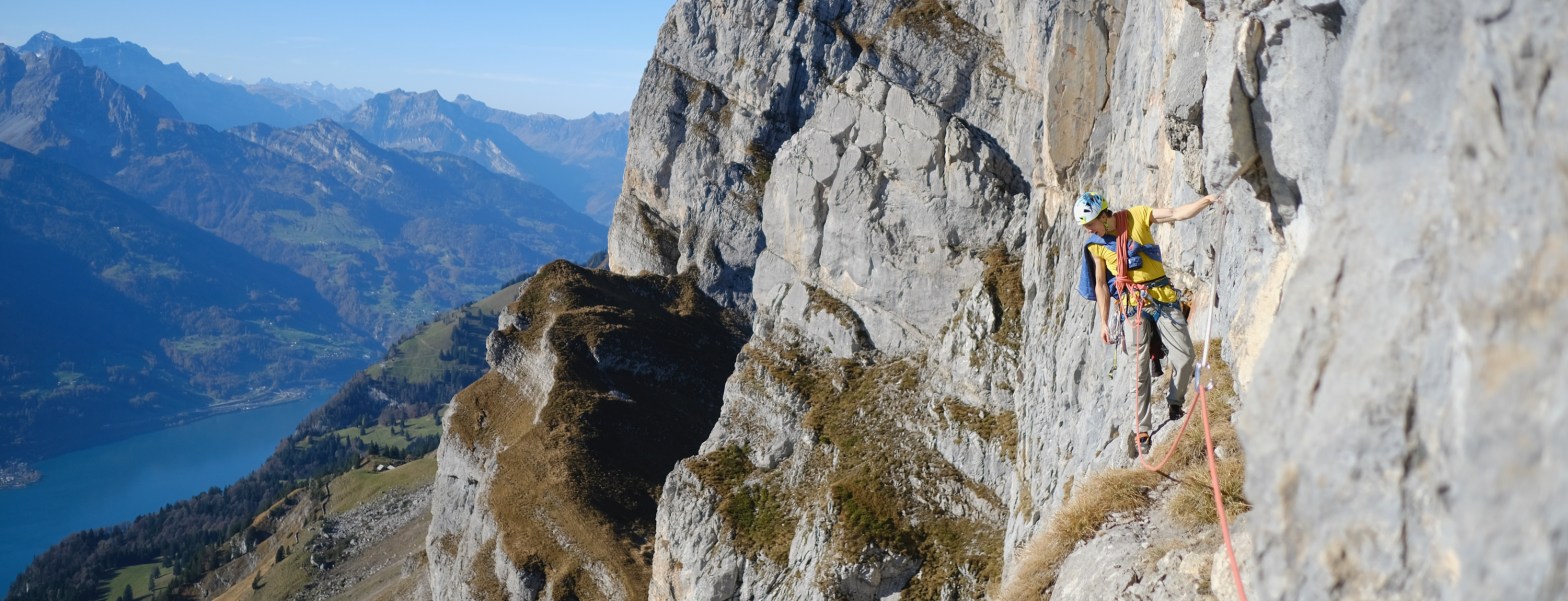
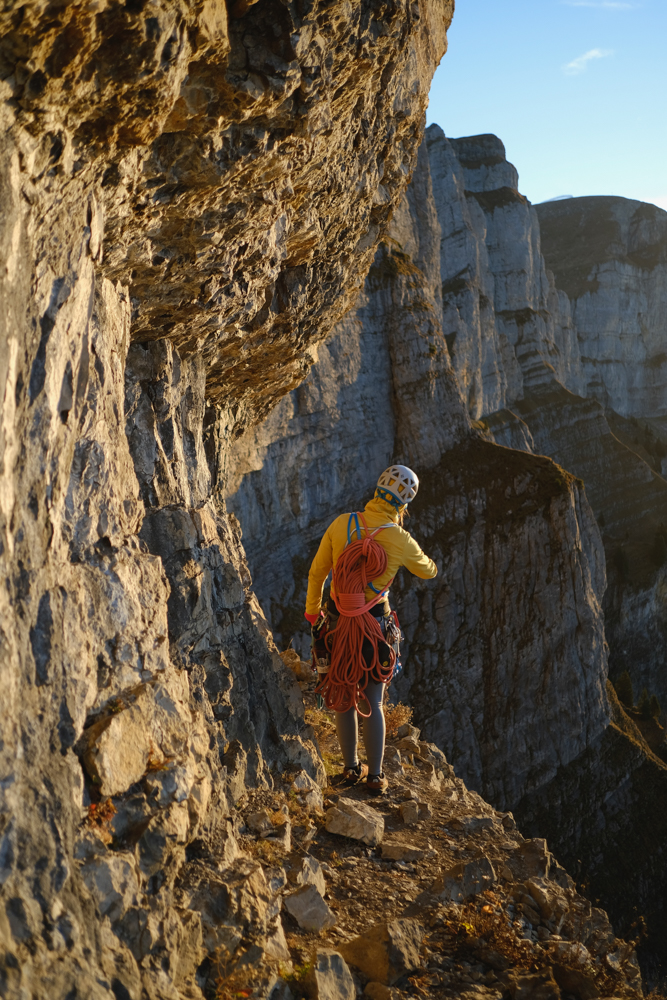
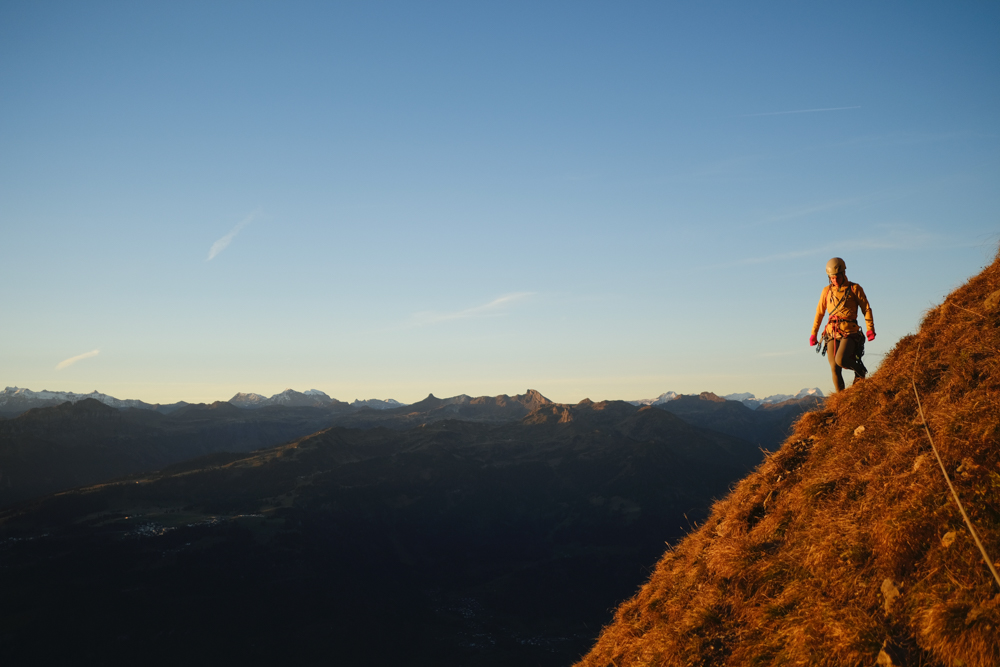
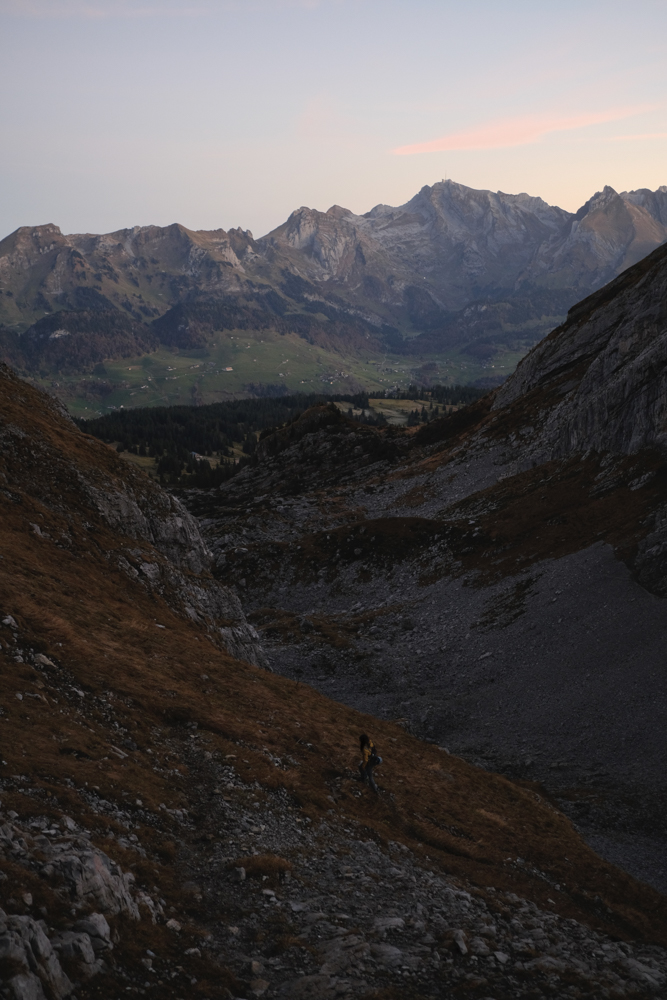
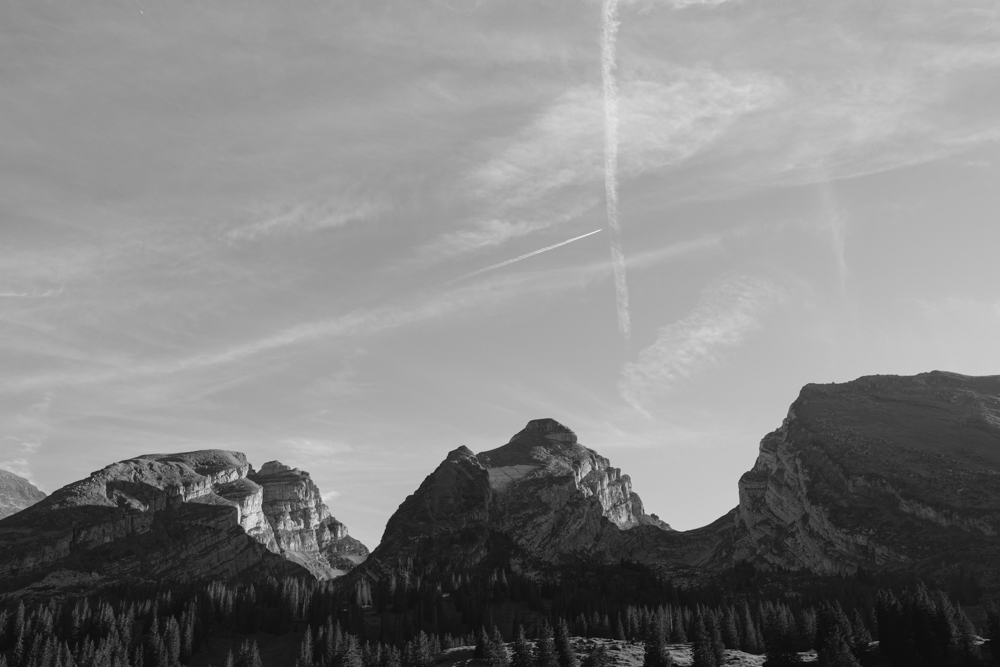
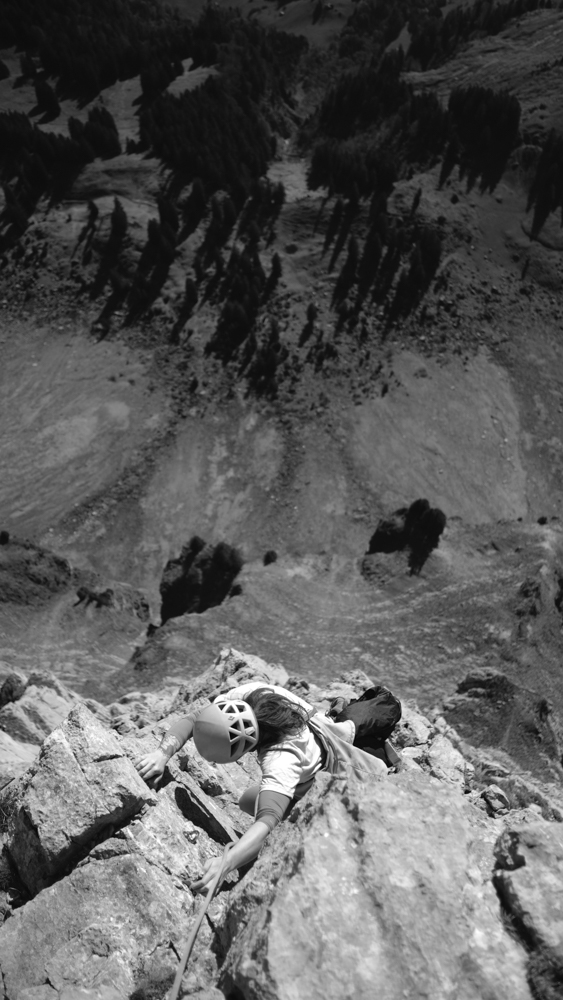
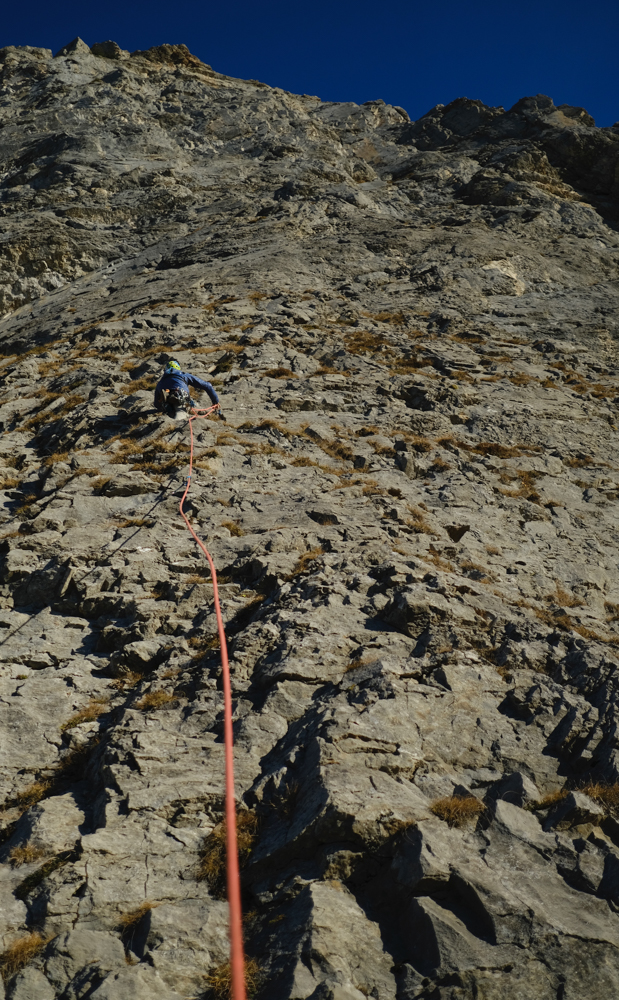
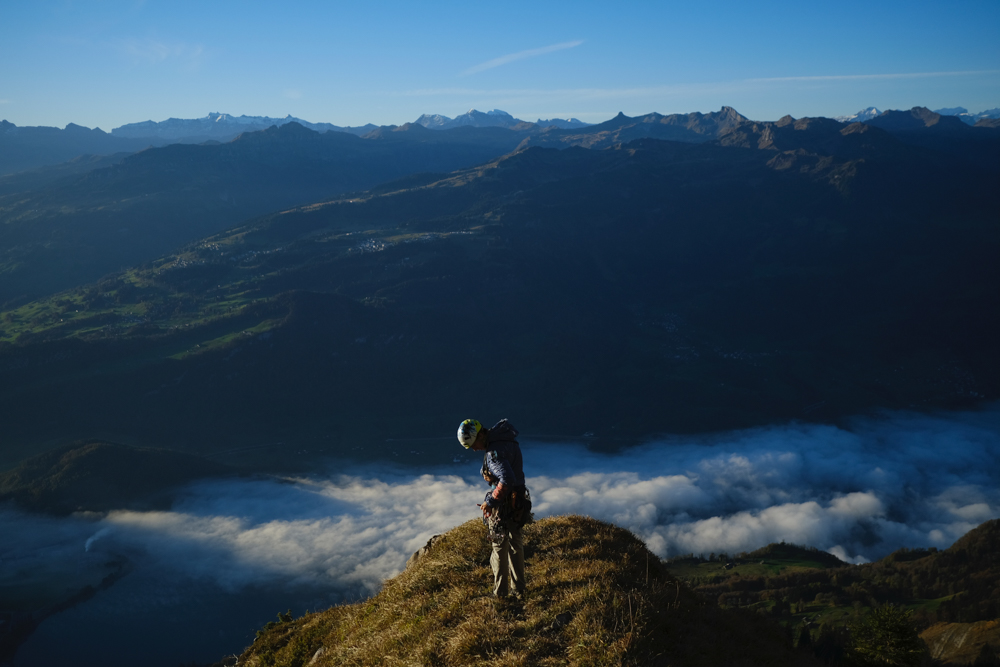
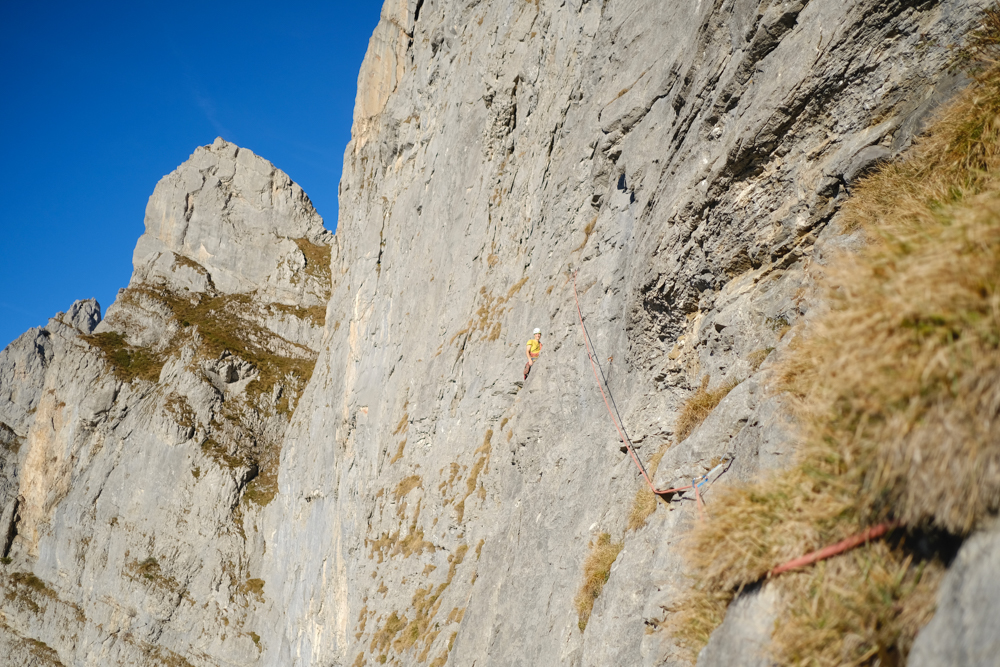
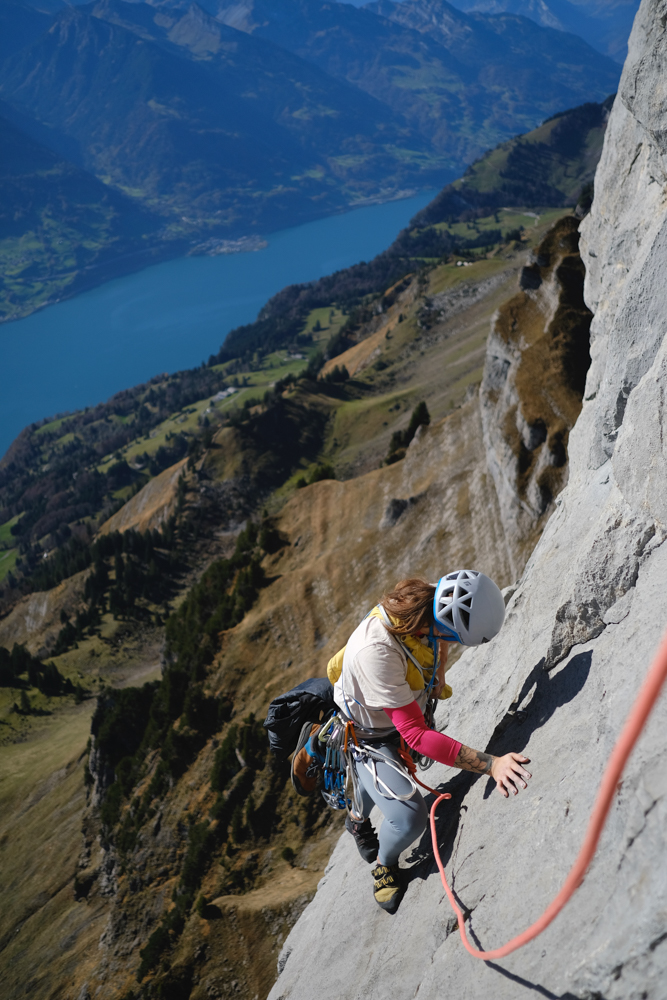
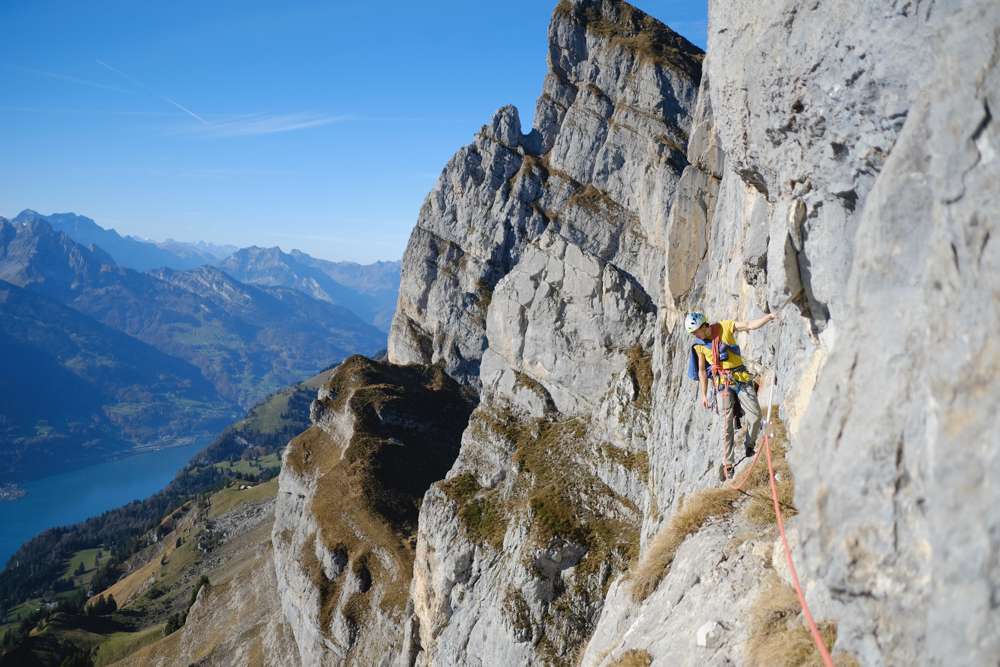
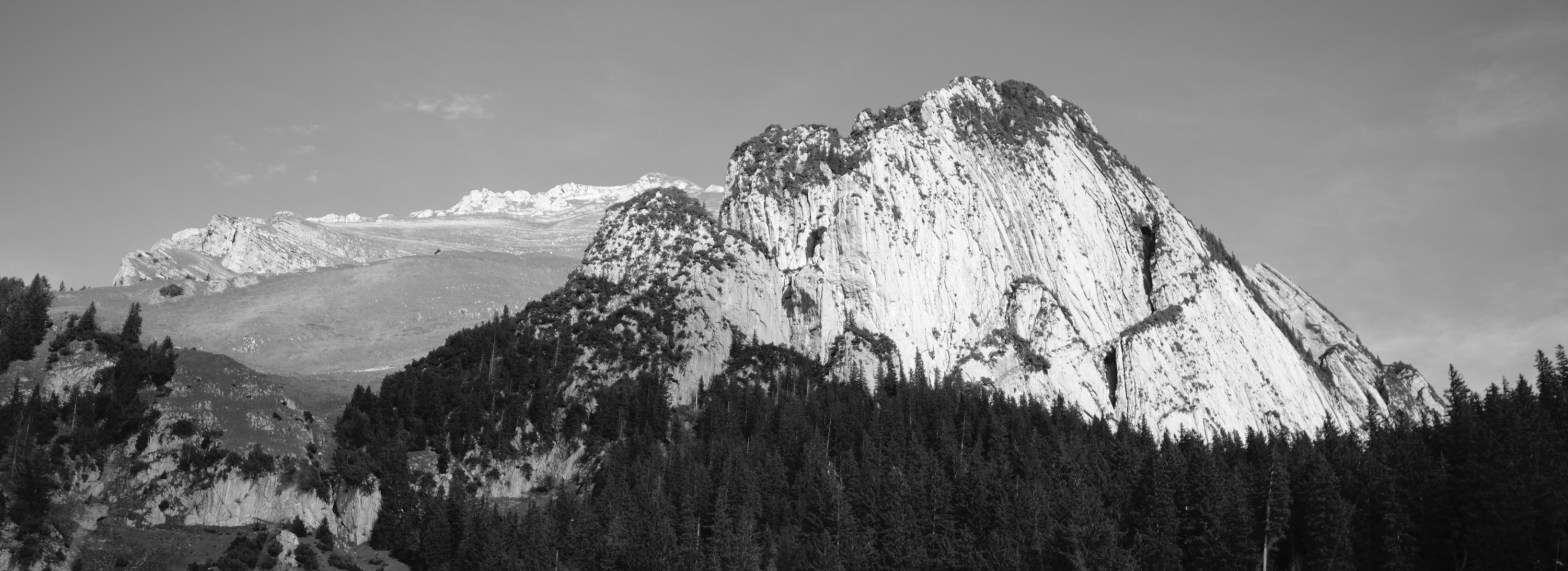
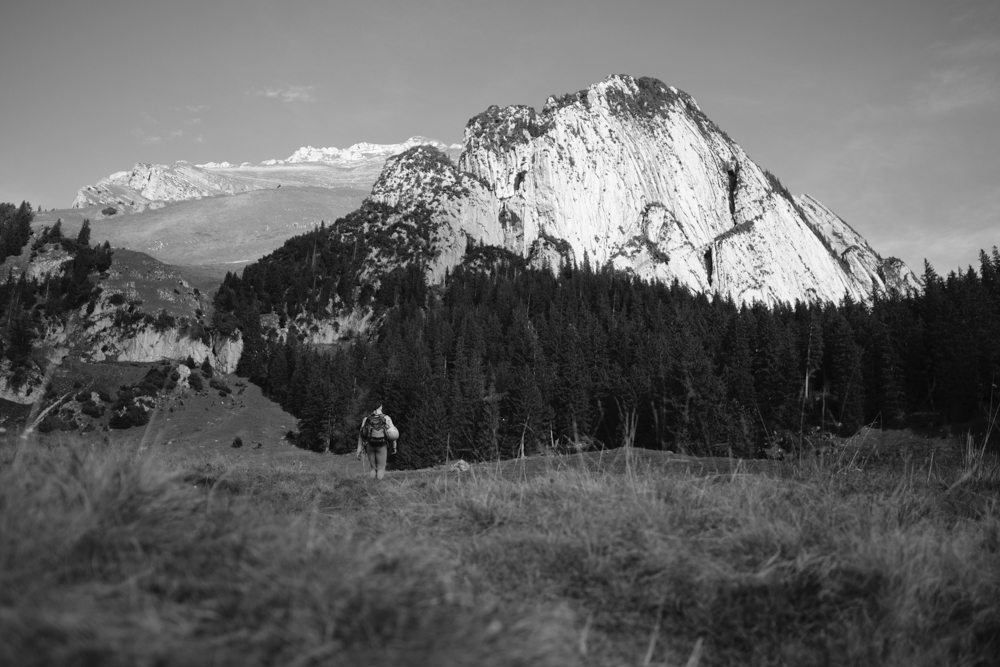
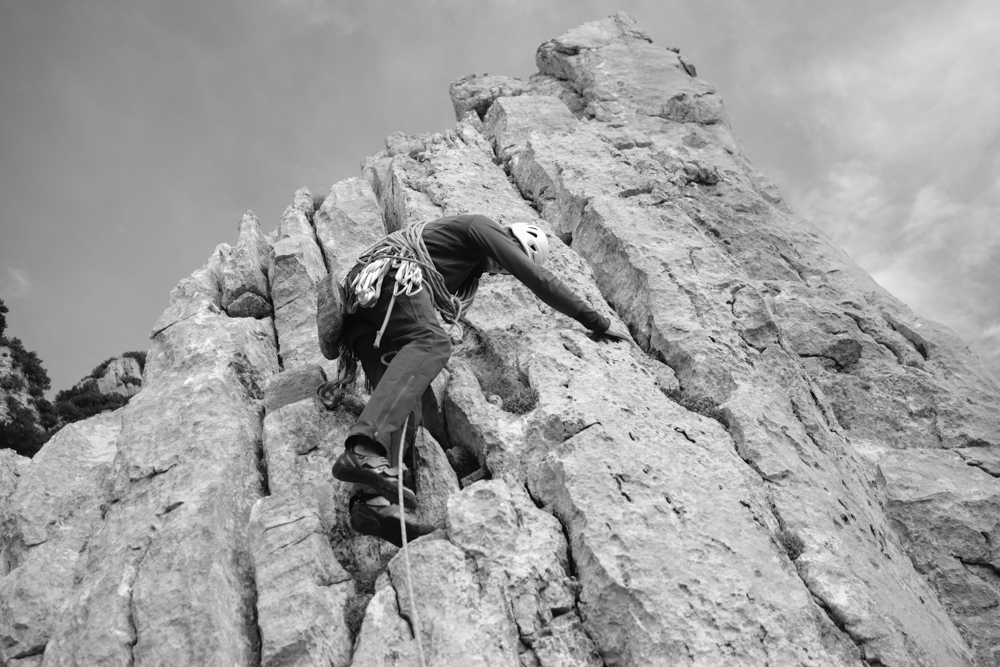
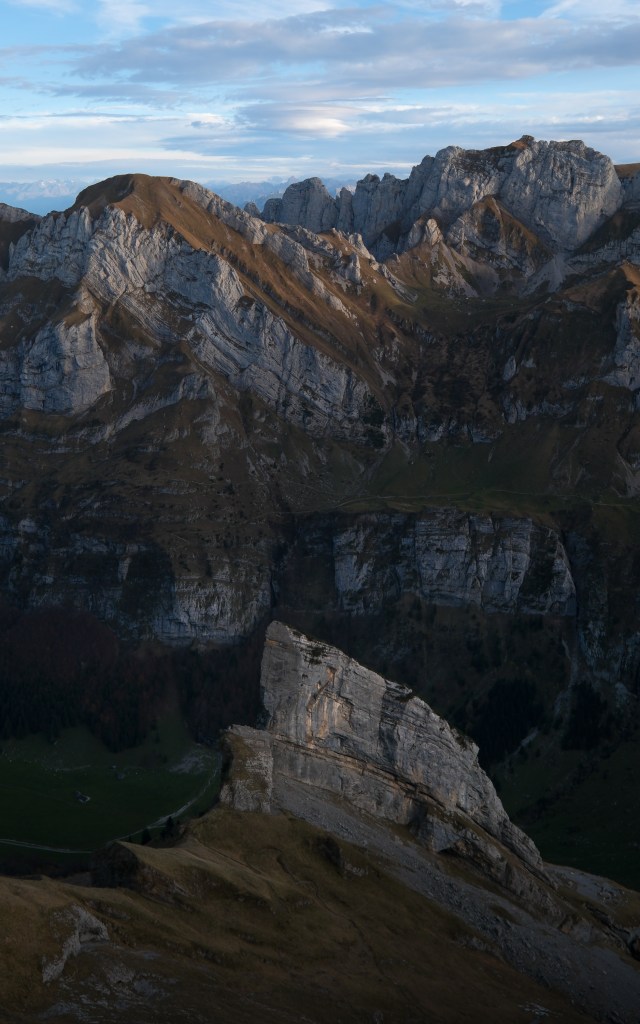
Während wir den Kreuzbergen im Osten des Alpsteins im letzten Spätsommer schon vielfach Besuch abgestattet haben, blieb der Süden für mich bisher unbekanntes Gelände. Daher nehmen wir heute (26.10.2024) als sachte Einführung die Schafbergkante am Wildhuser Schafberg. Es ist ein wohliger Sommertag im späten Oktober: Der Zustieg ist gesäumt von bunten, raschelnden Blättern, die Sonne wärmt von außen, und der kurze steile Anstieg von innen, insbesondere weil wir einen ungewollten Abstecher nehmen und einige Höhenmeter extra zurücklegen müssen.
Die leichteste Route über die Kante ist mit 5c in der Schlüsselseillänge fair bewertet; schwieriger schien uns eher die Routenführung im unteren Teil: Vom ersten zum zweiten Stand gibt es eine Vielzahl möglicher Wege, die durchaus auch mal in den Bereich 6a fallen können. Hier gibt es eine wunderbare Übersicht, sowohl über den Zustieg als auch über den Weg des geringsten Widerstands für die ersten zwei Seillängen.
Ein erneuter Solo Durchstieg im Dezember blieb mir verwehrt, da sich in der Route doch einiges an Schnee und Eis in den schattigen Rissen sammelt; an den sonnen-zugewandten Wänden konnte ich indes super topropen um schonmal zukünftige Projekte auszuspähen.
Einige Zeit später gab es für mich dann noch die Tour Patschli am äußeren rechten Rand der Schafbergwand. Hier sind die Bohrhaken in angenehmen Abständen vorzufinden, dafür gibt’s teils erstaunlich anspruchsvolle Platten-Passagen und eine (sehr) kurze athletische Dachkletterei in der vorletzten Seillänge.
Hoch hinauf auf steilen Schrofen
schreite ich dem Schmerz davon
der sich einen Weg erschlich
ins Herz, ein scharfer Stich,
einwärts gekehrt quer ich
zum schmalem Pfad
zum scharfen Grat, bin frei, endlich.
Ein kleiner Stoß, ich fliege los
Gedanken brechen aus,
aus ihren Runden raus,
der Grat verschwunden, ungebunden
schweb ich hier in Dunkelheit –
es tut mir Leid.
And all is lost in a storm, of something sinister.
They swarm in hundreds from below,
trudge through the meadows in a row,
to infiltrate the sacred realm,
to irritate, to overwhelm
the residents below the sky
who simply sigh and shy away –
their habitat is in decay
because of mankind's holiday.
Drawn to the void inside
alloyed by sweat and tears,
in search for heavy feet
and pure joy on repeat.
I only fear the laziness
while trying to escape the years
to find instead the emptiness
out there, wide landscapes all around,
a place where thoughts do have no doubt.
There are many Mountains in the UK and Ireland; but especially Scotland has all of the high peaks. A refined classification system categorizes all British hills based on their height and drop (also called prominence).
The Munros are the highest ones: A Munro is a Scottish Mountain with a height above 3000 feet that has a ‘distinct’ peak. Currently, there are 282 official Munro mountains, see also here. All other Scottish Peaks with a height above 3000 feet that are not considered to be a Munro are called MunroTops.
When we visited Scotland this year (actually it was 2022, but this post has been in the pipeline since), I was quite intrigued by these mountains. But where are they? How high are they? Which one is the highest one? Which one barely passes the 3000 feet threshold?
A little googling yields this excellent MunroMap that shows where all Munros are located in Scotland. Then, there is the Hill Bagging website where you can track your own progress on your pursuit to scale them all. There is also this wonderful blog post about the distribution of Munro mountains across different regions in Scotland. And lastly, the database of British and Irish hills gives comprehensive tabular data.
This encouraged me to do a little side project: I took (parts of) the data and visualized the location of all Munros as well as further hill types, as well as their height distribution compared to their drop. On the map you can also check out their prominence. It was a nice intro into learning Vue.js and also get started with d3js, but there is lots more to learn; so maybe there will be a second post soon.
Our island has plenty to offer: A vibrant tourist season, tranquility in winter, lovely walking trails and well-developed cycling paths, magical sunsets, and water all around that causes foggy mornings and provides habitat for many marine birds. What it doesn’t offer are woodlands. Before, I would often take my bike and drive to the woods, to wander around, to get lost between the trees, and admire their age and wisdom. Woodlands are soothing; they absorb stress. So it’s about time that I start to explore the woods on the mainland – just beyond the watery boundaries of our new home.
Time flies, time creeps, time-wise time leaps – from fast to slow to fast – past months appear like years, passed weeks between the gears of tomorrow and today, we may shed tears when this time concludes.






















 Punkt im Dunkeln